

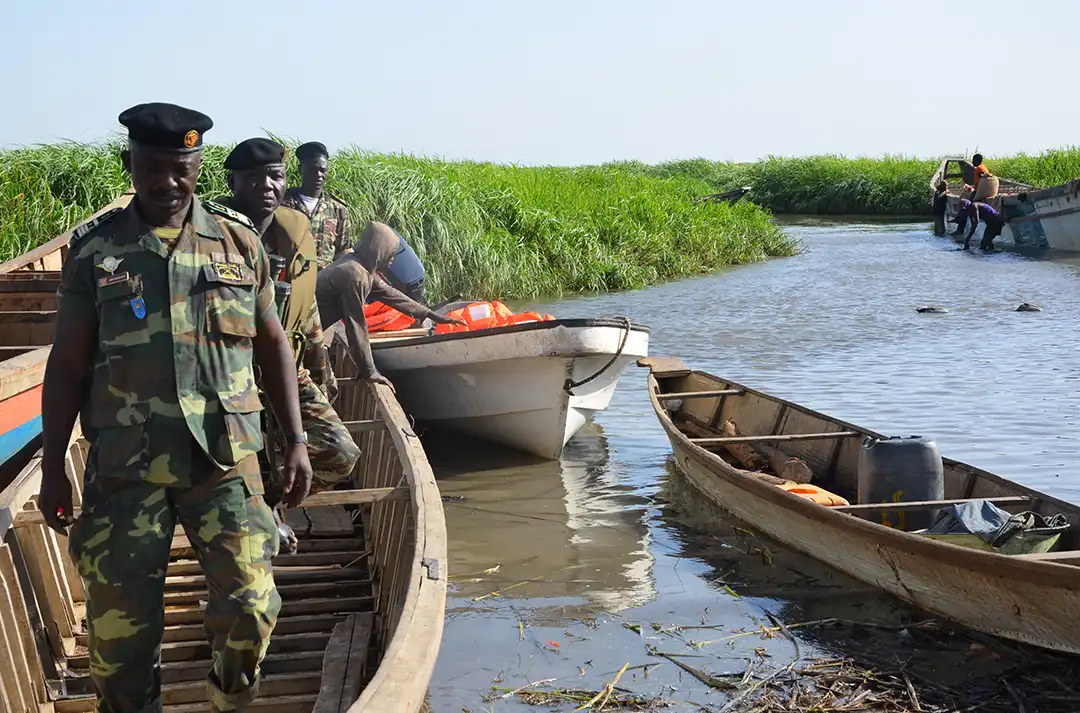
A northern region of Cameroon in the Lake Chad Basin has become a focal point of pressure by terrorists trying to deepen control, a study shows.
The Islamic State West Africa Province (ISWAP) is using violence, intimidation, economic pressure and propaganda to weaken authority in the isolated Darak district at the intersection of Cameroon, Chad and Nigeria, according to a study by the Institute for Security Studies.
The region, the poorest in Cameroon, has struggled for years with the Boko Haram insurgency and its more powerful offshoot, ISWAP.
“A combination of weak national integration and historic neglect by the state have for many years contributed to violence and the presence of smugglers in the region, with a proliferation of highway robbers, traffickers and petty criminals,” the International Crisis Group reported. “It was vulnerable to this jihadist insurrection due to geographical and cultural overlap with north-eastern Nigeria, the presence of an intolerant version of Islam and the repercussions of the Chadian civil wars.”
The ISS reported that the region’s civilians are suffering at the hands of the terrorists and the local authorities.
“ISWAP subjects locals to its ‘laws,’ such as forcing them to pay ‘tax’ as a sign of allegiance and to provide the group with an income,” the institute reported in June 2026. In an attempt to stop the terrorists, local security forces have resorted to abusing residents for collaborating with the raiders and have confiscated their property, including canoes and phones, the institute reported.
The terror group uses ideology to spread and enforce its message. It told villages that the area’s 2024 floods that destroyed homes and infrastructure were God’s punishment, the ISS said.
Researchers link terrorism in Cameroon with spillover violence from neighboring countries, especially Nigeria and Chad. The region’s isolation makes it a compelling target for terrorists. Its many winding waterways and uninhabited islands provide insurgents with concealed routes for moving personnel, weapons and supplies.
Boko Haram also remains active in the region. Since 2021, with the loss of its Sambisa Forest stronghold in Nigeria, Boko Haram has shifted its activities toward the Lake Chad region near the Cameroonian border, the Jamestown think tank reports. “Cameroonian troops have since maintained forward positions across the border in Nigeria as part of joint counterterrorism operations,” Jamestown reported in 2024.
Between 2016 and 2019, Boko Haram and ISWAP carried out numerous attacks in Cameroon, often targeting refugee camps and civilians. One of the deadliest incidents was in January 2016, when four female suicide bombers launched a coordinated attack in the town of Bodo, killing up to 35 people and injuring more than 80.
A typical Boko Haram operation came in 2023, when terrorists killed at least 12 people on Darak Island in a series of raids in July. Heavily armed fighters arrived on motorboats, attacking fishers in at least three villages, “shooting indiscriminately, and looting,” according to Voice of America. The governor of the region asked the military to intervene and work with local militias and civilians to end the attacks.
Historically, the region has been strategically important because of its abundance of fish and fertile land. But traditional livelihoods are under threat. Scientists say the lake has shrunk by about 90% since the 1960s, due to a combination of heavy water use, inefficient crop irrigation, serious long-term droughts and shifting climate patterns.
Despite its economic importance, the region has few government officials and little infrastructure. ISWAP insurgents have taken to spreading their propaganda at community gatherings and weekly markets, demanding that they be called “Dan mallam,” or sons of the Prophet, the ISS reported. To enforce their rules, the insurgents have used whippings, fines, abductions and imprisonment. Civilians reportedly have been punished for drinking alcohol or entering a farming area without ISWAP authorization.
The group has attacked 10 military outposts in the region since January, “damaging state infrastructure and leading to the dismantling of Cameroonian military posts along the border,” the institute reported.
Allowing the continued presence of ISWAP in the region will embolden the group and raise the terror threat throughout the northern part of the country, researchers say. They recommend increasing troop numbers in Darak, with Soldiers trained to operate in “marshy, inaccessible terrain” and equipped with motorized canoes, tactical drones for observation, and armed combat drones capable of targeted strikes. The institute also recommended joint military action between Nigeria and Cameroon “to help secure both sides of the border.”