
In what has been described as a first-of-its-kind operation targeting how crime finances terrorism, authorities working with Interpol and Afripol arrested 83 people across six African countries.
Officials designed Operation Catalyst, disclosed in late 2025, to identify and disrupt financial networks connected to terrorism. Interpol made 21 arrests on terrorism-related crimes, 28 arrests for financial fraud and money laundering, 16 for cyber-related scams, and 18 for illegal use of cryptocurrencies.
Interpol noted that tracking terrorist financing is a particularly complex task involving crimes such as fraud, kidnapping for ransom, illegal commerce, online scams, Ponzi schemes and misuse of crypto assets.
“These illegal activities can be linked to terrorism financing directly — when terrorist groups receive funds from such schemes — or indirectly, through money laundering or intermediary networks,” Interpol reported. “These connections highlight how different forms of crime are increasingly intertwined.”
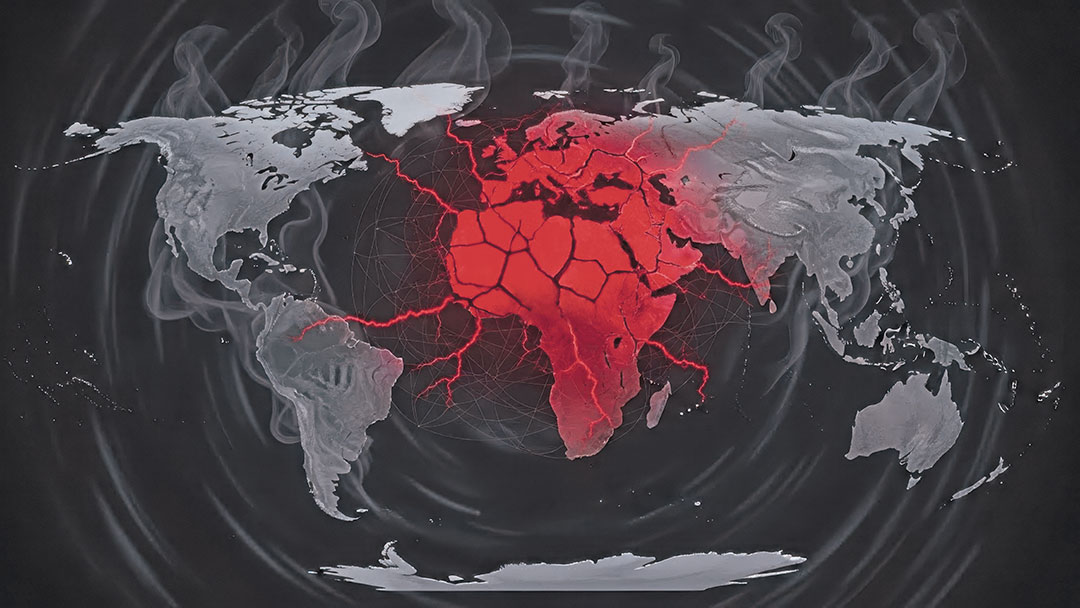
Researchers have studied the links between terrorism and organized crime for years. In principle, they would appear to have no common goals. Terrorist groups typically claim ideological, religious and political reasoning to justify their attacks. Organized crime groups traffic drugs, kidnap people, and run extortion and smuggling operations to make money, with no underlying ideology. But authorities and scholars say that African terrorists and criminals work together in a nexus.
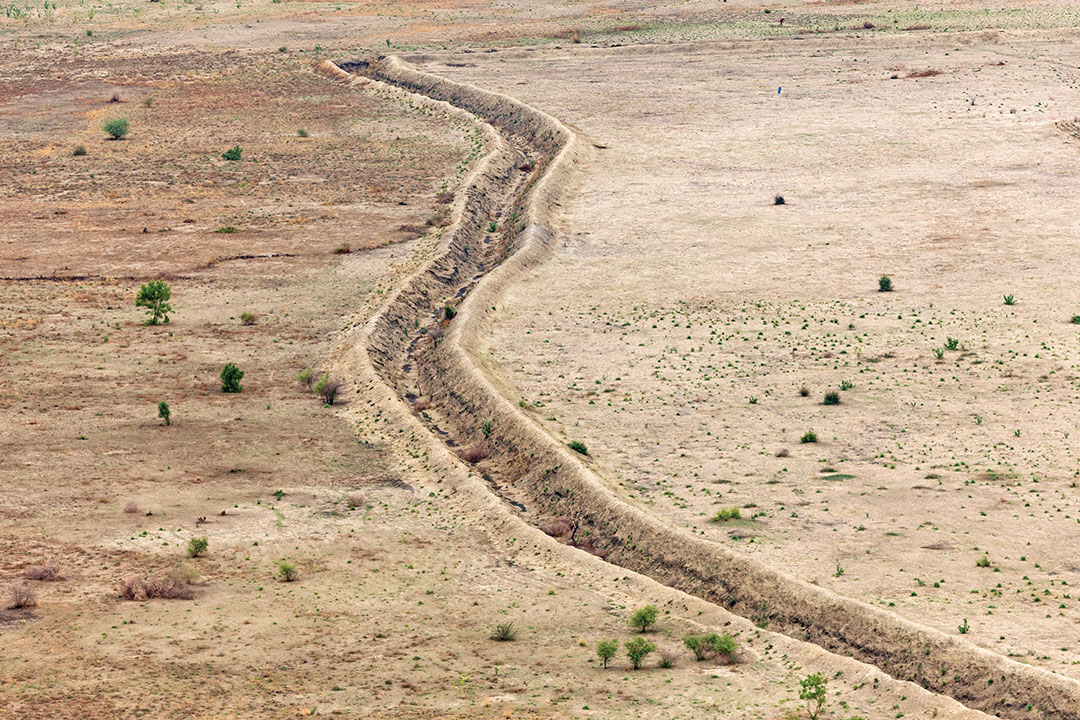
Stability, a United Kingdom-based journal, says the nexus of crime and terrorism comes in three stages: coexisting, with the two groups operating in the same space but with limited interaction; cooperation, when they collaborate through aligned interests; and convergence, when the two groups merge.
The crime-terror nexus can evolve to the point that the two groups begin to use each other’s methods, workers and travel routes, according to a 2025 report in the International Journal of Police Science by Dr. John Sullivan and Dr. Irina Chindea.
The study shows that over time, the relationships between terrorists and criminals have shifted from simple coexistence to active cooperation, with shared tactics, financing and networks. Countries are finding that their intelligence-gathering strategies no longer fit into traditional categories of crime or terrorism.
The United Nations tracks links between organized crime and terrorism through the U.N. Interregional Crime and Justice Research Institute. Established in 1968, the institute’s original purpose was to research crime prevention and criminal justice. “Across Africa, a growing threat looms: the intricate links between organized crime and terrorism,” the institute noted. “The nefarious interconnections between these phenomena jeopardize peace, security, and socio-economic development, undermining political stability and community resilience.”
In countries across Africa, extremists are taking over unprotected remote rural areas, extorting taxes in exchange for protection and basic services such as road and food access. These terrorists have learned to work with criminals to get what they want.
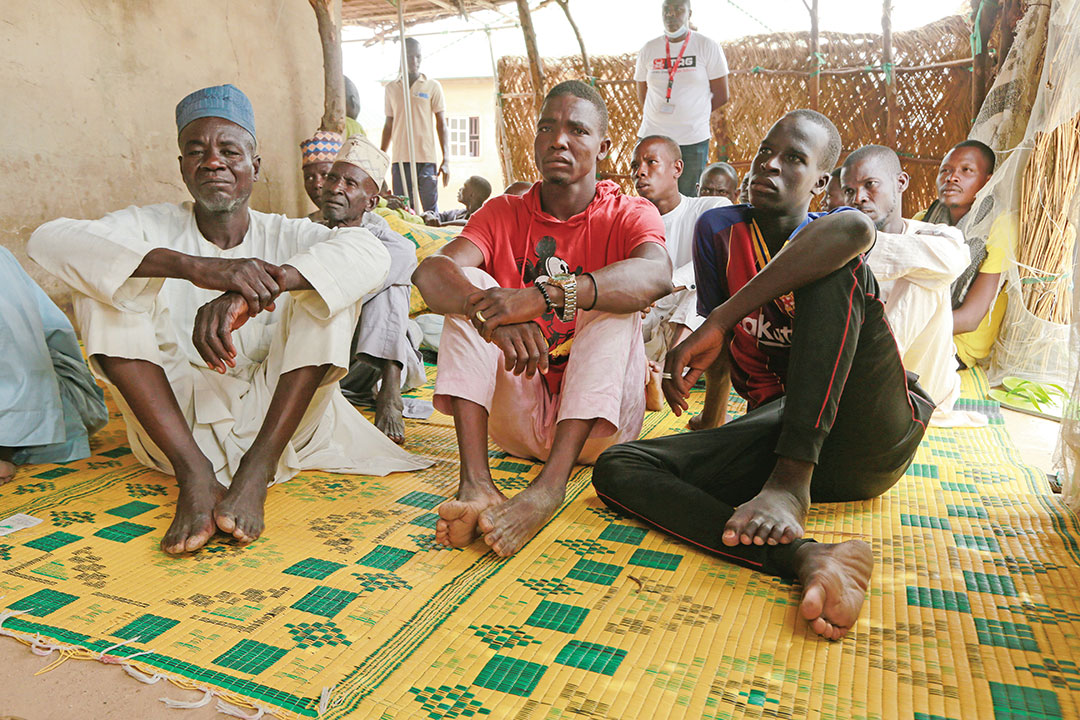
The cooperation between terrorist groups such as Boko Haram and Jama’at Nusrat al-Islam wal-Muslimin (JNIM) and organized criminals in Africa “tends to be pragmatic and asymmetric, and it definitely takes different shapes,” Dr. Sergio Altuna, a senior research fellow for the Program on Extremism at The George Washington University, told ADF.
“Boko Haram and JNIM are the main two terrorist organizations present,” he said. “They both employ rural control tactics, meaning they replace the government in places where the government has no legitimacy or no presence. We’re talking about great areas of territory.”
Altuna said such terrorists impose taxes and protection fees in areas that are remote and largely ungoverned.
The extremists and criminals have developed “a growing capacity for cross-border economic disruption, which includes kidnappings for direct funding,” Altuna said.
The result of this terror-crime nexus is no substitute for actual governance, he said. “It is not a legitimate representative of the population; it is religiously illegitimate, and also incapable of providing the most basic needs of the population, including, of course, fuel, and allowing for the schools or for the public system to fail to function normally.”
The Center for Strategic and International Studies classifies cartels and other criminal groups as transnational criminal organizations, or TCOs. The center classifies political and religious extremists as foreign terrorist organizations, or FTOs.
“The primary difference between FTOs and TCOs is that FTOs, by definition, pursue political objectives, while TCOs are ideologically more agnostic and primarily profit motivated,” the center said in an October 2025 report. It noted that in some parts of the world over the past 20 years, the “operational realities” of terrorist and transnational criminal organizations have blurred “to the point of indistinction.”
The U.N. says criminals and terrorists learn from each other. Terrorists use organized crime groups as a source of money and capitalize on the criminal experience of the people they recruit. Organized crime groups can adopt terrorist techniques, tactics and supply chains.
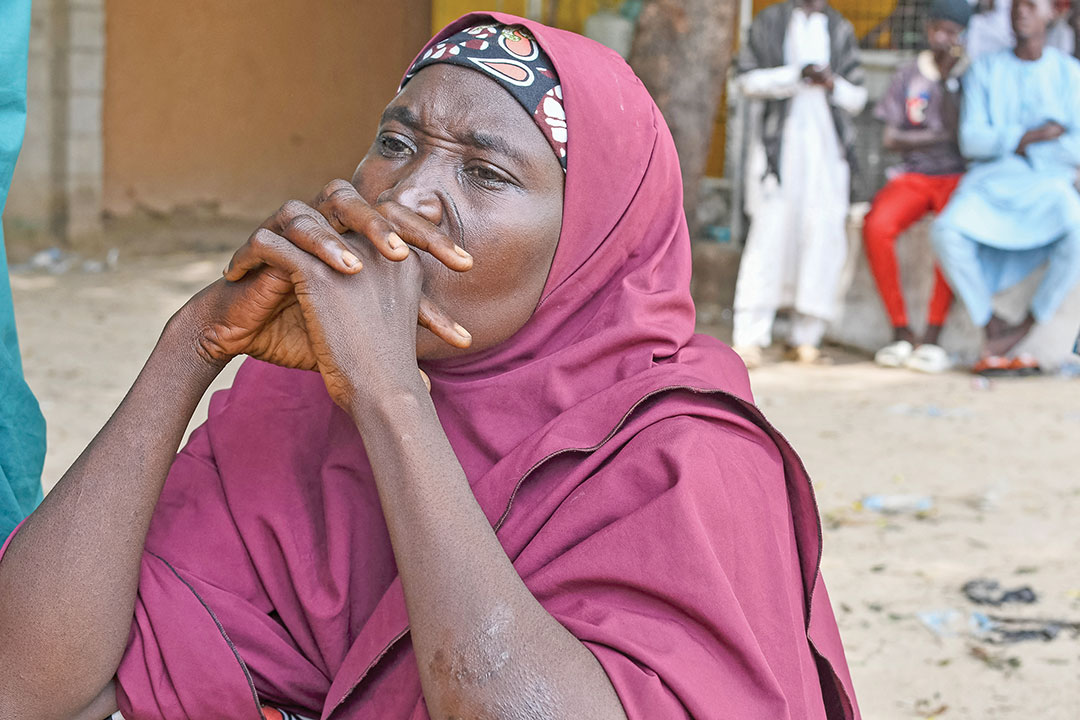
“Extreme violence is one of the mechanisms of weakening the state and setting the stage to empower the various criminal networks,” report Sullivan and Chindea. They say the day-to-day activities of some terrorist groups “closely resemble activities that are commonly associated with organized crime.” Terrorists are known to kidnap people; trade in artifacts; smuggle weapons; take over banks, factories and other structures; extort and intimidate; and take part in prostitution and human trafficking.
The roots of the nexus include the interaction of criminal and terrorist networks within prisons, the Journal report shows. Criminals are drawn to terrorist narratives as a justification for crime and can find terrorist skills useful. The stigma of past terrorism can complicate societal reintegration and make crime an alternative course for ex-prisoners, the authors wrote.
DRUG ABUSE GROWS
As in other parts of the world, the Sahel’s problems with governance, security and poverty have made it susceptible to drug abuse. Disillusioned young people have turned to low-cost drugs such as tramadol and other synthetic opioids, the Institute for Security Studies (ISS) reported. The drugs are a revenue stream for organized crime while making young people vulnerable to recruitment by criminal networks. In turn, terrorists such as Boko Haram and JNIM tax drug smuggling routes to fund their activities. With terrorists and criminal networks sharing the drug smuggling routes, the line between ideological and profit-driven motives all but disappears.
The Atlantic Council warns that the drug distribution links between organized crime and terrorists can cause “narco-terrorism on a scale hitherto unheard of and the entrenchment of partnerships between drug smugglers and increasingly well-funded terrorist groups.” The council noted that even when terrorist groups are not directly managing the drug trade, “they stand to benefit from the routes and from facilitating drug smugglers’ operations in the territories they control.”
Another ugly consequence of the terrorism-crime nexus is the proliferation of guns throughout Africa. Terrorism depends on guns, so the intersection of the two groups would be almost inevitable. Terrorists have gone from being users of weapons to becoming actual partners in selling them. Small arms and light weapons have become “a lucrative trafficking commodity underlining the nexus between terrorism and transnational organized crime,” according to the Global Counterterrorism Forum. Terrorists and arms dealers in Africa benefit from porous borders and a limited police presence to smuggle arms across borders.
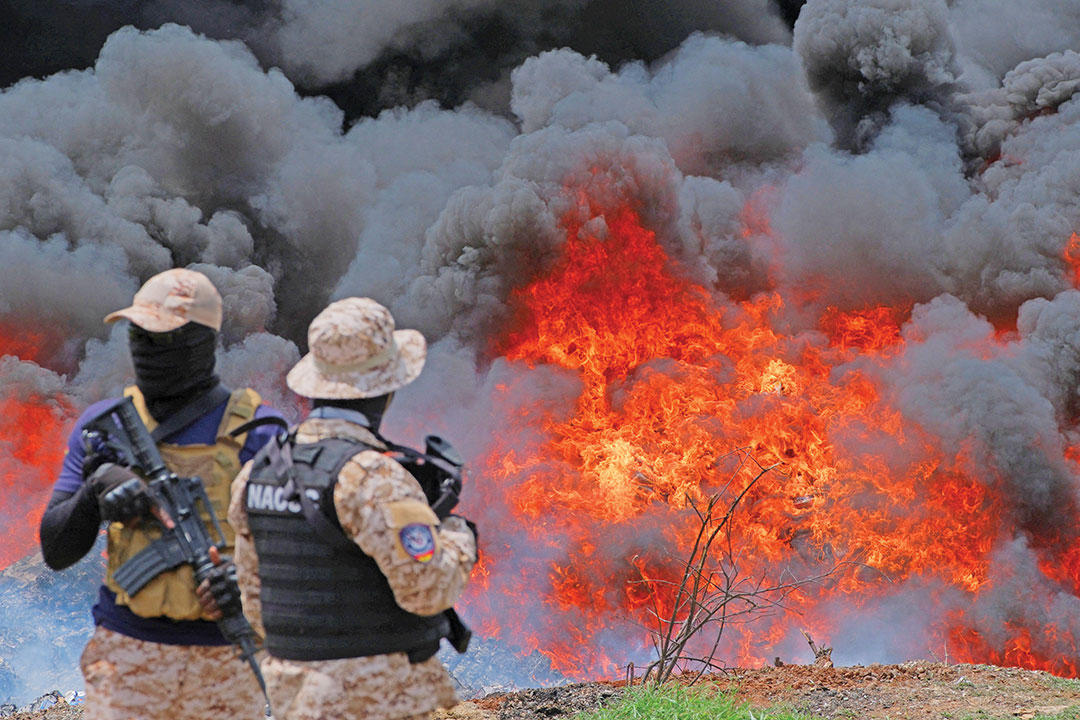
Adedeji Ebo, a U.N. deputy disarmament chief, said that despite steps to strengthen arms controls, more than a billion firearms are in circulation globally, sustaining conflict, terrorism and criminal networks across multiple regions. “Weapons diverted from national stockpiles — or at any point throughout the supply chain — could end up in the hands of non-State armed groups.”
“The illicit trade and misuse of small arms and light weapons fuels armed violence, terrorism and organized crime,” he said, as reported by the U.N. in November 2025. An Interpol database contains more than 2 million records of lost, stolen and trafficked weapons, supporting multinational operations “that have seized thousands of firearms and dismantled networks tied to terrorism, trafficking and illegal mining,” the U.N. reported.
RESOURCES, NOT LAWS
The Sahel’s organized crime and terrorism crisis is not a result of poor laws or legislation; it is the region’s limited ability to enforce its own rules, the ISS reported. “Vast ungoverned spaces, socioeconomic conditions that breed corruption, and protracted insecurity enable illicit economies to thrive.”
The African Union’s Nouakchott Process of 2013 established a cooperation mechanism to improve intelligence sharing and security cooperation in the Sahel and other regions to counter terrorism and transnational organized crime. The process includes Algeria, Burkina Faso, Chad, Côte d’Ivoire, Guinea, Libya, Mali, Mauritania, Niger, Nigeria and Senegal, and various AU structures, regional economic communities and the U.N.
The ISS says reviving the Nouakchott Process could be useful, but only if the AU enforces it. Success, the institute said, hinges on “overcoming mistrust, sharing intelligence, implementing joint border patrols and targeting criminal and extremist enclaves.”
To encourage international police cooperation, Interpol is merging the fights against terrorism and organized crime. In a 2025 summary of law enforcement recommendations, Interpol included “strengthening border controls with regional and international partners to disrupt the movement of illicit goods, smuggled persons, and terrorist suspects.”
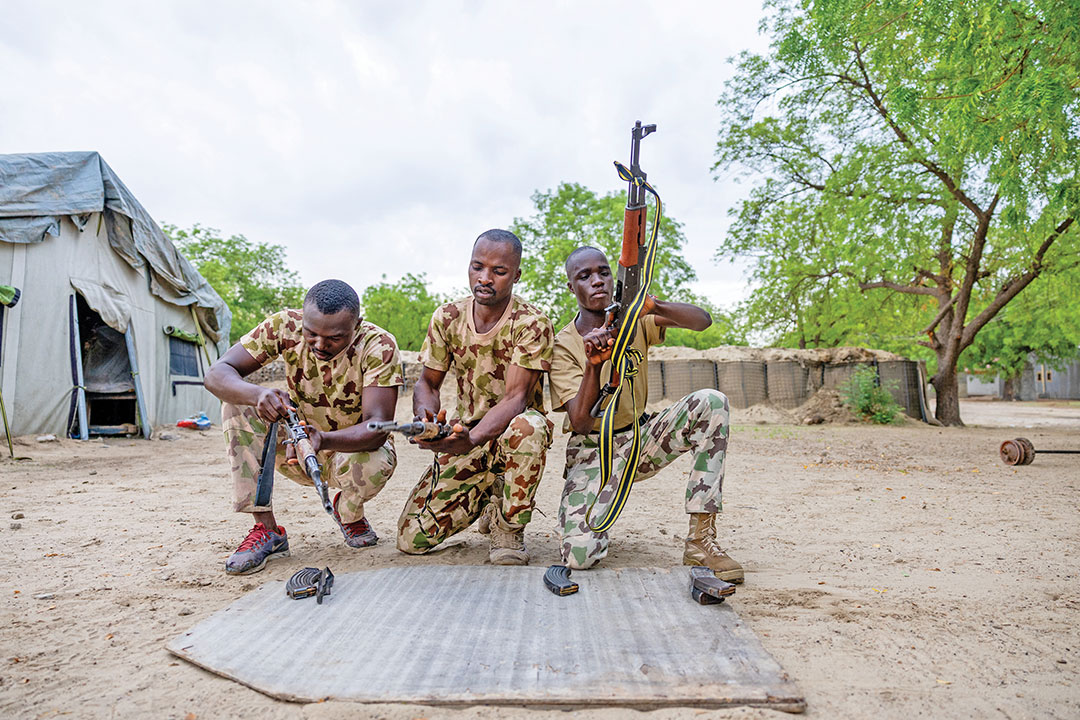
The U.N. Security Council plays a critical role in supporting AU counterterrorism initiatives. U.N. Deputy Secretary-General Amina Mohammed said terrorists are trying to expand their influence in more parts of the continent, such as Togo and Côte d’Ivoire.
“Let us make no mistake,” she said during a U.N. meeting in early 2025. “At this rate, in West Africa, the future is at stake. The marginalization of youth, coupled with soaring unemployment, has left an entire generation vulnerable to extremist groups. If we don’t act, we risk losing this generation to the horrors of terrorism, their futures stolen before they even have a chance to begin.”
Modern security threats include “criminal cartels, gangs, mafias, insurgents, and terrorists” operating on a global scale with distinct local characteristics, Sullivan and Chindea said in their 2025 report. Gathering and sharing information is a cornerstone of stopping the terrorism-crime nexus. Such information must be distributed among a range of global actors, including metropolitan police, national police and intelligence agencies; health authorities for biological events; and civil defense agencies, including fire and medical services.
They concluded that counterterrorism intelligence needs to be expanded to include efforts to “address transnational organized crime and gangs in order to effectively address intelligence support for the crime-terror nexus.”