

As terror groups from the Sahel encroach on coastal West African states, Mauritania has remained relatively peaceful. The country has not experienced a major terror attack since 2011, when militants affiliated with Al-Qaeda in the Islamic Maghreb, or AQIM, terror group attacked a gendarmerie post near the Malian border and abducted a military policeman.
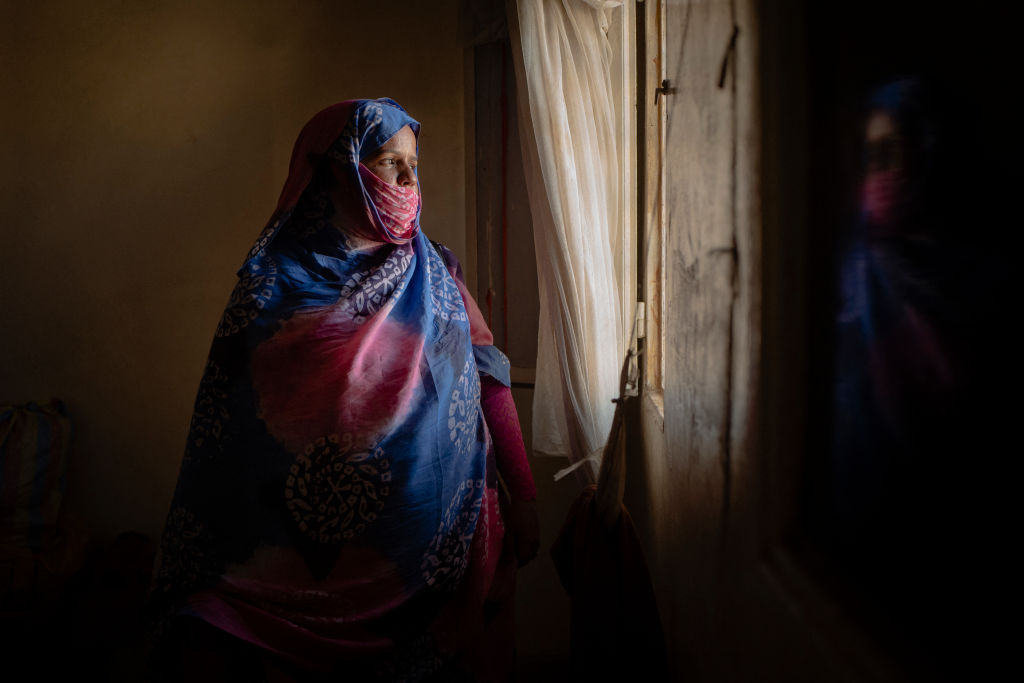
Analysts say Mauritania’s use of trained and certified Islamic female spiritual guides are a critical component of the country’s peacekeeping approach. Known as mourchidates, these women are certified by the state and deployed into prisons, schools, youth centers, hospitals and mosques, where they speak with young men and women about faith.
Trained in Islamic law, Quranic understanding and the history of theological thinking, their mission is to deradicalize young people. Armed groups commonly blend radical religious beliefs with recruitment tactics, often among unemployed, marginalized and angry younger populations.
In prisons, the mourchidates talk to inmates with ties to Sahelian armed groups. They challenge the theological claims used by those groups and offer alternative religious arguments rooted in mainstream Islamic study. They calmly argue that violence against civilians cannot be justified in Islam. They attempt to build trust to allow prisoners to reconsider their past choices.
“The mourchidates were deployed by the Ministry of Islamic Affairs to different parts of the country, where they educated young people on the true teachings of Islam, such as tolerance, charity, and accountability, playing an important role in de-radicalisation without any use of force,” Yahia Elhoussein, a Mauritanian sociological expert, told Al Jazeera.
Mouna Bint Alban, a young mourchidate from the Tnwagyu tribe, which is known for its knowledge of Islamic sciences, told the UNODC that the thinking of extremists is contrary to the values of Islam and results from a misunderstanding of the religion. She said extremists often use Takfir speeches to justify their acts and hatred for others. Takfir refers to Muslims accusing other Muslims of being disbelievers.
“However, the Qur’an condemns the Takfirists,” Alban said, adding that her job is to “correct these misinterpretations” of the Quran and “show these young people that Islam calls for tolerance.”
Mauritania launched the program in 2021 with support from the United Nations Office on Drugs and Crime (UNODC). It is based on a program Morocco implemented in 2006, three years after one day of suicide bombings killed 43 people and injured more than 100 in Casablanca. Morocco’s mourchidates also received formal theological and social training. Moroccan researcher Youssra Biare said they have become an acknowledged example of channeling women’s religious leadership to prevent the spread of violent extremism.
“Beyond their role in countering extremist narratives, they address the social and emotional factors that can make young people vulnerable to radicalisation,” Biare told Al Jazeera. “For countries such as Mauritania, the Moroccan model demonstrates how investing in well-trained female religious leaders can strengthen community trust, promote moderate religious discourse, and create culturally grounded approaches to youth de-radicalisation and social cohesion.”
The mourchidates peaceful efforts are a sharp contrast to the militaristic approaches to deradicalization that other countries take.
“One of the strengths of the Mauritanian model is that it understood early on that violent extremism cannot be addressed through security responses alone,” Aminata Dia, a Mauritanian founding member of Elles Du Sahel Network, a consortium of women leaders, told Al Jazeera. “The country invested in prevention, religious dialogue and community trust-building, particularly through the mourchidates programme.”
While the mourchidate program alongside Mauritania’s broader counterterror strategy have prevented major terrorist attacks, the country still faces significant security issues. One of the most pressing threats comes from neighboring Mali, where the Jama’at Nusrat al-Islam wal-Muslimin (JNIM) terror group has seized large swaths of territory and imposed a fuel blockade on Bamako. Mali’s security situation is complicated by the presence of Russian mercenaries, now called Africa Corps, fighting alongside Malian forces. Each entity has committed atrocities against civilians.
In late August 2025, JNIM gained control of a military base in the Malian town of Farabougou, near the Wagadou Forest, which is on the Mauritanian border. About a week later, JNIM captured Farabougou. In October 2025, Mauritanian and Senegalese armed forces began intensified joint security operations along their shared borders with Mali in response to the growing threat of terrorism.