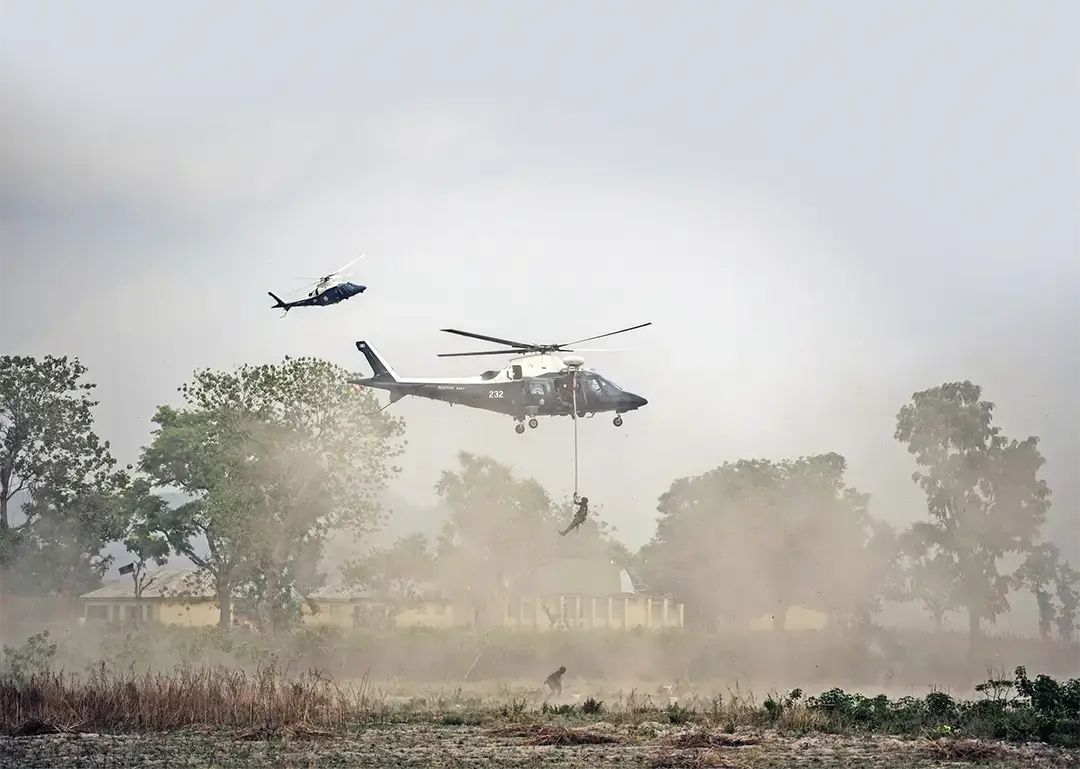

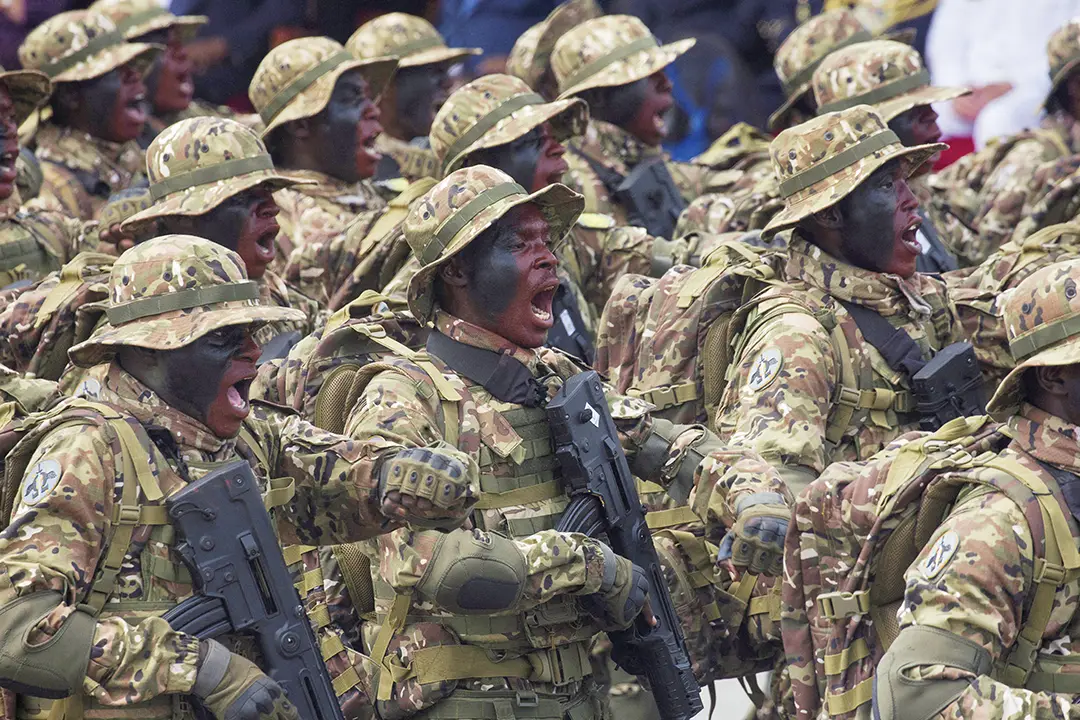
As technology plays a larger and larger role in special operations forces (SOF) missions, leaders still believe that it is humans, not hardware, that make the difference.
Highly trained operators use their courage, ethics and adaptability to make split-second decisions on the battlefield. Amid upheaval brought on by tools like artificial intelligence (AI), African security professionals stress the importance of keeping “human capital” at the center of SOF planning.
“The determining factor in SOF is the personnel, the human being,” said Maj. Gen. Mohamed Ali Barise of the Somali National Army during the 2025 Silent Warrior conference in Nairobi. “The way you train, the way you indoctrinate, shape and instruct will determine the success of the mission.”
But what’s the best way to develop these operators? Experts believe it is a combination of stringent selection, adaptive training, mentorship and careerlong support.
Superior Selection Process
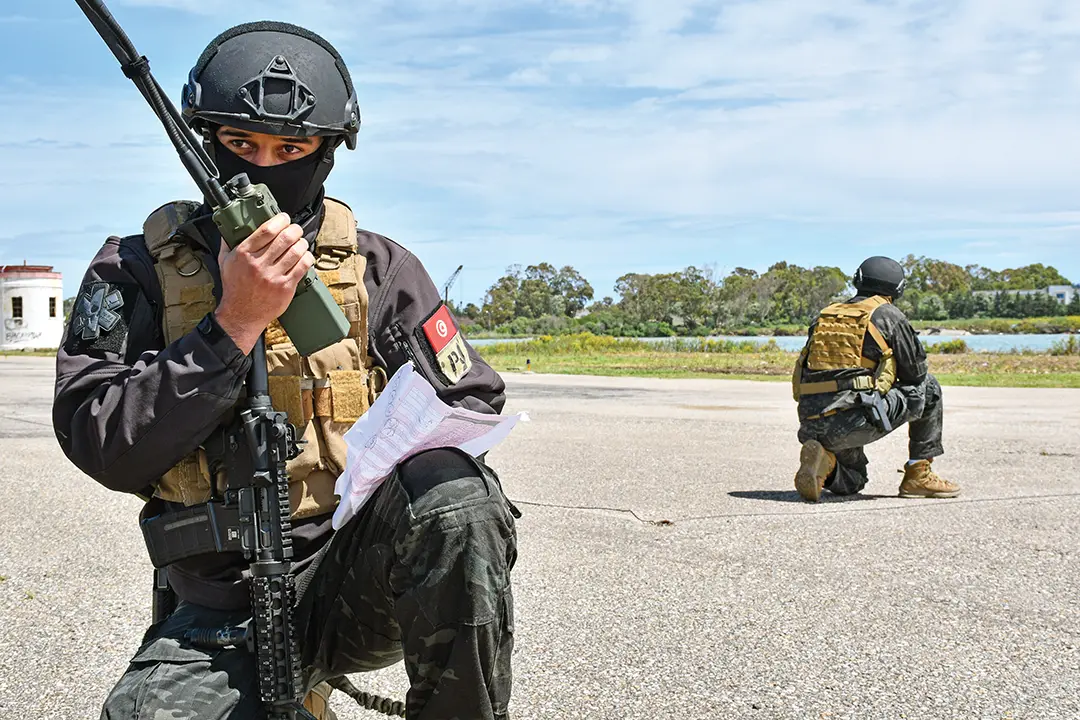
SOF training is notoriously grueling. New recruits are pushed to their physical and psychological limits to prepare them for combat. SOF units are known for having the highest attrition rates in the military. Some elite groups graduate only about 10% of candidates.
South Africa’s famed Recces, for example, must endure a test known as the ultimate challenge, which involves desert treks while carrying blocks or sandbags, along with wilderness survival and sleep deprivation. Experts believe SOF should not shy away from this toughness. In fact, it should be a badge of honor that is used to attract young people willing to test themselves.
“Take operatives to a point, almost to a breaking point, so when he gets to the field and hits this same point he will not give up,” said Col. Charles Mugo, deputy commander of Kenyan Special Operations Forces Command.
At Silent Warrior 25, an annual special forces conference, one commander recalled a situation in which a unit on patrol in Somalia was ambushed and several Soldiers were separated from the group. They spent weeks having to survive in the wilderness, relying on their training to keep them alive. Training must prepare SOF operators for such hardship, the commander told attendees.
SOF should not only seek candidates who are physically fit but those who also are mentally tough, creative problem-solvers and leaders.
“Look at the recruitment process,” Mugo said. “Recruit volunteers who understand the nature of the work they’re going to face.”
Progressive Training
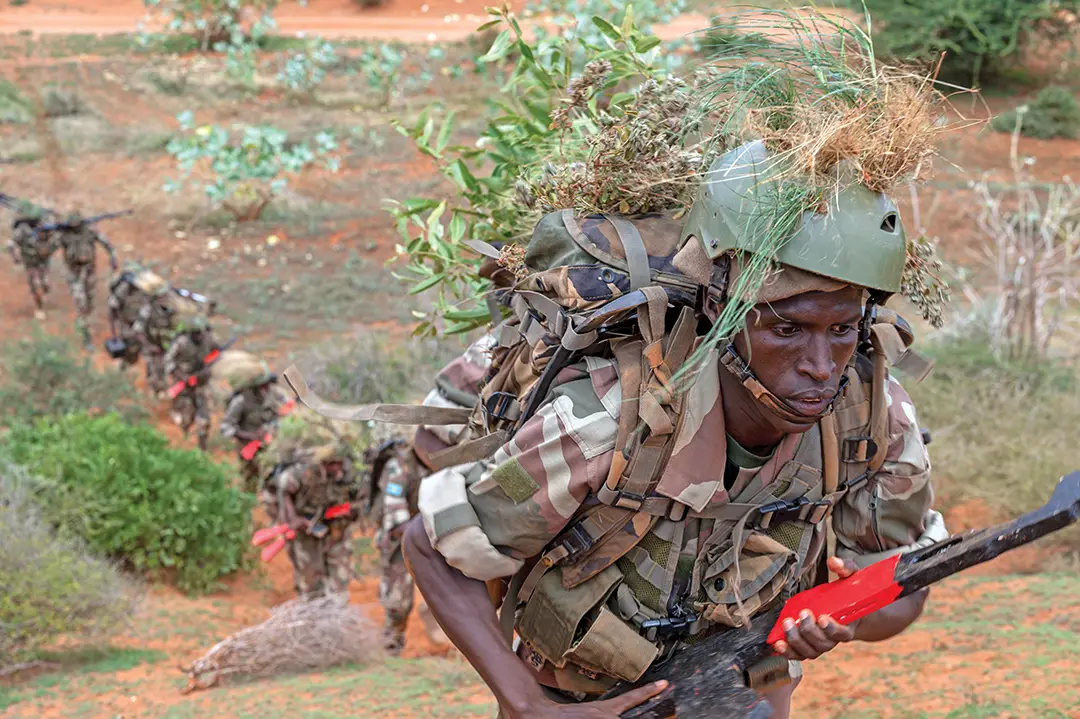
Col. Jérôme Francis Nko’o Ella, commanding officer of Cameroon’s elite Bataillon d’Intervention Rapide (BIR) Alpha Operation, knows well the importance of highly trained SOF units. His nation faces terrorism and banditry in its extreme north, separatists in the west, and piracy along the coast, meaning BIR operators must be prepared to handle diverse terrain and problem sets. To refresh skills and maintain sharpness, BIR operators return every two years for additional training to add new capabilities and take on new responsibilities.
Nko’o Ella said this emphasis on training is important. “In other parts of the world, they are emphasizing technology and equipment; in Africa, we don’t have the same money, so we need to emphasize training Soldiers instead of equipment,” he told ADF during Silent Warrior. He added that there is a need to work with outside partners, so the training they provide is progressive. This means that each time a foreign partner comes to provide training, it builds on what was learned before. Ultimately, this results in a “train-the-trainer” model that builds Cameroon’s domestic capacity.
“We, the receivers of the training, should feel that we are really improving our abilities. With time, we are better organized,” he said. “The outside trainers need to know also that every time they come, they’re getting more in terms of increased capabilities.”
The best training modules have a rapid feedback cycle that uses combat experience to update instruction. Sometimes called adaptive training or fail forward, it keeps SOF tactics, techniques and procedures up to date with what adversaries are doing.
SOF leaders believe the best way to accomplish this is by adding homegrown, self-sustaining training capacity in African countries. One example is Côte d’Ivoire’s International Academy for the Fight Against Terrorism, inaugurated in 2021. It offers 19 special forces training programs based on real-world challenges faced by West African SOF.
“In order to have training for the African security context, we need to look at the African realities,” Mugo said. “Let our training be based on the realities that we are facing in the African security context, and let us all tailor our training depending on what we are experiencing in the countries. The threat analysis should guide us.”
Mugo believes the best training stems from well-crafted doctrine that lets special forces units from the Navy, Air Force, Army as well as police personnel work together. This doctrine, according to best practices, should be updated at least every five years.
“All these challenges that are faced in training SOF originate mostly from the doctrine,” Mugo said. “If you have got a good doctrine, a common doctrine for special operators, then you will be able to have good leaders.”
Mentorship
Militaries recognize that the best training might not happen in the classroom or on the shooting range. Some of the most effective fighting forces now consider mentorship a strategic pillar in officer cadre development.
“Whether in barracks, war colleges, or peacekeeping deployments, seasoned commanders are increasingly guiding junior officers not only in tactics but in ethics, diplomacy, and the evolving nature of leadership in modern African conflict zones,” wrote King Richard Igimoh for the website African Defence & Security.
As young SOF operators are thrust into complex, rapidly changing environments, mentorship can be a steadying force. It promotes intergenerational knowledge transfer, reinforces ethics and builds esprit de corps.
More than 12 African countries have formal mentorship programs with 62% of junior officers citing mentorship as key to promotion, African Defence & Security reported.
Among the countries that have successfully established mentorship programs are:
The Rwanda Defence Force, which assigns senior commanders to cadets at graduation, who work with them for five years.
The Ghana Armed Forces, which designates a mentorship officer in each battalion responsible for pairing mentors with new lieutenants and captains.
In Kenya, mentorship is part of the Military Ethics and Leadership School, with a particular emphasis on making sure officers in peacekeeping deployments are paired with mentors. The Kenya Defence Forces runs forums after deployments to capture lessons learned and offers support to returning officers.
Another key component is the development of noncommissioned officers (NCOs) who are responsible for training and sustaining a mission-ready force and executing strategies that originate in the officer corps. In most militaries, a new recruit will depend on an NCO for basic training, drill and ceremony instruction, and to maintain order and discipline.
A Ghanaian colonel captured the importance of the practice when he told African Defence & Security: “Ranks fade, medals rust, but the lessons passed from one soldier to another — that’s the legacy that endures.”
SOF for the Future
As SOF leaders prepare for the future, they are looking at ways to support the health and well-being of the warfighter. Improving retention rates can be done through programs that ensure merit-based promotion and incentives for operators to continue their education and acquire critical skills. Effective SOF units also are focused on supporting family life and the mental health of operators.
But as SOF training adapts to new threats and new technology, experts believe operators should stay focused on what makes them unique: their knowledge, their values and their adaptability.
“Warfare is a human endeavor,” retired U.S. Vice Adm. Collin Green of DZYNE Technologies said during Silent Warrior, noting that, at its best, SOF is the “connective tissue” of the military with regional expertise, cultural understanding and language skills. These come from being on the ground in contested areas, and “that’s not going to go away,” Green said.
As a path is charted for the future, leaders urge SOF to double down on its core values.
“The SOF operator must be well trained and prepared as a fighting machine, but the value is more than that,” Somalia’s Barise said. “It’s the ideology, the doctrine, the reason why they are wearing the uniform. It’s the way they are conducting the operation, the ethos they believe, the integrity, professionalism, the courage. These are the determinant factors for a Soldier to be a Soldier.”
A Model for Supporting the Warfighter
As leaders look to support SOF’s human capital, one model used by militaries and large organizations globally can be helpful. This framework for identifying solutions to complex organizational problems is known by an acronym — DOTMLPFI — that can be helpful in focusing efforts. It stands for:
- Doctrine: These fundamental, officially sanctioned principles guide how military forces organize, train and use capabilities to achieve national security objectives. The doctrine is a shared framework for action that constantly evolves. When the doctrine is not aligned with the realities of the mission, operators struggle to succeed.
- Organization: This is how forces fight in units within a command structure. Supporting human capital development means offering operators clear career paths and merit-based promotion within their organization.
- Training: At its best, SOF training incorporates lessons learned and adapts to realities on the ground. It also should be forward-looking to anticipate enemy tactics. The best training is progressive, instead of repetitive. It is also self-sustaining, led by domestic trainers and institutions.
- Materiel: SOF operators are quickly adopting new weapons and high-tech tools to face shadowy, asymmetric adversaries. However, say SOF veterans, the best equipment is not necessarily the most advanced but what can be consistently maintained in the field and repaired when needed.
- Leadership: SOF leadership demands moral courage, discipline, and the ability to make quick decisions in the fog of war and accept responsibility for them. As SOF units look to develop leaders, they increasingly foster intergenerational mentoring relationships.
- People: Developing human capital means supporting warriors away from the battlefield. This requires supporting their families, career aspirations, and physical and mental health.
- Facilities: Effective operators are forged at bases, barracks, training ranges and higher learning institutions. To support its human capital, SOF must have adequate facilities.
- Interoperability: As threats cross borders, it is increasingly important that SOF be interoperable with a wide range of security partners. This includes forces from other countries, the branches of its own military and other domestic security agencies.