

STAFF SGT. TRENTON JANCZE/U.S. AIR FORCE
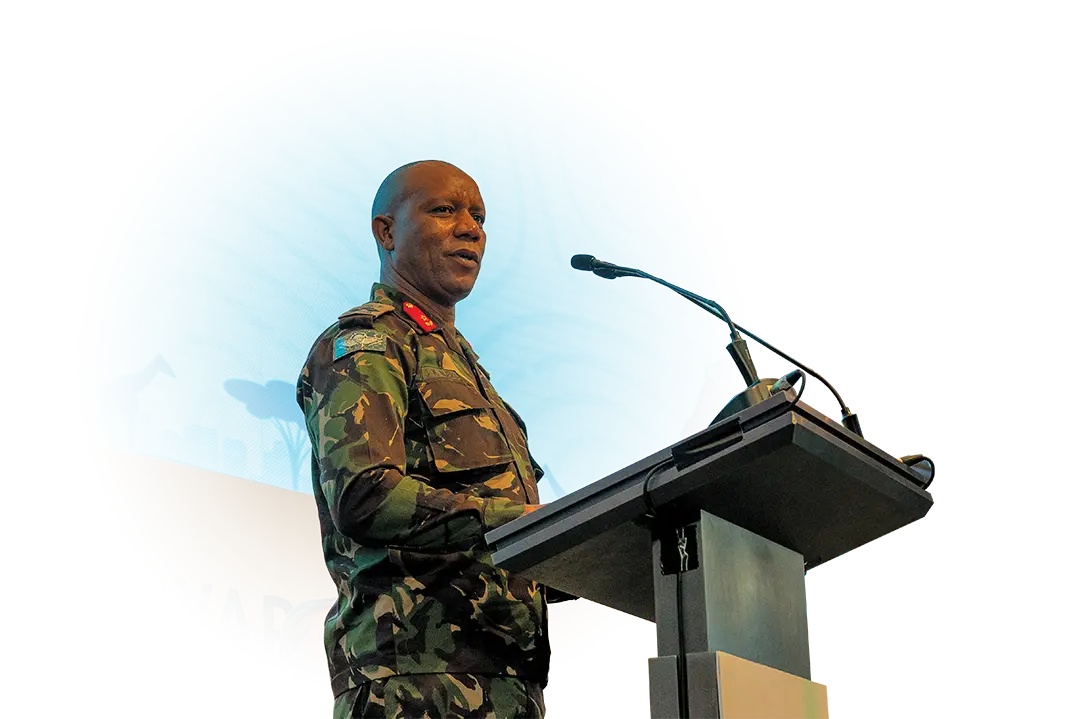
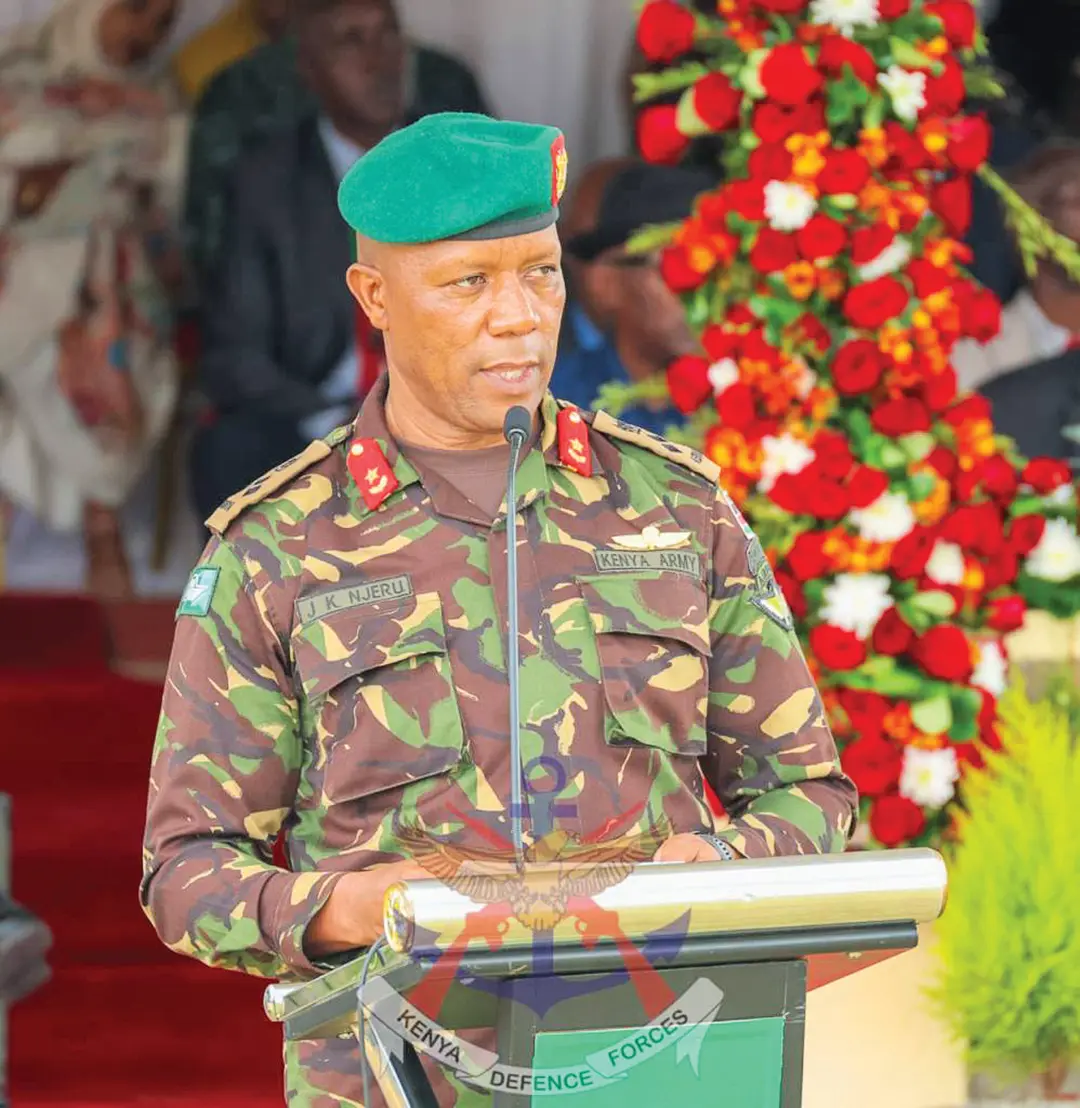
Brig. John Kinyua Njeru has served as commander of Kenyan Special Operations Forces (KENSOF) Command since 2021. He began his career in 1990 and has served in a range of roles in the Kenya Defence Forces (KDF), including commander of Army Special Operations Brigade, commander of Ranger Regiment, commander of Special Forces and commanding officer of 30 Special Forces Battalion. He has served in peacekeeping missions in Darfur and Sierra Leone. He holds a master of arts degree from National Defence College, Tanzania, and has completed a range of training domestically and internationally, including the International Special Forces Course in the United States. He was awarded the Elder of the Order of the Burning Spear, Order of the Grand Warrior and several United Nations medals. ADF interviewed him during the Silent Warrior conference in Nairobi, and he provided written responses to questions. The interview has been edited for space and clarity.
ADF: Can you share a bit about your career? What made you want to serve your country in the military, and what were one or two key positions you’ve held during your career?
Njeru: My journey into the military began with a very simple motivation: a deep desire to serve Kenya in a meaningful and disciplined way. Growing up, I was inspired by the professionalism and sacrifice of our armed forces, and I knew early in life that I wanted to be part of that tradition.
My career has spanned three decades and allowed me to serve in command, staff and operational roles that shaped my strategic outlook. One formative assignment was my time embedded with multinational forces in Sierra Leone and in Darfur. That experience reinforced the value of partnerships and the reality that modern threats do not respect borders.
Another defining moment was leading formations and units in complex operations in Kenya. Operating in this environment taught me the importance of agility, adaptability and intelligence-led action — principles that continue to guide KENSOF today.
ADF: Silent Warrior is a unique event with SOF leaders from more than 40 African nations participating. What type of exchanges and partnerships do you expect to take place at an event like this?
Njeru: Silent Warrior is a convergence point for African experience, innovation and shared purpose. This year’s program deliberately brings together regional clusters and thematic discussions to strengthen cooperation and interoperability. At an event of this scale, there are three major forms of exchange:
- Operational insights: Nations will compare approaches to insurgency, stabilization and counterterrorism — lessons are drawn from real missions, not theory.
- Interoperability pathways: Silent Warrior creates space for identifying where African SOF can synchronize doctrine, communications and capability development.
- Strategic partnerships: It offers a diplomatic platform through which relationships between commanders mature into structured cooperation frameworks.
Ultimately, the strength of the symposium is that it recognizes Africa’s diversity but focuses on our shared security destiny.
ADF: How would you characterize SOF partnerships in East Africa? Is there collaboration and intelligence sharing with SOF commanders in the region? Is there room for improvement?
Njeru: East Africa remains one of the most dynamic and challenging security theaters on the continent, and this reality underscores the importance of stronger SOF partnerships. While individual nations continue to confront shared threats such as al-Shabaab and cross-border criminal networks, there is significant potential for deeper collaboration, particularly in intelligence sharing, coordinated responses and joint training.
Kenya’s geographic position — bordering five countries — places us at the heart of regional security. We see great promise in expanding cooperation with counterparts in Somalia, Ethiopia, Uganda, Tanzania and other neighbors, building toward a future in which information flows more seamlessly and where operational responses can be mutually reinforcing. The aspiration is to move progressively toward frameworks that support early warning, harmonized planning and more coherent border security postures.
There is considerable room for growth. The region would benefit from stronger real-time intelligence fusion mechanisms, interoperable communications systems, and more regular trilateral or quadrilateral SOF engagements. These are areas we are keen to advance through sustained dialogue and confidence-building among our forces. Our adversaries are constantly evolving, and the region must evolve with them.
ADF: How has SOF training improved and evolved during your career? Kenya’s Special Operations Training School (SOTS) in Gilgil continues to expand. How can Kenya prepare the next generation of operators for the challenges they will face?
Njeru: Our training model has transformed significantly. When I joined the force, SOF training was intense but narrower in scope, mainly spanning the Para Battalion. Today, SOTS in Gilgil is a modern institution that reflects global best practices. We have expanded our curriculum to include urban warfare, intelligence exploitation and advanced mission planning. This is in line with KDF SOF doctrine. Preparing the next generation requires us to invest in three areas:
- Human capital: We must address the welfare of operators and cultivate mentally agile, emotionally disciplined professionals. These operators understand the terrain and the political context of missions.
- Technology integration: New operators must train with the tools they will use on operations, including unmanned aerial vehicles (UAVs), sensors, digital mapping and AI-enabled systems.
- Joint and multinational training: The future operator must be comfortable working seamlessly with other KDF formations and units and with partners from across the globe.
Our young operators are talented. As such, our responsibility is to give them the training edge they need to outthink and outmaneuver adversaries.
ADF: How is technology being used by Special Forces to gain a tactical advantage over adversaries? Have you seen results from the use of UAVs or other technology?
Njeru: Technology has become a decisive enabler. In KENSOF, we no longer view technology as an accessory; it is part of the operator’s core kit. UAVs, ground sensors, advanced optics, precision communications and geospatial tools are now embedded into mission planning and execution.
UAVs have provided:
- Persistent military intelligence, surveillance and reconnaissance, even in terrain that is difficult to access on foot.
- Early warning against hostile movements.
- Improved targeting accuracy, reducing collateral risk.
- Support to ground teams during close-quarter engagements.
Beyond UAVs, digital connectivity has enhanced our command and control systems, allowing commanders to make faster, more informed decisions. Technology gives us the ability to see first, understand first and act first, and that is decisive in special operations.
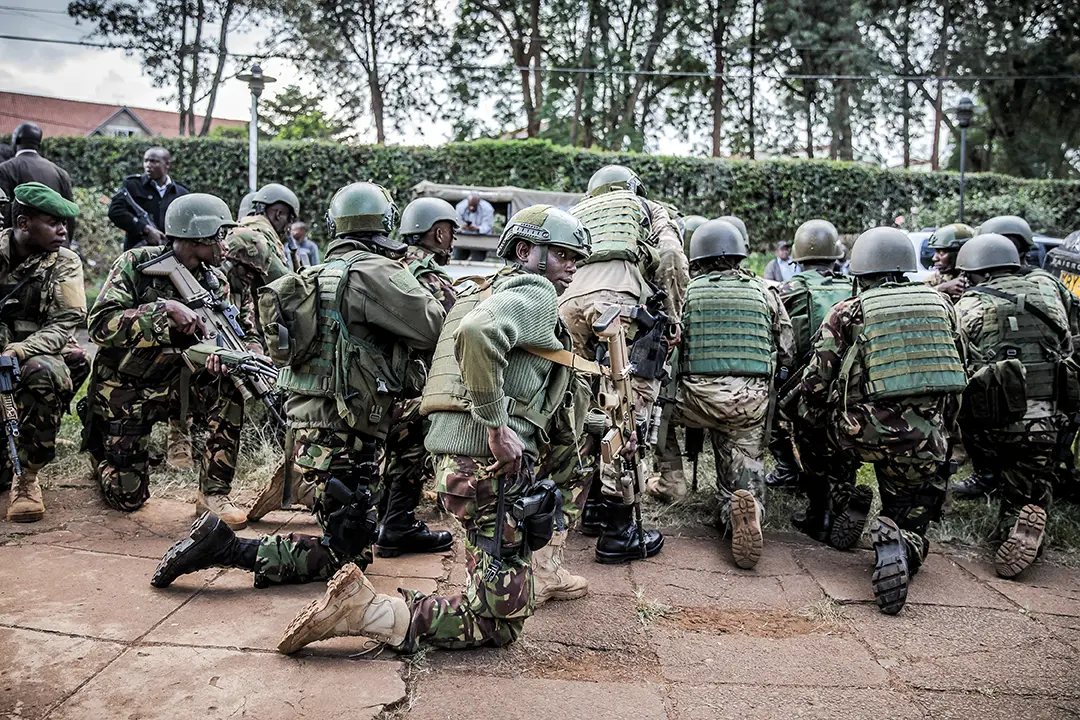
ADF: The threat along the northern border and the efforts by al-Shabaab to infiltrate and attack targets inside Kenya have been a constant challenge. Can you describe the progress in this fight and what role KENSOF is playing in defeating al-Shabaab?
Njeru: Al-Shabaab remains an adaptive and persistent adversary. However, Kenya has made significant progress in degrading their networks, denying freedom of movement and protecting local communities.
KENSOF plays a critical role in this effort by:
- Conducting intelligence-driven operations against high-value targets.
- Supporting border security operations in collaboration with other KDF formations, police, intelligence services and international partners.
- Executing precision missions that disrupt planned attacks before they materialize.
- Working closely with communities to strengthen resilience in border counties and to win the hearts and minds of the local population.
Our success is rooted in discipline, consistency and tight integration between SOF, intelligence agencies, local leadership and international partners. Although the threat persists, the capability of Kenyan forces, particularly SOF, continues to outpace the enemy’s ability to regenerate. We are determined, patient and unwavering in this mission.
ADF: Kenya Special Forces emerged within the past three decades. Can you explain how the specialty has grown and developed over that time?
Njeru: The evolution of Kenya’s SOF capability is one of the most significant military transformations of the past 30 years. We began with small, specialized units responding to emerging asymmetric threats. Today, we have an integrated Special Operations Forces Command with mature doctrine, modern equipment and mission-tested units.
Over time, several developments have shaped our growth, including:
- Professionalization of selection and training to produce elite operators.
- Institutionalization of doctrine to ensure that SOF roles are clearly defined within the national defense architecture.
- Enhanced interoperability with KDF services (the Army, Air Force and the Navy), intelligence agencies, and international partners.
- Operational experience, which has refined our tactics, techniques and procedures.
- We are still a young force by global standards, but we have grown with purpose and with clear strategic direction.
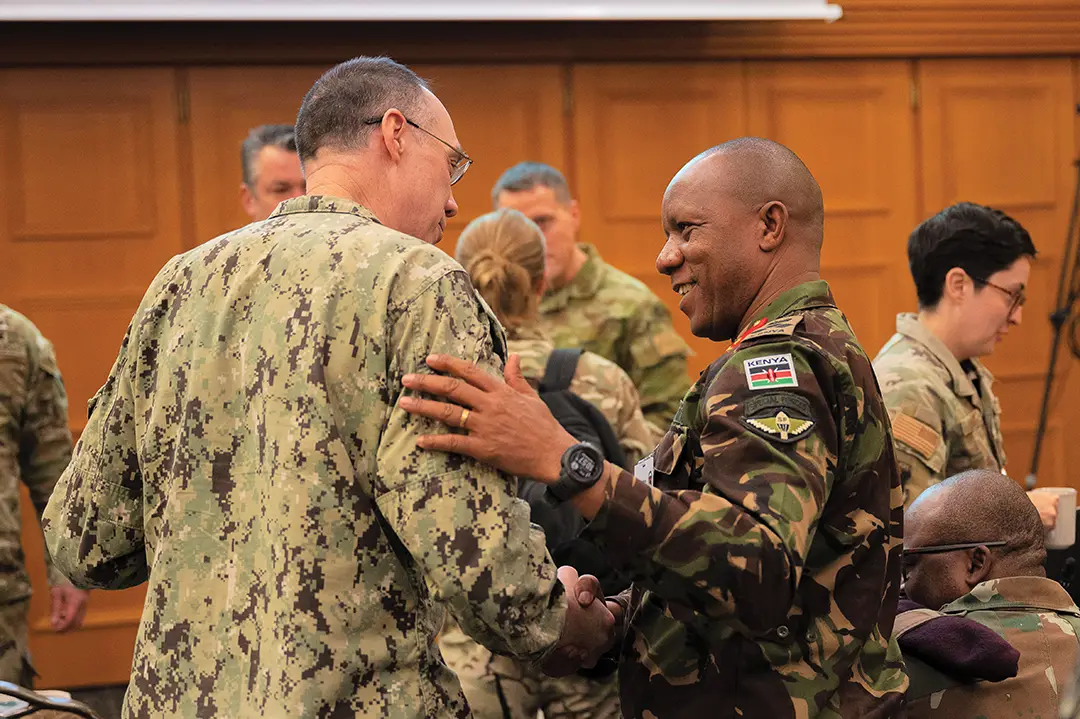
SENIOR AIRMAN TYLER McQUISTON/U.S. AIR FORCE
ADF: What is the next step in the development of SOF in Kenya? In what ways do you seek to improve?
Njeru: The next chapter for SOF in Kenya is about deepening jointness, promoting mentorship, accelerating modernization, and preparing for future threats that are more complex, hybrid and technologically enabled.
To accomplish these goals, we want to enhance intelligence fusion to build a seamless SOF intelligence ecosystem that shortens the decision cycle. We need to make advances in adopting technology to integrate AI-enabled systems, autonomous platforms and improved cyber-support capabilities. We must strengthen regional partnerships. Silent Warrior and similar platforms are examples that show Africa’s security future will be cooperative, not isolated. Finally, we should invest in human capital development. This will produce leadership, mental resilience and the special skills needed for emerging domains.
The guiding principle is simple: SOF must always be two steps ahead of the threat. Our development plan ensures that we remain agile, lethal and strategically relevant, both to Kenya and to the wider region.