

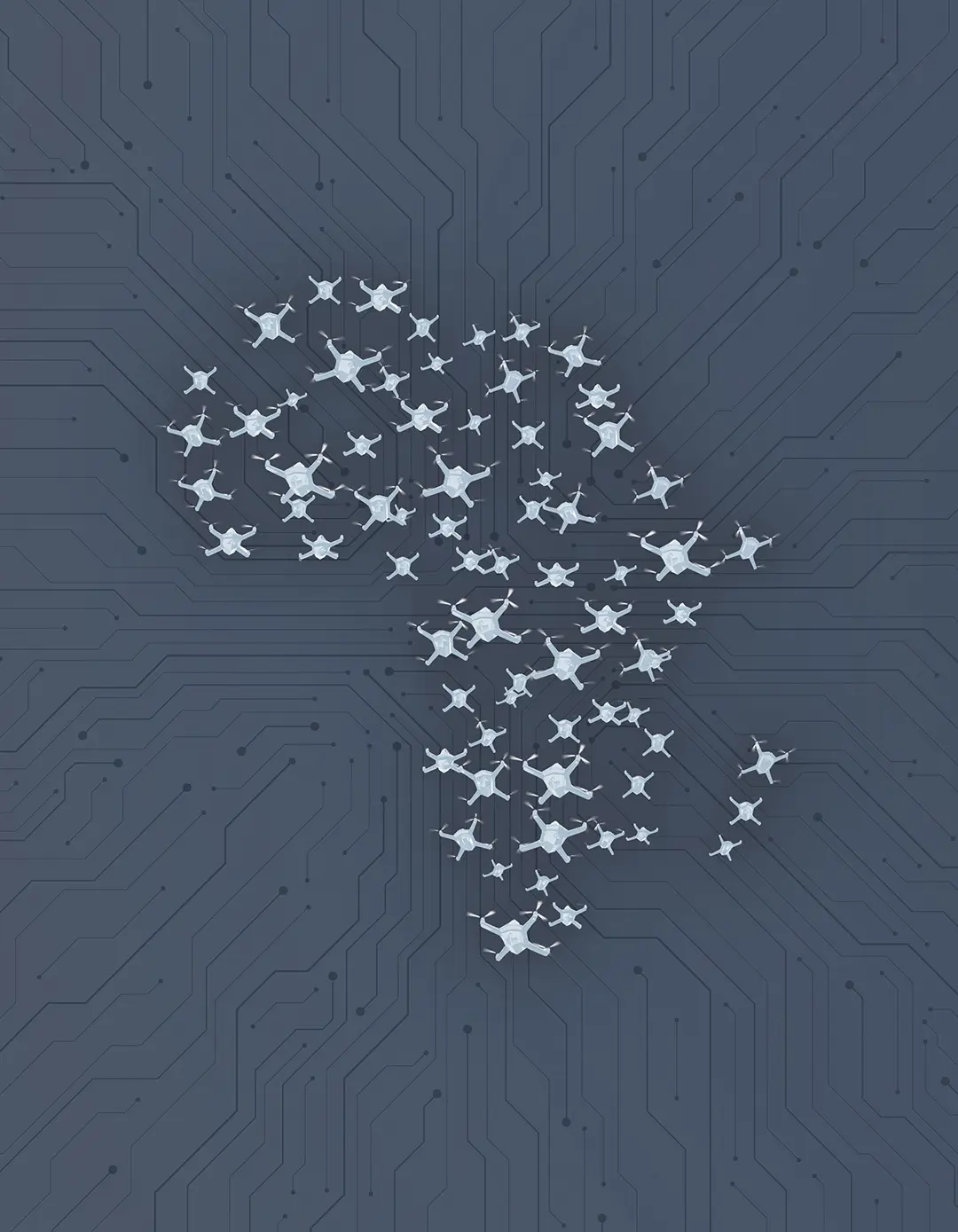
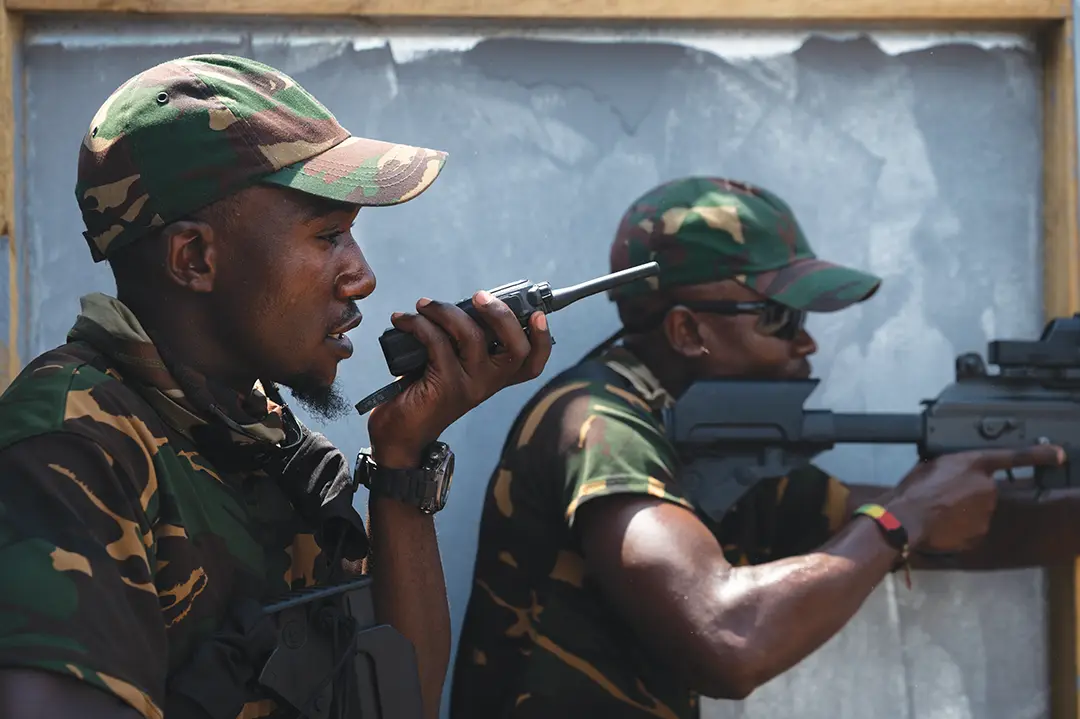
When it comes to communicating on the battlefield, special operations forces often rely on high-frequency radio.
But the Kenya Defence Forces (KDF) found that it had a problem with this vital tool. Over the years, Kenya has acquired devices from an array of manufacturers like Motorola, Hytera and Harris. These radios were effective, but they were not interoperable. They use different encryption, operate on different wavelengths and at different frequencies.
Fortunately, the KDF has its own solutions laboratory. The Communication and Information System Maintenance and Innovation Centre (CISMIC), created in 2021, develops and repairs electronic equipment and software for the military. It was tasked with solving the problem.
“The goal here is to make sure our troops in the field are secure,” Col. Stephen Kinyanjui, CISMIC director, told ADF. “So any communication between them is not intercepted by an adversary, and we do not end up having casualties because we were communicating in an insecure manner.”
The solution they developed is known as “Gate Bridge.” The tool can take a signal from one device, encrypt it and send it on to the next device in a protected and compatible form. KDF technicians conceived and built the tool using locally available parts and their own intellectual property.
Kinyanjui said it was important for the KDF to find a homegrown solution so Kenya would not need to rely on external donors and manufacturers.
STAFF SGT. AMBER LITTERAL/U.S. AIR FORCE
“When you do it yourself, the support and maintenance becomes integral to you, and you train your own teams and you ensure sustainability of the solution,” he said.
Kenya is following this model as it develops more technology to protect troops on the battlefield. Military technicians are testing counter-IED devices, satellite systems and technology to improve food security. The principle of self-reliance remains central, Kinyanjui said.
“When you retain the intellectual property, it becomes cheap,” he said. “The knowledge may even be available on open source, so it’s up to you to go and dig it out, work on it, perfect it and then give it out to the troops. That way we are able to sustain the solution.”
Across military branches, and particularly in special operations forces (SOF), technology is offering new possibilities and presenting new challenges. Operators are grappling with how they can best adapt to defend their nations in this rapidly changing landscape. They study how the changes will affect their mission or embolden their enemies.
“There is a technological improvement that we need so we can meet the threat of the terrorists who are already using this technology,” Col. Jerome Francis Nko’o Ella, commanding officer of Cameroon’s Bataillon d’Intervention Rapide Alpha Operation, told ADF. “We have to catch up, to close the gap.”
The Innovation Incubators
SOF operators often are among the first to adopt new technology. Because they tend to work in small units on high-risk missions and far from central command structures, they need tools that give them an edge.
Forward-deployed SOF units have a history of testing military technology before it is distributed to the wider force, earning them the name “innovation incubators.” One example came in 1990, when GPS technology first was used in combat during Operation Desert Storm. This let operators navigate behind enemy lines and conduct reconnaissance. Today, GPS technology is ubiquitous.
Experts view SOF as the best option for rapid prototyping for the same reasons they are selected for high-risk missions: “their maturity, flexibility, rigorous selection processes, and potential for risk-tolerance,” wrote Leo Blanken, Philip Swintek and Justin Davis for War on the Rocks, an online analysis platform.
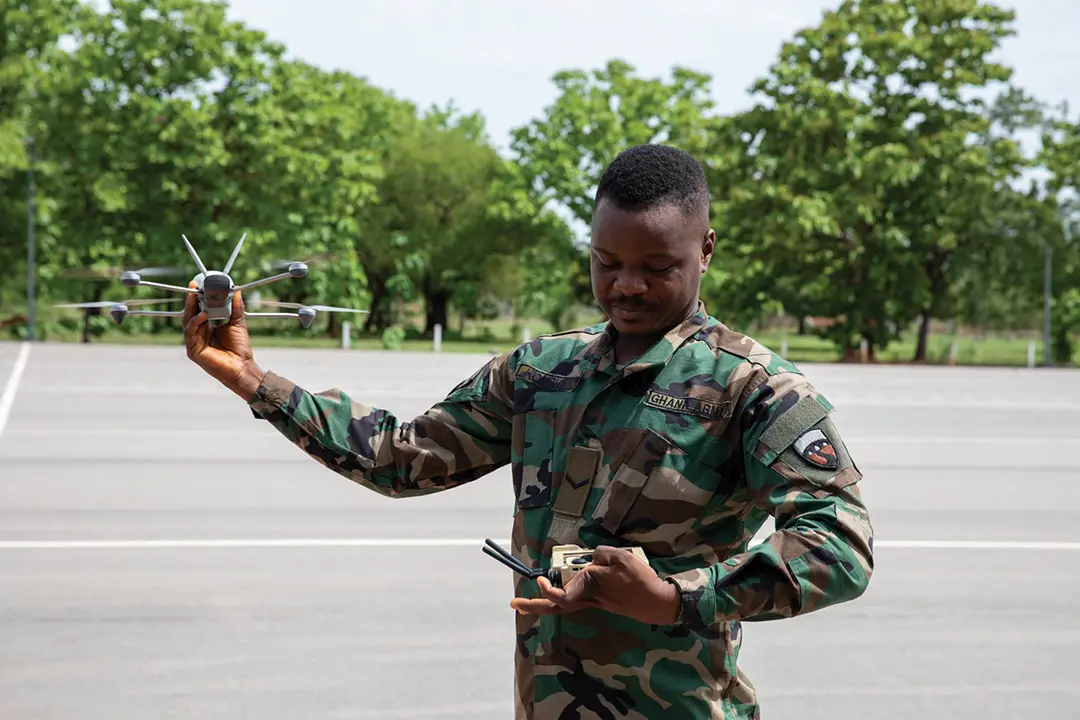
Technology is changing the world of SOF operators in a number of ways.
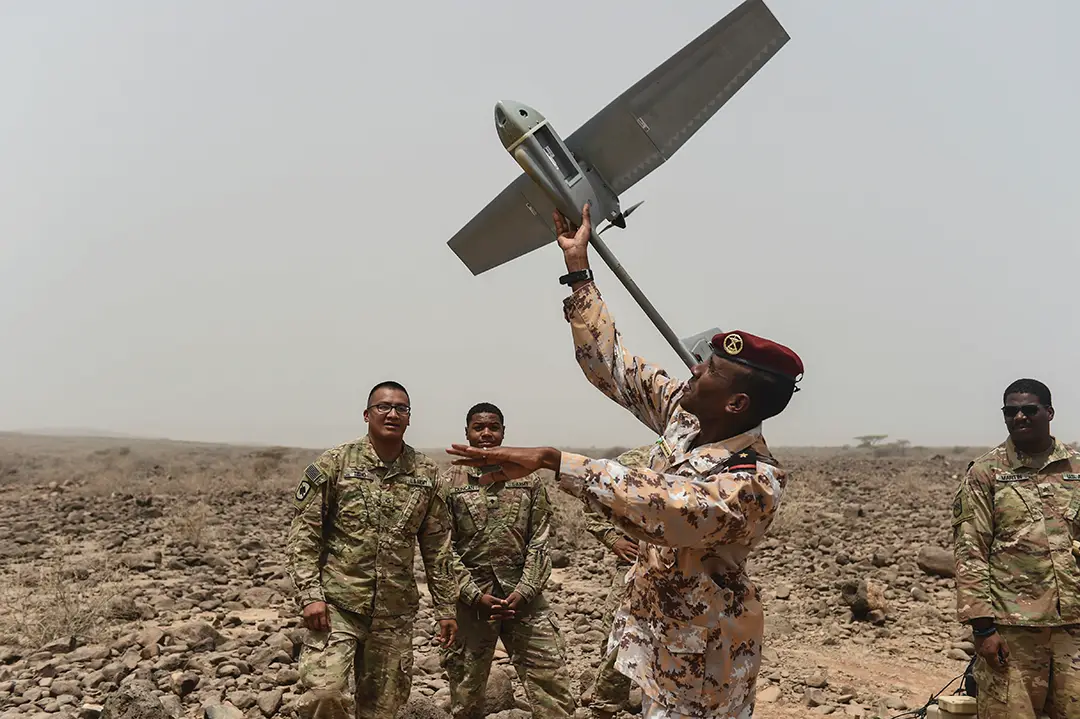
Unmanned aerial systems (UAS) are used for surveillance and to identify targets, provide early warnings of possible attacks and offer aerial support for ground teams in hostile territory. SOF operators also are on the forefront of testing anti-drone technology, including hand-held jammers to counter attacks.
Artificial intelligence shows promise for a variety of uses. It can help operators predict what adversaries will do. It can be integrated into legacy systems to make them more efficient and aid decision-making. It also can help operators sift through mounds of intelligence. It improves cybersecurity and logistics by anticipating failures and weaknesses before a breakdown occurs.
Digital situational awareness tools have SOF operators testing wearable technology that lets them identify friendly Soldiers, map terrain and plot enemy positions. Some devices offer augmented reality, which projects information onto a headset. Additionally, the “sensor-to-Soldier” delivery time is speeding up with data acquired from hardware like UAS and manned aircraft that can be accessed nearly instantaneously.
For Kinyanjui, a culture of innovation and flexibility is key. If forces are not adapting, they’re vulnerable.
“I believe without embracing technology you are going to be left behind,” he said. “If you continue using traditional methods, the individuals themselves will become exposed. When you innovate you are looking for a better way to keep your troops protected.”
Doctrine and Training
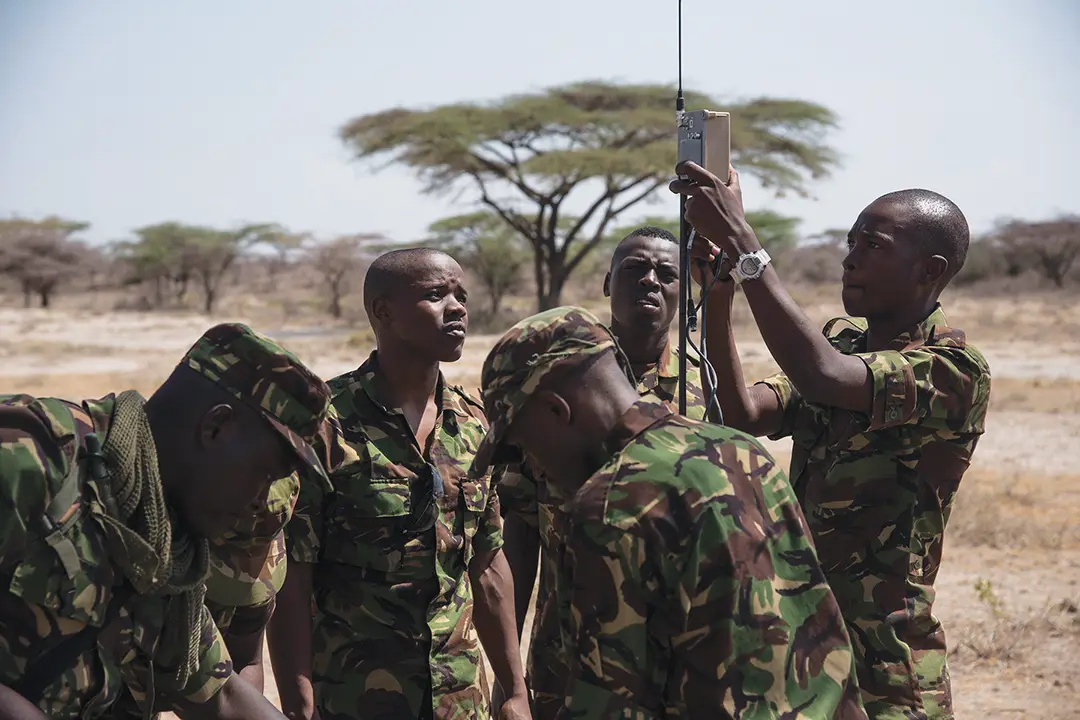
As new technology makes its way to the battlefield, experts believe doctrine and training must keep up. SOF operators already train with advanced simulations that create scenarios with inputs from real, complex missions. SOF training incorporates cyber skills; intelligence, surveillance and reconnaissance techniques; and UAS. Experts say commanders must embrace and empower young tech-savvy operators and prioritize the recruitment of those who have tech skills.
Retired U.S. Vice Adm. Collin Green of DZYNE Technologies said SOF commanders should recognize that young people coming up through the ranks are “digital natives” who use technology “like a fifth limb.”
“Don’t be insecure as a leader; be willing to tap into the well of local talent,” Green said during the Silent Warrior 25 SOF symposium in Nairobi. “Encourage young people to be creative with military solutions.”
STAFF SGT. TIFFANY DENAULT/U.S. AIR FORCE
An essential part of this is making cybersecurity and awareness a priority. SOF needs to stay ahead of bad actors who seek to infiltrate and disrupt. Terrorist groups, criminal organizations and state-sponsored hackers target military personnel, computer systems and hardware. In South Africa, for example, military and government agencies report an average of 1,450 cyberattacks per week. Command, control and communications systems; supply chains; and even weapons technology are in hackers’ crosshairs.
“Cyber should start with defense first and foremost,” Green said. “Do you know what’s in your fence line, in your supply chains? Do you protect your tactics, techniques and procedures? It’s really hardening yourself first and foremost before you look at what you’re going to do on the offensive end.”
Some of this will require updating doctrine. Kinyanjui advocates written processes that state how emerging technology should be used and protected. This document can be updated as necessary.
“You need to embed it in the doctrine; it needs to be documented and put in your way of operating,” Kinyanjui said. “If you don’t embed it in your procedures and processes, it can be used by one group of special forces, but when you are gone, it’s not there.”
Tech That Elevates the Warfighter
As technology plays an increasing role in SOF operations, some operators are referring to a foundational SOF truth published by U.S. Special Operations Command: “Humans are more important than hardware.”
This means that, although technology can help, it is the skill, judgment and courage of the operator that determines a mission’s success.
“SOF operators are the decisive ‘technology’ in any mission,” the think tank website Battelle Insider wrote in an essay series examining warfighter health optimization. “They integrate and operate advanced systems. They interpret chaotic, ambiguous environments. They make rapid, high-stakes decisions under extreme pressure. And they adapt in ways that machines and platforms cannot.”
Likewise, Green said SOF is going through a “renovation period,” adding that it is important to double down on its strengths, like cultural knowledge and on-the-ground expertise, while adapting, evolving and adding new capabilities.
“Control what you can control, remain intellectually curious, have a culture of experimentation,” he said. “Embrace the uncomfortableness.”
As new technology changes the battlefield, SOF’s high standards of performance and professionalism must remain intact, Lt. Gen. John Omenda, vice chief of the KDF, told attendees at the SOF conference in Nairobi.
“Silent warriors operate in areas where complexity is greatest and the margins for error are very small,” Omenda said. “It is in this demanding environment where discipline, integrity, respect for human rights and adherence to international norms must remain uncompromised. Tools may shift, but character remains.”