
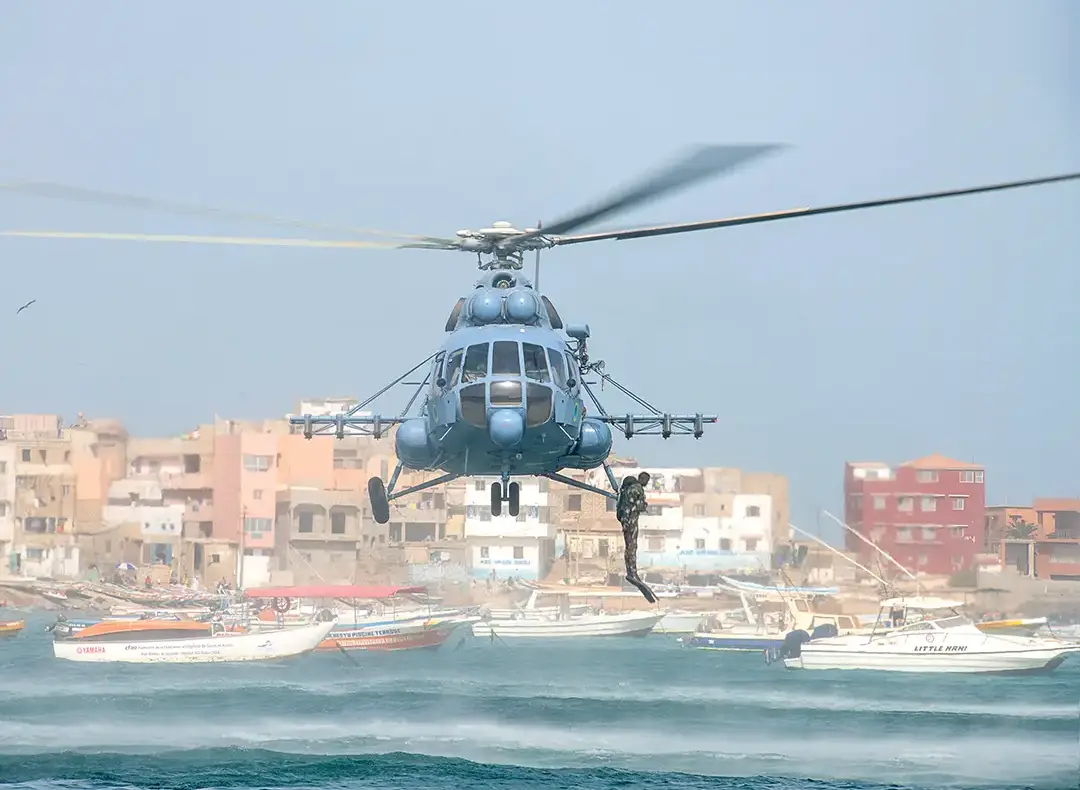
In 2005, terrorism was just beginning to take root in the Sahel and threatening other parts of the continent. As terrorist groups expanded their operations, the United States and its West African partners launched a military exercise specifically designed to combat them. The exercise has endured ever since.
Libya and Côte d’Ivoire co-hosted the 2026 iteration in April. The arrangement bridged a gap in continental security by connecting North African security forces to West Africa’s coastal nations. It marked 21 years of African countries building Flintlock into an institutionalized special operations platform against terrorist groups.
“It helps us build and reinforce the capability of our (special operations forces) unit in order for them to be able to fight effectively against terrorist groups,” Lt. Col. Kitcha Sekongo of Côte d’Ivoire said at a Flintlock planning session in 2024. “Being an international exercise, it also helps us build the right coalition and build partnerships in order to stand united against this threat.”
Exercise Flintlock has become U.S. Africa Command’s premier annual special operations exercise. It brings together more than 30 African, Western and other nations to strengthen security, counter terrorist organizations and improve interoperability. It focuses on improving operational independence, human rights, and regional stability in the Sahel and surrounding regions. It gets its name from an early type of firearm and has come to symbolize the “lock, stock and barrel” of fundamental training.
Each Exercise Flintlock reflects the recent history of the continent. Flintlock launched in 2005 with five African countries as Sahelian threats from al-Qaida in the Islamic Maghreb and other terrorist groups emerged. The 2015 exercise took place while Boko Haram threats unfolded, marking Flintlock’s shift to real-world scenarios.
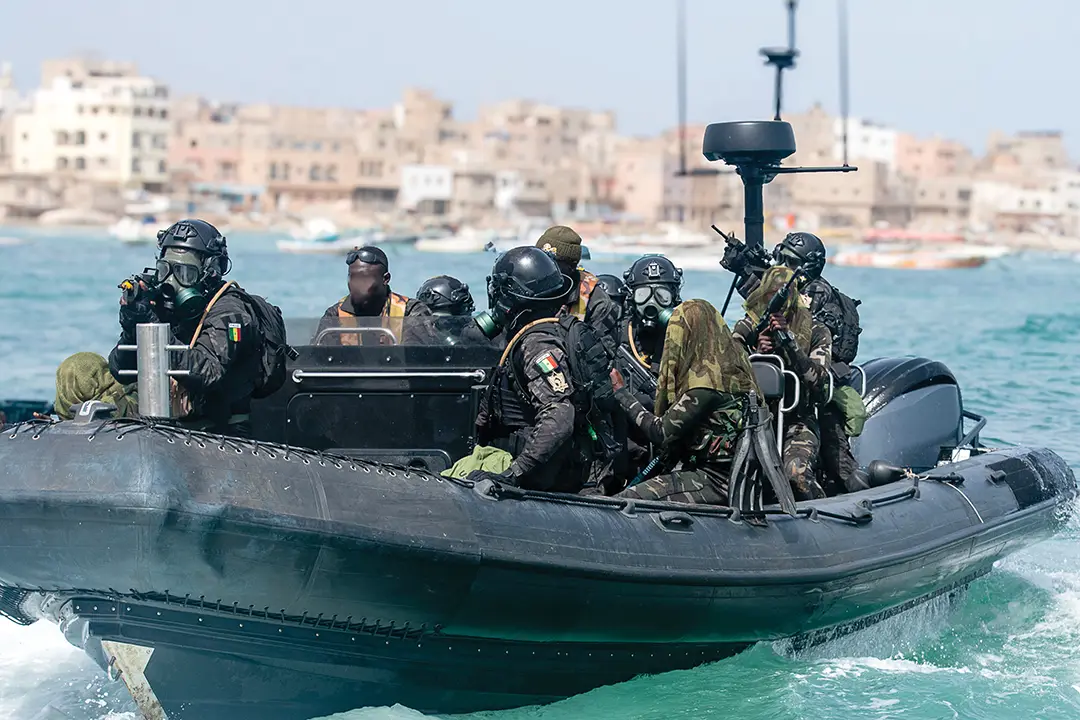
Flintlock was the only U.S.-led annual exercise on the continent conducted in 2020 during COVID-19. The exercise was hosted in Mauritania with an outstation in Senegal. Morocco and Senegal acted as counterterrorism and regional cooperation trainers, a first since Flintlock’s inception.
Côte d’Ivoire and Ghana have hosted the exercise multiple times. Over the years, host countries also have included Algeria, Cameroon, Chad, Mali, Mauritania, Niger, Nigeria and Senegal.
Flintlock 2026 came amid unprecedented terrorism threats across Africa. Sahel violence from Jama’at Nusrat al-Islam wal-Muslimin (JNIM) and other groups spills toward coastal ports. The Lake Chad basin has become a haven for extremist activity. Libya remains contested by terrorists and malign actors.
As a collective, Flintlock’s African participant countries confront an increasingly dangerous environment in which shared threats demand shared solutions. Flintlock goals focus on three capacities: interoperability across doctrinal divides, intelligence-driven operations against cross-border networks and civil-military resilience that protects communities. African countries also drive continuity, choosing partnership through crises.
The exercises are about continental and global threats. “You can see the whole spectrum, and it’s not just West Africa,” a Ghanaian military officer told Joy News, a TV news station and website in Ghana, during Exercise Flintlock 2023. “It’s a global thing. I mean, there’s a time not to just think about yourself, because if it attacks you, it attacks everybody.”
African security forces face stark communication challenges. Languages spoken at Flintlock include English, French, Portuguese, Arabic and a multitude of African native languages such as Hausa and Swahili. The different languages present problems with communication and command terms. Incompatible radios and communications systems can present more problems. A Chadian intelligence tip might reach Ghanaian operators through three languages and mismatched formats.
Flintlock bridges these gaps. Mixed planning cells embed interpreters. Standardized map symbols and situation templates overcome technical differences. Drills prioritize “low-tech, high-trust” tools — high-frequency radios, human couriers, paper maps — realistic for West African outposts without satellite links.
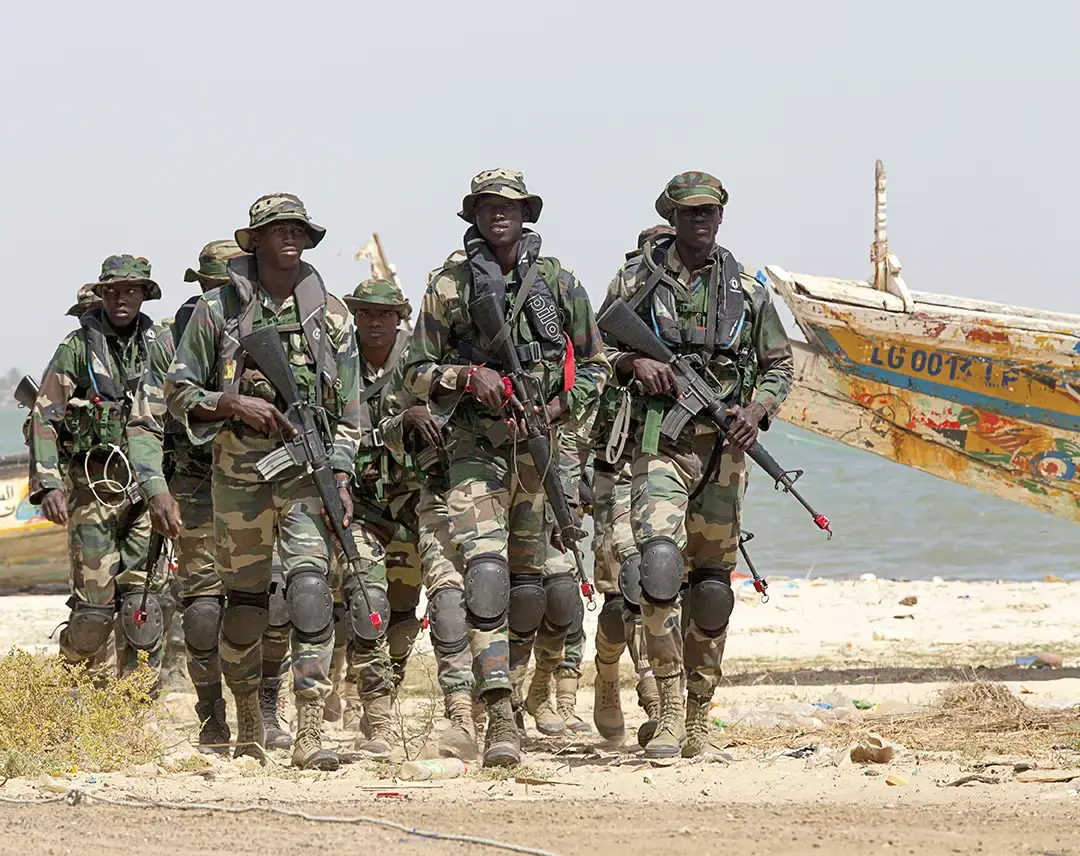
“We must be able to fight with what we have, but think together with what we share,” a West African special operations forces commander emphasized.
Participants say the annual event facilitates intelligence sharing on the continent.
“Something that’s fundamental in the fight against terrorism is this information-sharing — it’s essential,”
Chadian Brig. Gen. Zakaria Ngobongue told ADF during Flintlock 2015. “If we don’t share information, we’re never going to get to our final stage. Flintlock is exactly what we needed, the right time and place, together. We share information and put into practice this sharing of information.”
Live scenarios push trust beyond words. Soldiers from different countries witness each other’s competence under pressure.
“We don’t always have the opportunity to blow up a vehicle, so it’s a sizable learning experience to see the life-size explosion,” said Maj. Issa Diack of the Senegalese National Police during Flintlock 2016.
Across 20 years, Flintlock has trained multilingual officers who operate joint staffs post-exercise, turning barriers into an advantage of multilingual units that can outmaneuver terrorist organizations. Officers who sustain joint operations after the exercise are crucial.
Picture Ghanaian drones tracking a terrorist arms convoy from one West African country while Benin’s border patrol relays positions by radio. Togo’s quick reaction force might cut off escape routes. French-speaking Beninese might write English summaries; interpreters could relay live raid commands. That is interoperability. In Sirte, Libya, eastern and western units might combine local terrain knowledge with Moroccan signals intelligence to defend oil infrastructure, practicing civilian evacuations around live pipelines. That is intelligence fusion.
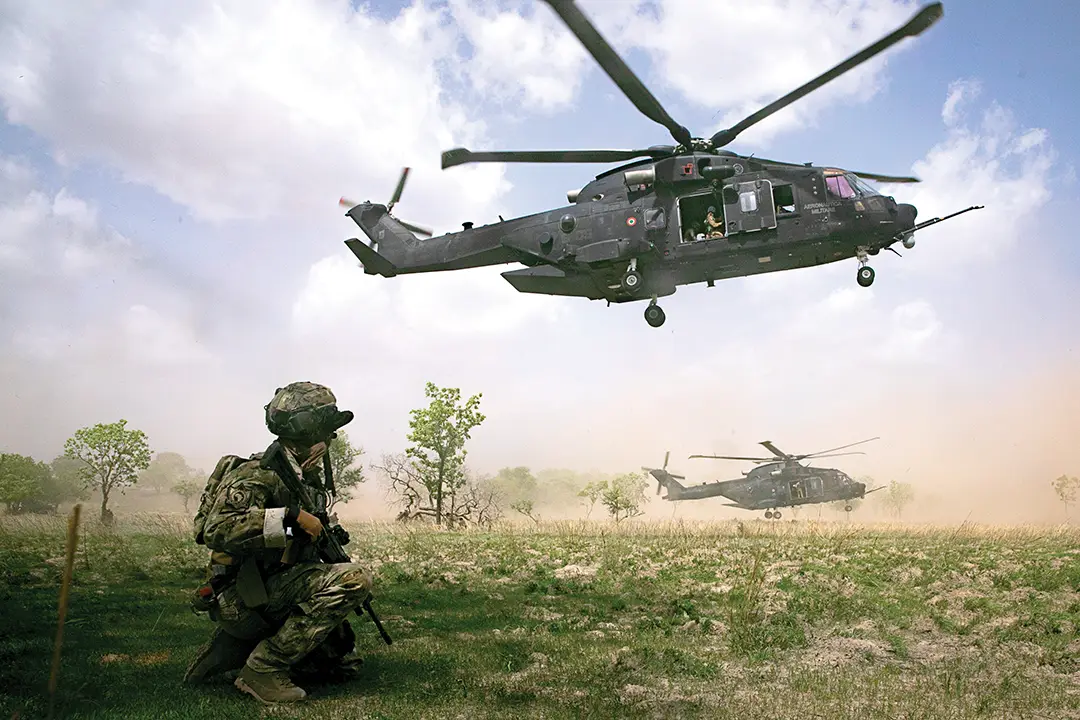
PFC. HANNAH BECKER/U.S. ARMY
In Côte d’Ivoire’s north, Guinean, Ivoirian and Senegalese security forces might clear villages, fuse local tips with satellite imagery, secure schools and coordinate programs for young people that mirror Abidjan’s border youth initiative. That is civil-military resilience.
Each scenario forces African countries to solve problems they have faced, such as language gaps, intelligence mismatches and civilian complexities. Officers leave with procedures that work year after year.
In 2023, Ghanaian Col. Richard Mensah shared lessons learned in Flintlock. “We cannot throw our hands in the air saying that, because terrorism is happening and we’re not achieving much, we should go to sleep,” he said, as reported by the website Joy News. “Special Operations are not created in emergencies. We must continue to train. Training is everything, and everything is training. We have to get our guys ready to be able to deal with the terrorists. These insights help us to build partnership exchanges, intelligence, and ideas and experience to be able to surmount some of the challenges.”
Many African countries have maintained partnerships through genuine hardships: coups in the region, unrest and economic challenges.
Flintlock exercises have crossed linguistic and governance barriers amid terrorist threats. Democracies have deepened preventively; combatants have built sustainably. Post-2022 Flintlock has had stable country participation despite some Sahel withdrawals. In most cases, national interests have prevailed over politics.
This year’s Exercise Flintlock helped African militaries face terrorist groups with coastal ambitions, emboldened by Sahel safe havens. Flintlock endures because African security forces made it theirs.
ABOUT THE AUTHOR: Pearl Matibe is Zimbabwean-born international security analyst with expertise in U.S.-Africa defense cooperation and military capacity building. She hosts The Shaka Spear podcast, where she analyzes U.S.-Africa security assistance, security cooperation, U.S. Africa Command partnerships, African special operations forces and evolving terrorism threats. Her work includes defense briefs and analytical studies for policy and security stakeholders. Matibe holds a bachelor of arts in government and international politics and a master of arts in international security, with a concentration in intelligence studies.