

ADF STAFF
Industrial development is booming across much of Africa, and with it comes the use of hazardous chemicals and other sensitive material.
Terrorist groups covet many of these “dual-use” items for use in attacks. Chlorine gas, for example, is commonly used in water treatment but can be weaponized to deadly effect. Medical research uses radiological and biological materials that can be dangerous in the wrong hands.
“The same materials that strengthen healthcare, scientific research, mining and industry can also become security risks if poorly managed,” Mubarak Aliyu, a Nigeria-based political and security risk analyst, told Al Jazeera.
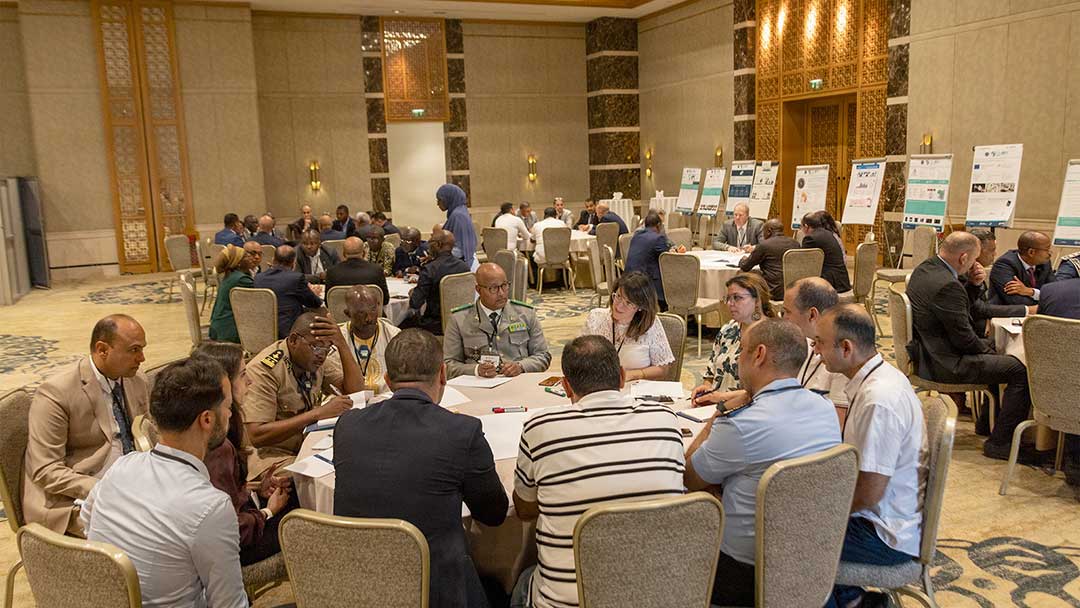
To combat this threat, more than 100 professionals from across the continent gathered in Tunis for Africa Shield 2026, a regional counterproliferation workshop. Participants represented the military, law enforcement, policymakers and international oversight bodies.
The U.S. Defense Threat Reduction Agency (DTRA), with help from the European Union and United Nations agencies, funded and organized the three-day conference. Participants discussed a range of topics, including:
Border management and supply chain security: Countries are working to tighten controls at border crossings and are sharing best practices to stop nonstate actors smuggling sensitive materials.
Intelligence flow and incident response management: Information sharing and coordination will improve responses to potentially dangerous incidents.
Export controls and dual-use technologies: Strengthening regulations and enforcement helps prevent the illicit transfer of sensitive materials.
Chemical, biological, radiological and nuclear (CBRN) crime investigation and counter-proliferation financing:Security professionals are updating investigative skills and collecting information needed to disrupt financial networks that enable proliferation.
The meeting also emphasized the implementation of U.N. Security Council Resolution 1540, passed in 2004, which calls for information sharing, interagency coordination, border management and regional cooperation to combat the threat.
Attendees said events like Africa Shield are key to strengthening the network of professionals that stops hazardous items from being diverted or stolen.
“This initiative has enabled African countries to clearly demonstrate their ownership of the counterproliferation problem set,” said Maj. Brittany Brown of DTRA’s Africa counter-weapons of mass destruction (CWMD) program. “The networks and collaboration created and endorsed at Africa Shield are unmatched, allowing our foreign partners to effectively fight against adversarial networks.”
Countries across Africa are also working to strengthen domestic safeguards. After Africa Shield, the Nigeria Police Force held a CWMD curriculum development workshop in Abuja. The event, held in partnership with DTRA, was part of a train-the-trainer initiative to heighten awareness and strengthen the ability of police across the country to respond to chemical, biological, radiological, nuclear and explosive threats.
“The evolving nature of weapons of mass destruction demands proactive policing, continuous operational training and deeper inter-agency and international collaboration,” Nigeria’s Deputy Inspector-General of Police in charge of Operations Umar Shehu Nadada said at the beginning of the event.
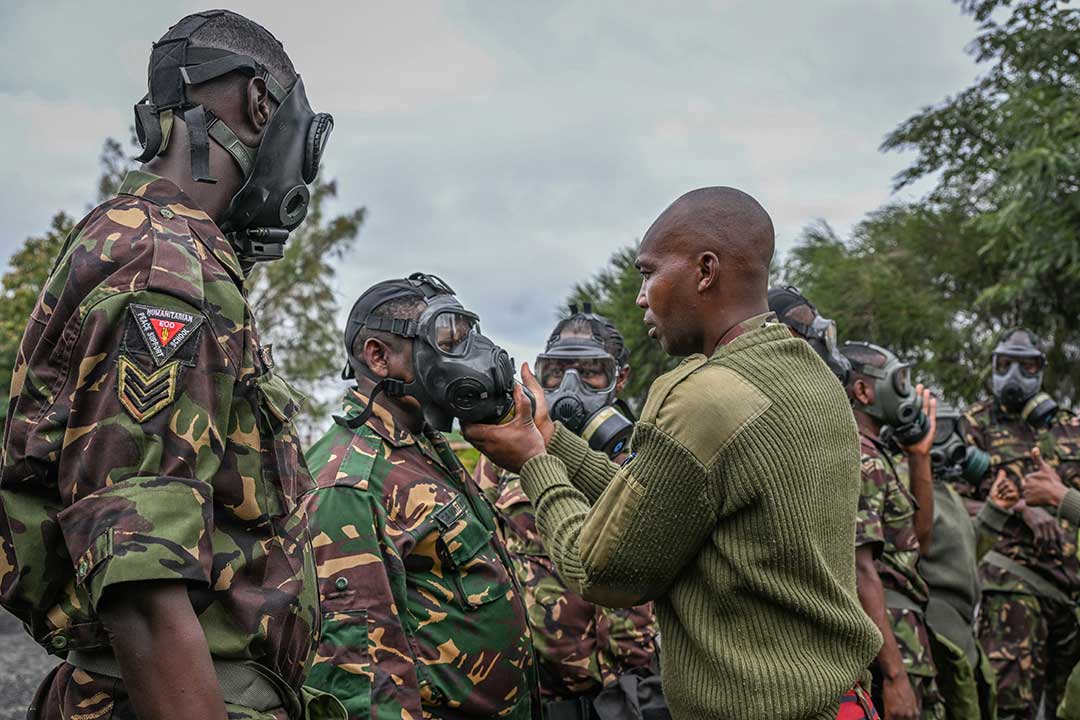
In Kenya, the military, police and civilians have held a number of training events. The country formally unveiled its first comprehensive CBRN National Action Plan last year. During the annual Exercise Justified Accord in Nairobi, U.S. Soldiers trained alongside members of Kenya’s Disaster Response Battalion to prepare for CBRN threat scenarios.
Experts believe CBRN safeguards and awareness need to be part of a whole-of-government approach that prepares for threats without impeding lawful economic activity.
“The challenge is not to restrict development, but to ensure that innovation is matched by effective oversight, secure handling practices and robust regulatory systems that prevent diversion or misuse without slowing economic progress,” Aliyu told Al Jazeera.