

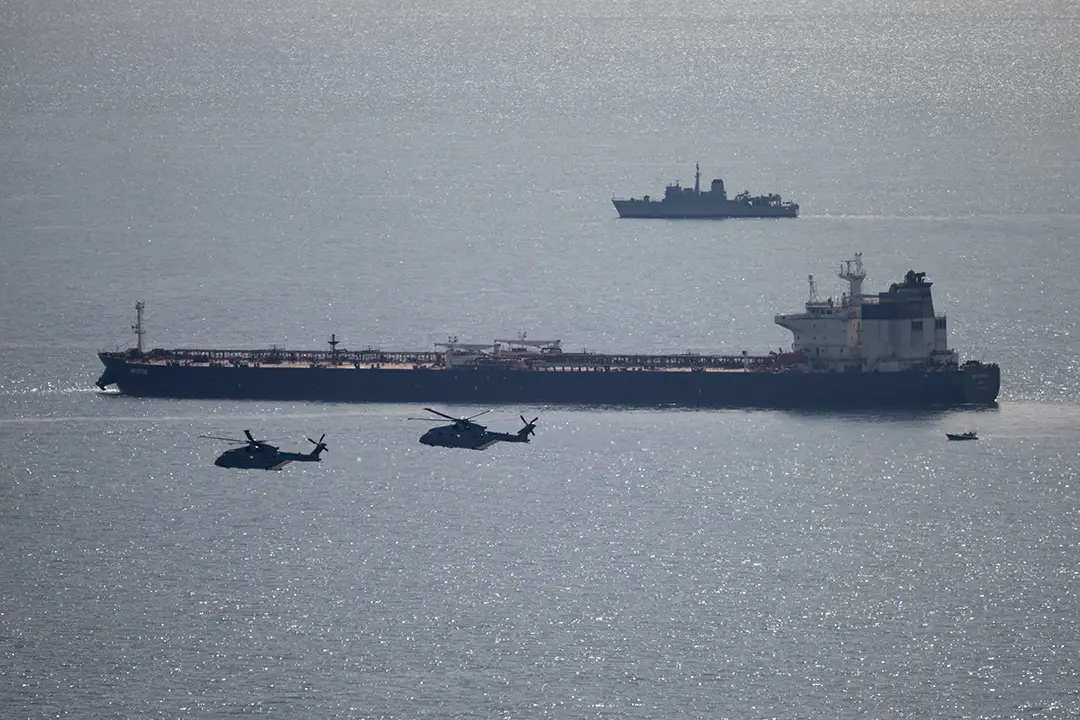
Cameroon is working to deregister and sanction foreign vessels that illegally register with the country to avoid detection. These shadow fleet tankers often carry Iranian, Russian and Venezuelan oil and have long abused the country’s flag to avoid sanctions.
The reforms include suspending new registrations of vessels operating outside Cameroonian waters and auditing the country’s shipping register. Cameroon is making the changes following pressure from the European Union and the International Maritime Organization. Authorities also are pushing to strengthen the country’s digital vessel registration process to reduce fraud and improve traceability.
“Although commendable, these reforms alone cannot end the exploitation of Cameroon’s registry,” wrote Raoul Sumo Tayo, a senior researcher at the Institute for Security Studies (ISS). “Legislative change, due diligence and beneficial-owner verifications tackle one part of the problem, but don’t address counterfeit certificates, fraudulent websites, compromised digital identities, or vessels misrepresenting Cameroon as their flag state.”
Brokers in Georgia, Montenegro and Türkiye have used pirated digital platforms to forge the signatures of Cameroon’s maritime district heads to get phony registration certificates, bills of payment and other documents, ISS Today, an ISS publication, reported.
Cameroon is one of several West African countries that has fallen prey to the “flags of convenience” systemin which a vessel flies the flag of a country other than the one that owns it. Shadow fleet vessels also engage in “flag hopping,” which refers to routinely registering with new flag states to avoid detection.
Yaoundé’s flag registry is considered one of the world’s highest-risk registers, according to Lloyd’s List, a digital maritime news platform. Clarksons Research reported in February 2026 that Cameroon experienced a 126% increase in ship registries over the previous 12 months.
Foreign ships abuse Cameroon’s registry due to governance failures, inadequate administrative, technical and social controls. Vessel ownership is difficult to verify because shadow fleet tankers usually are affiliated with complex business schemes. According to Tayo, 100 vessels have been linked to the Russian shadow fleet since December 2025.
“Cameroon’s maritime administration lacks the capacity to verify potential links with a sanctioned entity, access platforms to review a ship’s flag history, and subscribe to basic compliance review tools,” Tayo wrote. “Also, the country is not technologically capable of monitoring its registered ships daily.”
Russia’s shadow fleet consists of up to 591 ships that carry up to 4.1 million barrels of oil a day, although some now carry natural gas. The fleet, which operates globally, generates up to $100 billion in revenue annually.
According to Bloomberg, 11 of 14 tankers flying the Cameroonian flag in 2023 could be traced to Russian oil ports. In 2024, The Maritime Executive reported that Cameroon was widely regarded as a safe haven for Moscow’s ghost fleet.
“Historically, ships registered in Cameroon have been linked to other oil smuggling operations, particularly in Iran and Venezuela,” the newspaper wrote.
Iran, which also relies heavily on oil exports, operates about 170 shadow vessels, according to S&P Global, a financial data and analytics company. Tehran’s oil exports totaled about 1.6 million barrels per day in 2024 and 2025, up from 434,000 daily barrels in 2020. The shadow fleet carries most of the Iranian oil. Both fleets mostly consist of aging oil tankers that often operate without proper insurance coverage.
Shadow fleets operating in Cameroon also are accused of facilitating sea crimes such as illegal, unreported and unregulated fishing and drug smuggling. The country loses about $33 million annually to illegal fishing.
In August 2025, Cameroon removed from its registry the Sky White, which was registered as a fishing vessel under the Cameroonian flag. The vessel was removed after a joint operation by Moroccan, Spanish and United States navies discovered 3 tons of cocaine on board, Cameroon’s Le Continent magazine reported.
Experts say Cameroon must do more than update its registry to properly surveil its waters.
“For Cameroon to turn its vulnerabilities into a regional model for modernizing maritime governance, a specialized merchant navy corps is needed with control capabilities, compliance tools and real-time tracking systems,” Tayo wrote.
Tayo also suggested that Yaoundé optimize collaboration with international partners to improve maritime security and connect with the International Maritime Organization’s Global Integrated Shipping Information System to access vessel flag histories before the ships are registered.