

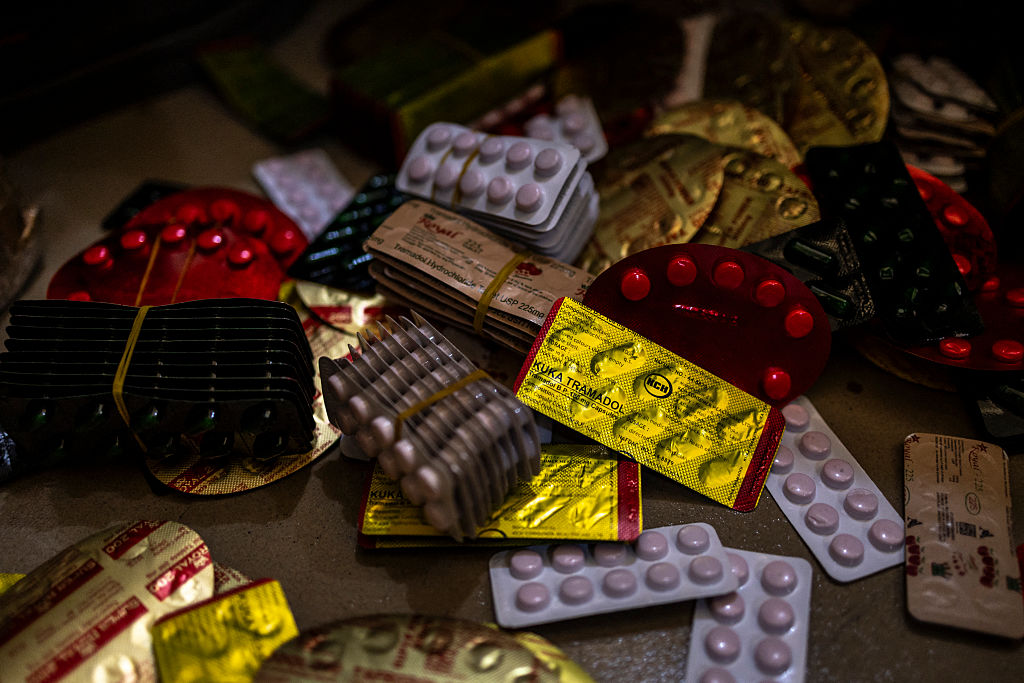
Nigerian authorities arrested a Chinese grandmother in mid-May when they discovered more than 1,825,000 tablets of Indian tapentadol worth nearly $1.6 million in her luggage.
Tapentadol is a strong, highly addictive synthetic opioid that is often added to kush, a synthetic drug. Kush looks like marijuana but can be 25 times more powerful than fentanyl. Often called the “zombie drug” for the debilitating effects it has on users, kush has fueled a synthetic opioid epidemic that has ravaged West African communities for several years.
In April, Bellingcat, a Netherlands-based open-source investigative cooperative, reported that Indian companies shipped more than 320 million tapentadol pills worth almost $130 million to West Africa between January 2023 and December 2025. In May, Agence France-Presse (AFP) reported that shipments of Indian tapentadol were being delivered monthly to Ghana, Nigeria and Sierra Leone. Indian tapentadol also has been seized in Benin, Côte d’Ivoire, Guinea, Liberia and Senegal.
Ansu Konneh, director of mental health at Sierra Leone’s social welfare ministry, told AFP that the addition of tapentadol to kush is “very alarming.” Konneh said bodies of kush users are found in public areas daily and that more than 400 were collected over a recent three-month period in Freetown, the national capital.
“They grind it and mix it with kush,” Freetown-based public health researcher Ronald Abu Bangura told AFP, adding that tapentadol is “being misused all over the place.”
In late April, Ghanaian authorities arrested four people after seizing 5 million tapentadol tablets on a 40-foot trailer bound for Niger. Ghana’s Narcotics Control Commission did not specify the origins of the shipment, but most intercepted tapentadol deliveries in the country have been traced to India-based pharmaceutical exports, according to News Ghana.
So many young people use illegal opioids in the northern Ghanaian city of Tamale that a voluntary task force was created to raid drug dealers and rid the streets of pills mixed with tapentadol and carisoprodol, a muscle relaxant that is banned in Europe. According to the BBC, the potentially deadly combination of these drugs is not licensed for use anywhere in the world.
“The drugs consume the sanity of those who abuse them, like a fire burns when kerosene is poured on it,” Alhassan Maham, a city chief in Tamale, told the BBC.
Last year, India announced a zero-tolerance crackdown on the export of high-strength tapentadol amid concerns that it was being misused or rerouted into illicit supply chains, but the issue persists. An AFP investigation showed that some shipments were labeled as “Harmless Medicines for Human Consumption” in order to pass customs checks.
Indian companies such as Gujarat Pharmaceuticals, Merit Organics, McW Healthcare, PRG Pharma and Syncom Formulations have been linked to tapentadol deliveries to West Africa, the investigation revealed. Information from the export monitoring database Volza showed that McW Healthcare shipped dozens of consignments of 250 milligram tablets worth more than $1 million to Sierra Leone and Nigeria after India’s crackdown, AFP reported.
In January 2026, Kuwaiti authorities seized tapentadol tablets with a Syncom Formulations licensing number on a Beninese traveler. According to AFP, Syncom is the largest tapentadol exporter to West Africa by value. In February alone, $15 million worth of tapentadol was shipped to the region, much of it labeled as harmless to humans.
Tapentadol is attractive to users because it can cost less than a meal, and it is often taken to help perform grueling physical tasks. It is popular among motorbike taxi riders, market porters and gold miners. In Nigeria, opioids are the second-most abused drug behind cannabis. Femi Babafemi, director of media and advocacy at Nigeria’s National Drug Law Enforcement Agency, told AFP the country seized 2 billion high-strength tapentadol pills in 2023 and 2024.
“Kidnappers, terrorists and bandits use these drugs so they can carry out their nefarious activities,” Babafemi said, adding that Boko Haram fighters and other terrorists often take it “for courage.” The pills also are used to pay ransoms for kidnappings.
Throughout West Africa, tapentadol typically is sold as tramadol, but experts say it can be up to three times more powerful.
“Indian pharmaceutical companies began exporting vast quantities of tramadol to west Africa, often at potency levels far beyond what was considered safe for human consumption” about 15 years ago, Vanda Felbab-Brown, a senior fellow at the Brookings Institution, told AFP. “Domestically they could not sell such potent tramadol but they were indifferent to what was well known to stimulate substance-use disorders in their export markets.”
Observers say schoolchildren are using the drug in some West African communities.