

African countries share many challenges that no single country can solve alone, from terrorism and drug trafficking to illegal fishing and weak border security. As they confront those challenges, nations often struggle to deploy their most effective weapon: trust.
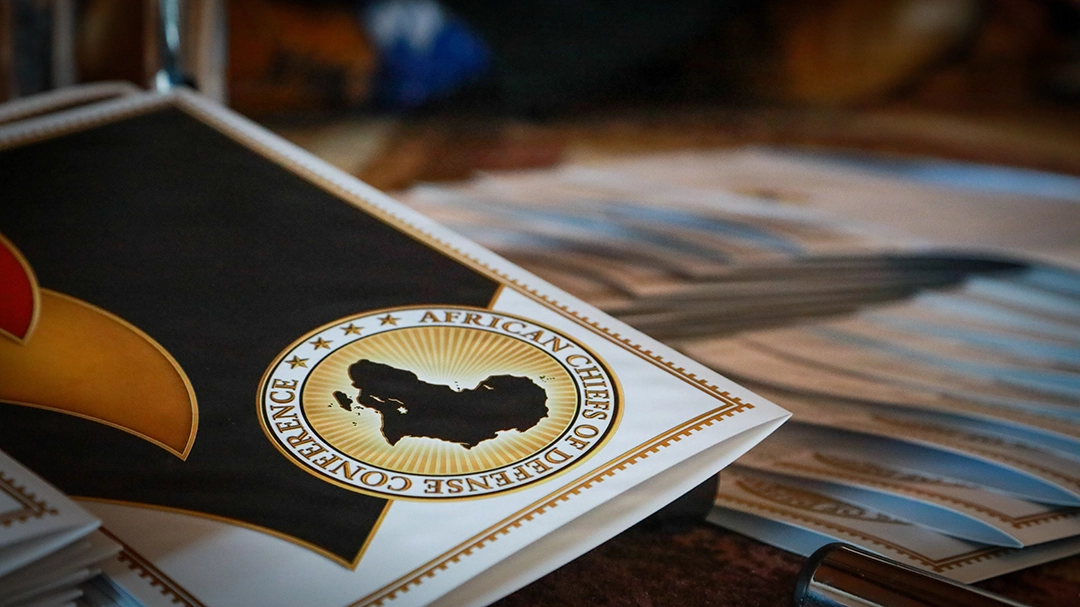
Without trust, the cross-border cooperation and regional collaboration required to meet those challenges will always fall short, according to military leaders who gathered in Luanda, Angola, for the African Chiefs of Defense (ACHOD) conference.
The conference serves as the key forum for senior military officials to address shared security threats, improve regional stability and discuss collaborative frameworks that enable long-term investment and economic growth across the continent.
“Intelligence sharing is no longer a matter of choice,” Gen. Jacob John Mkunda, chief of the Tanzania People’s Defence Forces, told the conference that brought together military leaders from 35 African countries.
However, sharing is often not as simple as it should be, he noted.
“The greatest obstacle to intelligence sharing is often not technology, but trust,” Mkunda said. “Likewise, the greatest opportunity before us is not merely acquiring new systems but building a culture of cooperation where information is shared securely, rapidly and purposefully.”
While Africa has spent decades building regional collaborative structures such as the Regional Economic Communities and maritime security agreements such as the Yaoundé Code of Conduct, governments and militaries are sometimes unwilling or unable to share intelligence and resources with their neighbors.
“The first barrier is trust. The second barrier is trust. The third barrier is trust,” said Adm. Renato Rodrigues de Aguiar Freire, chief of the Joint General Staff of the Armed Forces of Brazil, who attended the conference. Brazil is working with African countries to stop drug traffickers moving narcotics between the two continents.
Freire said that a lack of trust can be political, such as the rift caused when Burkina Faso, Mali and Niger left the Economic Community of West African States (ECOWAS) in 2025. But it can also be rooted in incompatible technology, varying legal structures or differing capacities for action.
“Not all countries possess the same technological capabilities, analytical expertise or infrastructure needed to collect, process and disseminate intelligence effectively,” Mkunda noted.
Nations need to know that the intelligence they share will be received, understood and used effectively while staying out of the hands of terrorists, traffickers and other targets, leaders said.
“Cooperation can enhance national security,” Freire said.
While technology such as artificial intelligence can overcome some of the challenges nations face when it comes to working together, each successful collaboration relies on recognizing the common interests that African nations share, Vice Adm. Oumar Wade, chief of defense forces for Senegal, told ADF.
That may require overcoming the weight of history between countries and populations, he added.
Gen. Olufemi Oluyede, chief of defense for Nigeria, pointed to his country’s security relationship with Niger, a relationship that is being rebuilt after Niger’s break with ECOWAS, as a point where the shared interest of combating terrorism is overcoming mistrust.
“In terms of operations, we still cooperate, even though it might not be as elaborate as we want it to be,” Oluyede told ADF.
For many military leaders, gatherings like the conference play an important role in developing the relationships they can use later to confront shared threats.
“It’s important to take stock of strengths and weaknesses and how we can complement each other,” Gen. Mpho Churchill Mophuting, chief of defense staff for Botswana, told ADF. “The main obstacle to trust is selfishness. We need to have a balance between looking at ourselves and looking out.”