

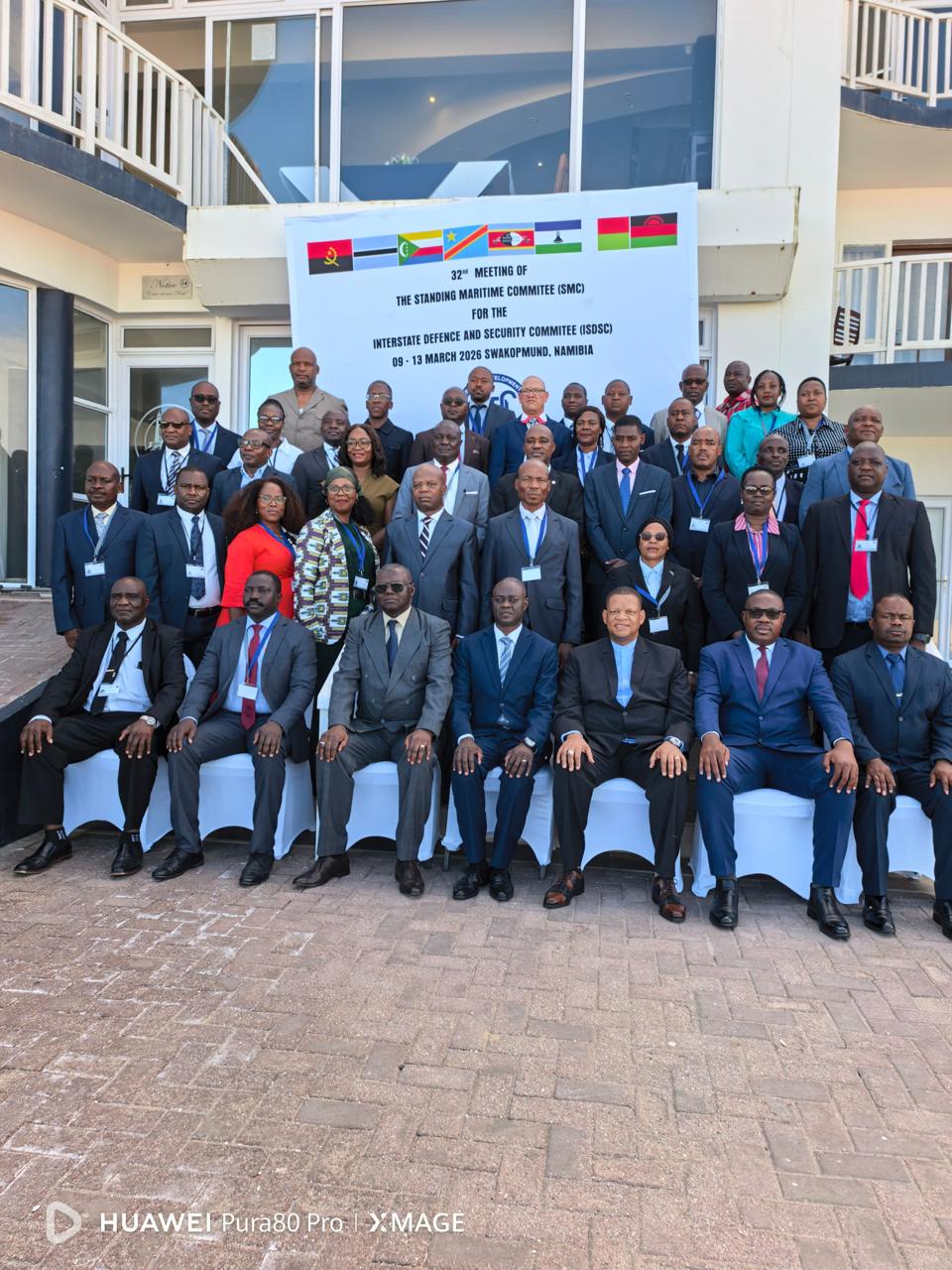
The Southern African Development Community (SADC) is planning two regional security exercises to harmonize regional responses to sea crimes and enhance information sharing that supports regional trade and economic stability.
This year, the bloc’s Standing Maritime Committee (SMC) wants to relaunch the SADC Maritime Exercise, which was postponed last year due to security challenges. This was announced during an SMC meeting in Namibia in March, when South Africa assumed chairmanship of the committee.
Namibia has agreed to host this year’s iteration of the exercise, a multinational effort designed to improve interoperability and readiness among regional navies. South Africa is developing the exercise’s concept and “coordinating preparatory engagements among member states,” the South African Navy said in a statement. It was not clear when the exercise will be held.
According to defenceWeb, the committee also is planning for Exercise Migebuka, a riverine and inland water event aimed at strengthening cooperation on inland waterways, particularly as it relates to allocating assets to the SADC Mission in Mozambique. Tanzania and Zambia will co-host the exercise this year on Lake Tanganyika, and Malawi is developing its operational concept.
Regional maritime security threats include illegal fishing, piracy and armed robbery at sea, terrorism, and transnational organized crime. The SADC’s 16 member states are: Angola, Botswana, Comoros, the Democratic Republic of the Congo, Eswatini, Lesotho, Madagascar, Malawi, Mauritius, Mozambique, Namibia, Seychelles, South Africa, Tanzania, Zambia and Zimbabwe.
During the March SMC meeting, Vice Adm. Monde Lobese, chief of the South African Navy, emphasized the importance of regional unity and cooperation in addressing these challenges and urged member states to participate in regional initiatives and exercises, defenceWeb reported.
Southern Africa’s trade is dominated by partners in Asia, Europe and the Middle East, making the security of ports, offshore resources and sea lines of communication critical to regional economic stability, according to analyst Timothy Walker at the Institute for Security Studies. However, the institute’s reviews of SADC’s political and security decision-making show that maritime issues receive limited and irregular attention at senior levels.
SADC maritime security goals are outlined by its Integrated Maritime Security Strategy. It aims to strengthen maritime governance, maintain a safe and secure maritime domain, improve marine environmental management, optimize the maritime economy, and promote maritime awareness and research. Since its implementation in 2022, the strategy has shifted its emphasis from reactive antipiracy measures to an approach that encompasses maritime security and safety, environmental protection, and sustainable blue economy growth.
“It calls for better information-sharing, interoperability and coordinated responses to maritime threats such as trafficking, arms smuggling, illegal fishing and environmental crimes,” Walker wrote.
He recommended that bloc members incorporate strategy objectives into national maritime plans and committees. SADC also could create a full-time maritime desk with maritime and naval experts from member states.
SADC, the Indian Ocean Commission and African Union officials could form a team this year to identify milestones, indicators and funding mechanisms. Walker also recommended that the bloc draft standard operating procedures for regional command and control, communications, information-sharing, and joint logistics.