

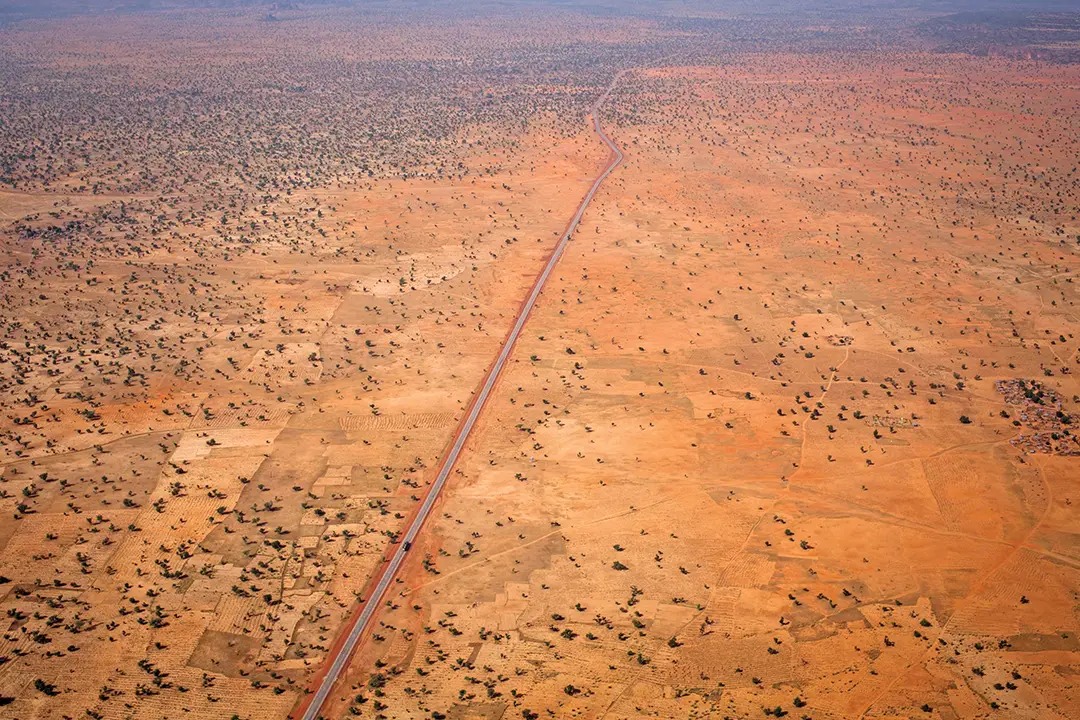
West Africa’s roads are more than trade routes. They have become the front lines of the region’s expanding wars.
In Burkina Faso, a 2022 terrorist ambush on a 200-vehicle convoy near Djibo killed dozens and triggered political turmoil that culminated in a military coup. Farther east, in Nigeria’s Borno State, terrorists have used land mines and improvised explosive devices (IEDs) to cripple the Maiduguri-Monguno highway, cutting off markets and forcing civilians into “super camps” for protection.
Across Mali’s Mopti region, terrorists have destroyed bridges to isolate entire towns. In October 2025, terrorists in the Sikasso region destroyed a convoy of about 50 fuel tankers that had crossed into the country from Côte d’Ivoire.
These incidents reveal a growing truth: West Africa’s transport infrastructure has become a target and a weapon. New research by the authors analyzed more than 58,000 violent events recorded by the Armed Conflict Location and Event Data project (ACLED) across 17 countries and shows that nearly two-thirds of all attacks occur within a kilometer of a road. The analysis underscores the degree to which controlling roads now defines controlling territory.
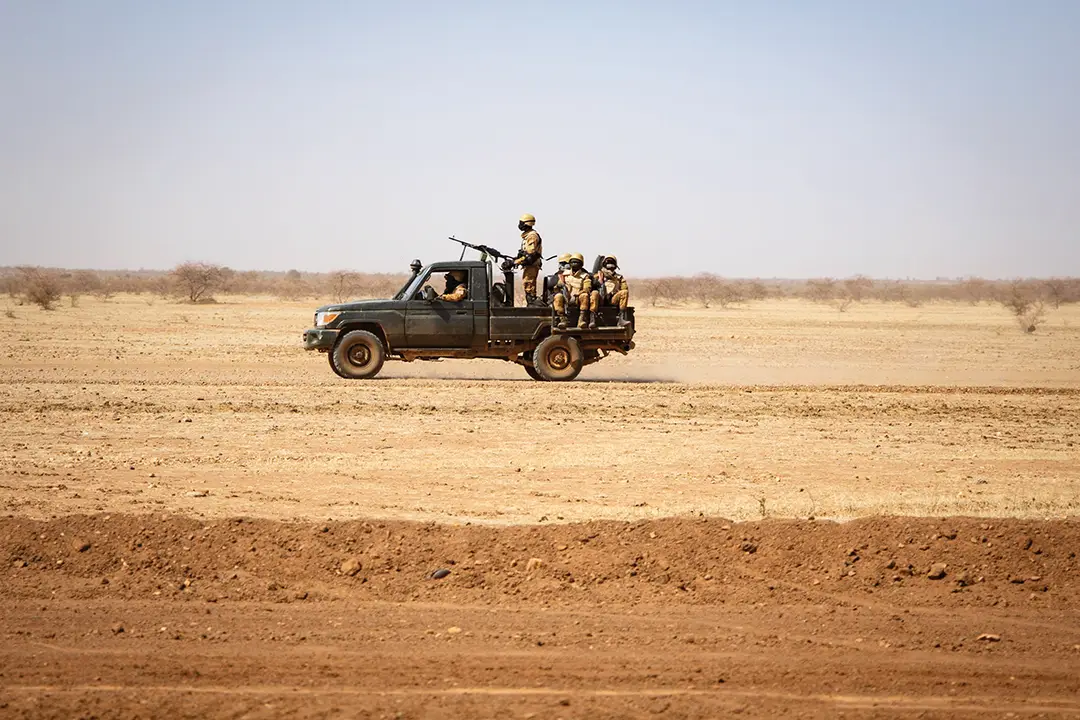
WEST AFRICA’S BLEEDING ROADS
Roads are the arteries of the state. They carry goods, troops and influence. But in much of the Sahel and its coastal periphery, poor road conditions and sparse networks have turned mobility into a dangerous gamble.
Violence is most intense along major corridors that link fragile capitals to remote frontiers. In Mali, the 640-kilometer highway connecting Mopti and Gao is the Sahel’s deadliest route, scarred by more than 400 violent incidents since 2012. In Cameroon’s anglophone Northwest, the road around Bamenda has seen more than 700 attacks since 2018, fueled by separatist violence.
These hot spots illustrate a broader pattern. Our research found that violence decreases sharply with distance from the road network: 65% of violent incidents take place within 1 kilometer of a road, but only 4% occur farther than 10 kilometers away. The trend is nearly identical regardless of whether violence involves ambushes, IEDs or attacks on civilians.
Part of the reason is logistical. Security forces and civilians must use the same narrow transport corridors to move people and supplies. Terrorists exploit this predictability, launching ambushes or planting explosives on the few paved routes available. Meanwhile, states rely on these same corridors to reassert control, creating a deadly feedback loop that makes mobility itself a source of insecurity.
URBAN CENTERS TO REMOTE HINTERLANDS
The geography of violence also is changing. During earlier stages of the region’s insurgencies, attacks clustered around cities and main highways. But as terrorist groups expanded, they began to strike deeper into rural areas.
In 2011, when urban violence reached its peak in West Africa, nearly 90% of all attacks were within 1 kilometer of a road. By 2024, that figure had fallen by about a third. This shift reflects what we call the ruralization of conflict: a process in which terrorist and rebel groups seek refuge and support in remote communities far from the reach of central governments.
Even as the front lines move outward, however, transport routes remain crucial. Rural ambushes, land mines and convoy attacks still depend on road access. Armed groups use control over transport to tax traders, impose blockades and restrict civilian movement.
The siege of Djibo in northern Burkina Faso is one of the clearest examples. From 2020 to 2024, terrorists surrounded the town, cutting all major road access and preventing food or medical supplies from arriving except by air. Hundreds of civilians died, and the town’s isolation fueled political unrest that destabilized the country’s leadership. Since then, militants have used blockades as a key tactic in central, southern and western Mali, affecting Kayes, Mopti, Nioro, Ségou, Sikasso and the capital, Bamako.
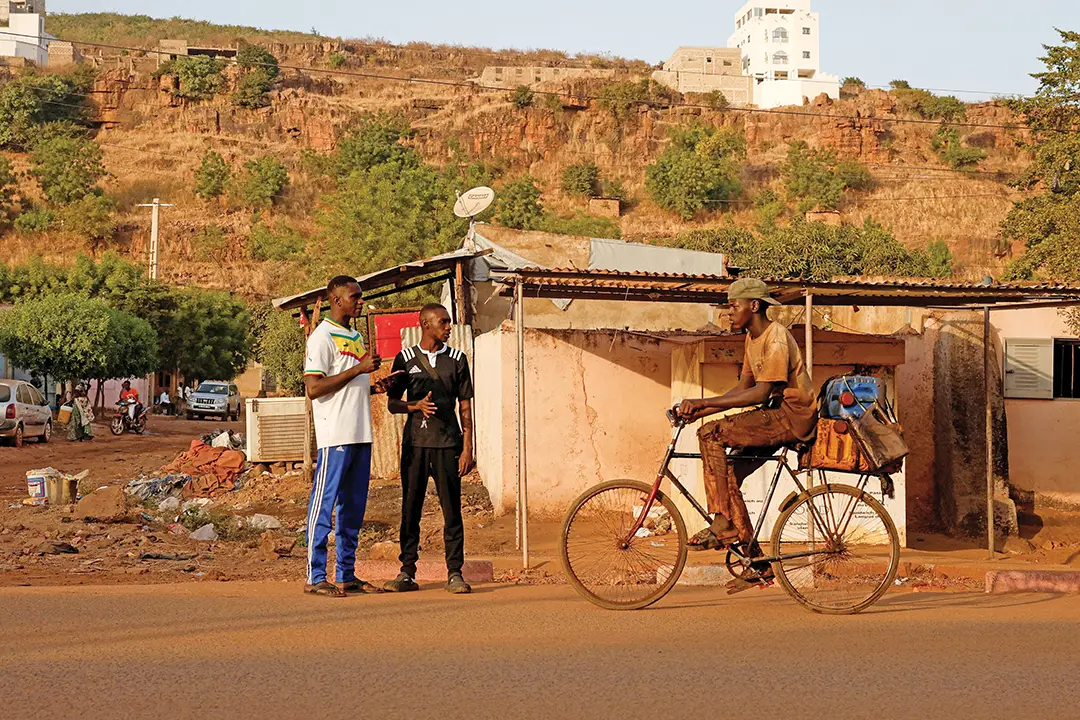
THE NEW GEOGRAPHY OF DANGER
Across West Africa, several corridors stand out as especially dangerous.
Mali: The RN16 between Mopti and Gao and the RN17 leading toward the Niger border are frequent targets of ambushes and IED attacks. Increasing numbers of attacks occurred between Bamako and the southern border with Côte d’Ivoire on the RN7 corridor, along which most oil consumed in the country is transported.
Burkina Faso: The N3 road connecting Djibo and Dori near the Mali border remains among the most perilous, reflecting years of terrorist efforts to blockade key towns.
Nigeria: The A3 and A4 highways radiating from Maiduguri, including routes to Bama and Damaturu, have been attacked hundreds of times, with militants using roadside bombs and mobile ambushes.
According to our research, these zones correspond closely with areas where state control is weakest and where transport accessibility is poorest. Sparse infrastructure magnifies insecurity. With only a few viable roads linking major towns, a single blockade or destroyed bridge can isolate entire regions.
AMBUSHES AND IMPROVISED EXPLOSIVES
The increase in ambushes has been one of the most striking evolutions in the Sahel’s many conflicts. Between 2000 and 2011, fewer than 60 ambushes were recorded in the entire region. By 2023, that number had surged to more than 260 a year.
Terrorist groups use ambushes not only to kill soldiers and seize weapons but also to sow fear and disrupt military logistics. Attacks often occur in sparsely populated zones where convoys are slow and visibility is low. In Mali, a 2024 ambush by Tuareg rebels killed more than 100 Malian soldiers and Wagner Group mercenaries near Tin Zaouatine, close to the Algerian border.
IEDs are another growing threat. Because they are commonly placed near roads, IEDs are an indicator of how closely violence tracks transport corridors. Since 2021, Burkina Faso and Mali each have sustained more than 100 IED incidents annually, many targeting military or humanitarian convoys. The impact goes beyond immediate casualties. Mines and explosives deter farmers from tending their fields and traders from using regional highways, deepening economic isolation.
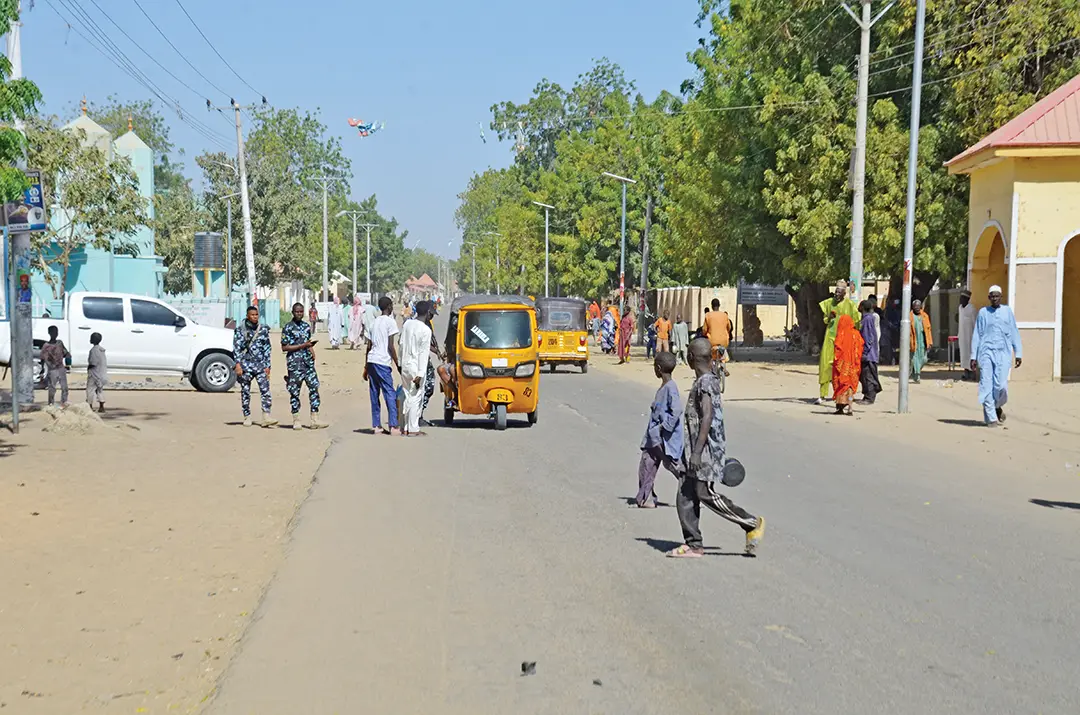
WHEN ROADS BECOME WEAPONS
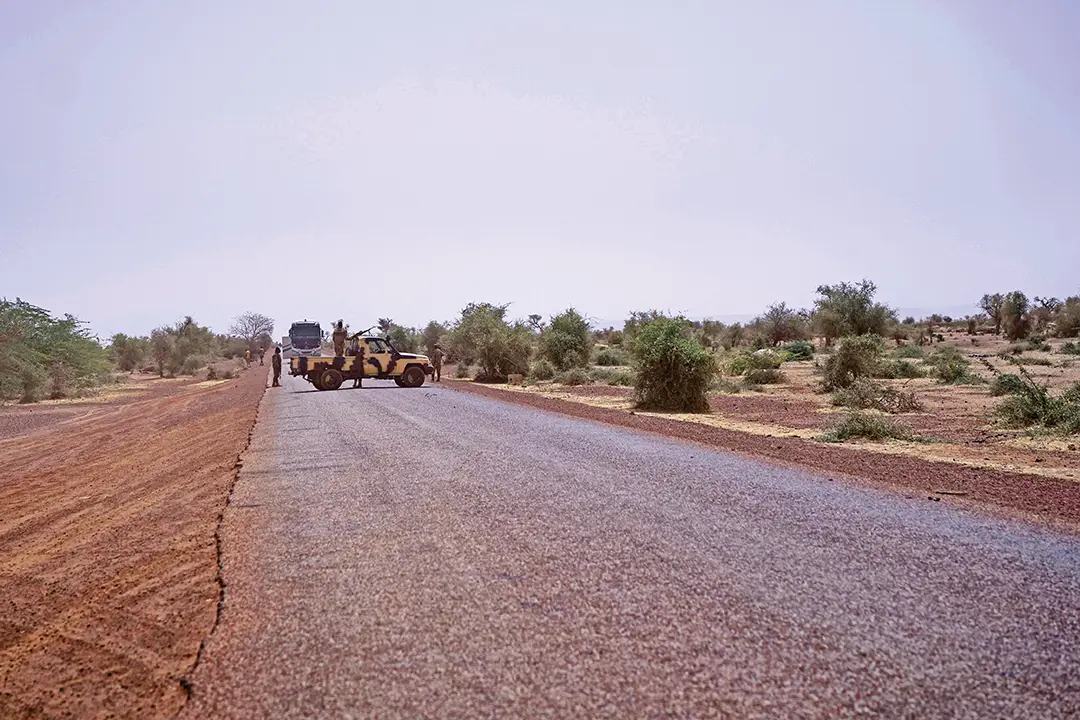
For terrorists, roads are more than targets. They also are tools of control. In much of the Sahel, armed groups erect checkpoints to tax traders and monitor population movements. A single roadblock can become a miniature customs post, a propaganda site or an ambush point.
In the Lake Chad region, such tactics compelled Nigerian forces in 2019 to consolidate troops into fortified super camps, ceding vast rural territory to insurgents. Similar dynamics are visible across Chad and Niger, where militants exploit the limited road network to dominate key corridors.
At times, terrorist groups deliberately destroy bridges and culverts to isolate communities or punish populations viewed as cooperating with the government. In central Mali, two bridges destroyed in mid-2021 cut off entire villages in Mopti and Bandiagara for more than a year, forcing the United Nations to fund emergency reconstruction. The new bridges were not completed until December 2022.
These acts of destruction underscore the symbolic and strategic power of transport infrastructure. Control over who can move, where and at what cost has become a central element of political authority in the region’s wars.
THE INFRASTRUCTURE-SECURITY PARADOX
The research points to a paradox. The same roads that enable state power also expose it. Across the region, government forces and civilians depend on limited infrastructure, while terrorists exploit that dependency to inflict damage at a low cost. This allows terrorists to continually weaken the capabilities of government forces and erode public confidence in ruling regimes while also bypassing the need to mount direct assaults on major cities.
Improving security in West Africa therefore will require investing not only in troops but also in transport. Expanding and maintaining road networks could reduce isolation, facilitate trade, and allow faster military and humanitarian responses. As the Organisation for Economic Co-operation and Development’s Sahel and West Africa Club notes, the lack of accessible transport remains one of the biggest obstacles to security and development.
Sixty years after independence, vast areas of the region still lack paved roads connecting them to national capitals. This absence leaves populations feeling abandoned and provides fertile ground for rebellion. As long as isolation persists, insurgents will continue to exploit the geography of neglect.
THE BATTLE FOR MOBILITY
Control over roads is reshaping the geography of power in West Africa. The region’s conflicts are not fought only for territory but also for the ability to move through it.
From Mali’s deserts to Nigeria’s forests, each attack on a convoy or bridge represents more than a tactical strike. It is an assault on the fragile connective tissue that binds not just states but also the entire region.
Until mobility itself is secured, the region’s roads will be lifelines and battlefields.
About the authors: Steven M. Radil is an international security consultant and the principal of GeoPublic Analytics LLC. Olivier Walther is an associate professor at the University of Florida’s Department of Geography. Alexander Thurston is an associate professor at the University of Cincinnati’s School of Public and International Affairs.