
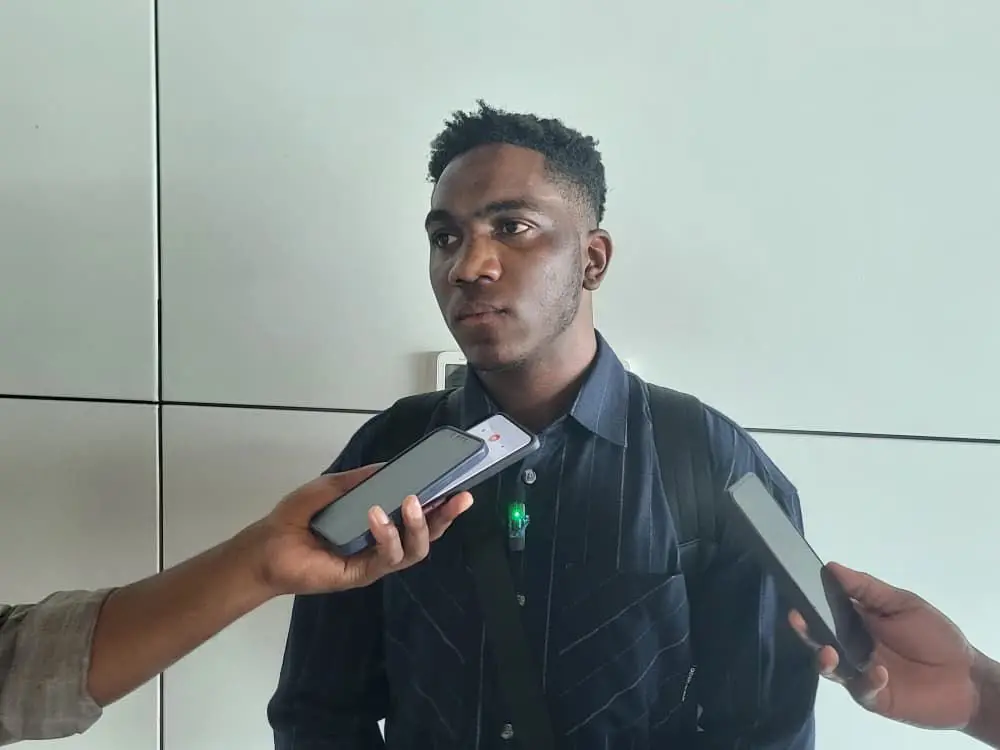
Daniel Ángel Masie Nchama is one of the few lucky ones. The 22-year-old computer science student from Equatorial Guinea was tricked into fighting for Russia on the front lines in Ukraine and lived to tell his tale.
A Cameroonian named Fabrice recruited Nchama with the promise of a job as a bodyguard in Russia. He left with 37 other African recruits in December 2025. When they arrived in Murmansk in the far north, they were given a Russian-language contract to sign.
“We said we couldn’t sign documents we didn’t understand,” Nchama told Agence France-Presse. “They insisted, saying it was too late to translate them.”
He took out his phone to translate. A Russian soldier put his weapon on the table.
“It was a threat. So we had to sign,” he said, adding that their passports were confiscated and not returned.
Promised eight to 10 months of training, Nchama was given a few weeks in Murmansk before he shipped out to a Russian military base in Donetsk, eastern Ukraine. With him were “many Africans,” including “another Equatorial Guinean, but also Cameroonians, Nigerians, Libyans and also Colombians,” he said.
According to Ukraine, more than 1,700 Africans are fighting for Russia, although some experts have estimated that closer to 4,000 Africans are among up to 20,000 foreign fighters in the Russian Army.
Wracked with hunger and fear in the freezing cold of Donetsk, Nchama risked his life to record a video plea.
“Come and help me! I’m on the front line in Ukraine. I’m fighting for Russia,” he said. “We need to find a plan to get me out of here quickly, because if they send me to the front line, it’s going to be really hard. Once I’m there, there’ll be no going back unless the war ends.”
It went viral on social media back home. After a television report also gained attention, the Equatorial Guinean government confirmed in a statement the existence of a Russian recruitment network run by a Cameroonian. By then, Nchama already had been sent into battle.
“I realized we were on the front lines when a missile struck our vehicle and killed two of my comrades,” he said.
Nchama initially was assigned to a battalion of 424 fighters in Donetsk, all of whom were killed within two weeks. He claims to be the sole survivor.
In March, the Equatorial Guinean government promised to take “diplomatic steps” to secure his release, and Vice President Teodoro Nguema Obiang Mangue welcomed Nchama home when he arrived at Malabo International Airport on June 27.
“What you have gone through must serve as a wake-up call for all the young people, parents, and guardians of Equatorial Guinea, in order to avoid trusting any proposal,” he wrote in a post on X.
Two days later, Nchama and his parents met with Mangue, who expressed concern for other countrymen tricked into fighting for the Russian Army. Nchama said the other Equatorial Guinean on his flight to Russia was named Djefri. They were separated upon arrival, and Nchama later learned that Djefri died on the battlefield.
Nchama’s father declared himself the “happiest man in the world” after his son’s return. He urged young people and their families to be cautious about chasing jobs promised in Russia.
“These promises are death guaranteed,” he said.