

The Ebola outbreak that started in the northeastern Democratic Republic of the Congo about four months ago had sickened more than 6,000 people and killed nearly 3,000 by the end of August as the virus spread to the country’s sixth province.
The outbreak is now considered the fastest-growing one yet in the DRC, according to the World Health Organization (WHO), although the true extent of the outbreak is not known. It was declared on May 15, but the WHO says sequencing showed it began in February. The West African Ebola outbreak killed 11,325 people from 2014 to 2016.
Tom Fletcher, the United Nations’ undersecretary general for humanitarian affairs and emergency relief coordinator, noted that the outbreak is spreading as nearly 11 million people already need support amid profound existing humanitarian crises, including malnutrition, acute food insecurity and ongoing conflict that limits the U.N.’s access.
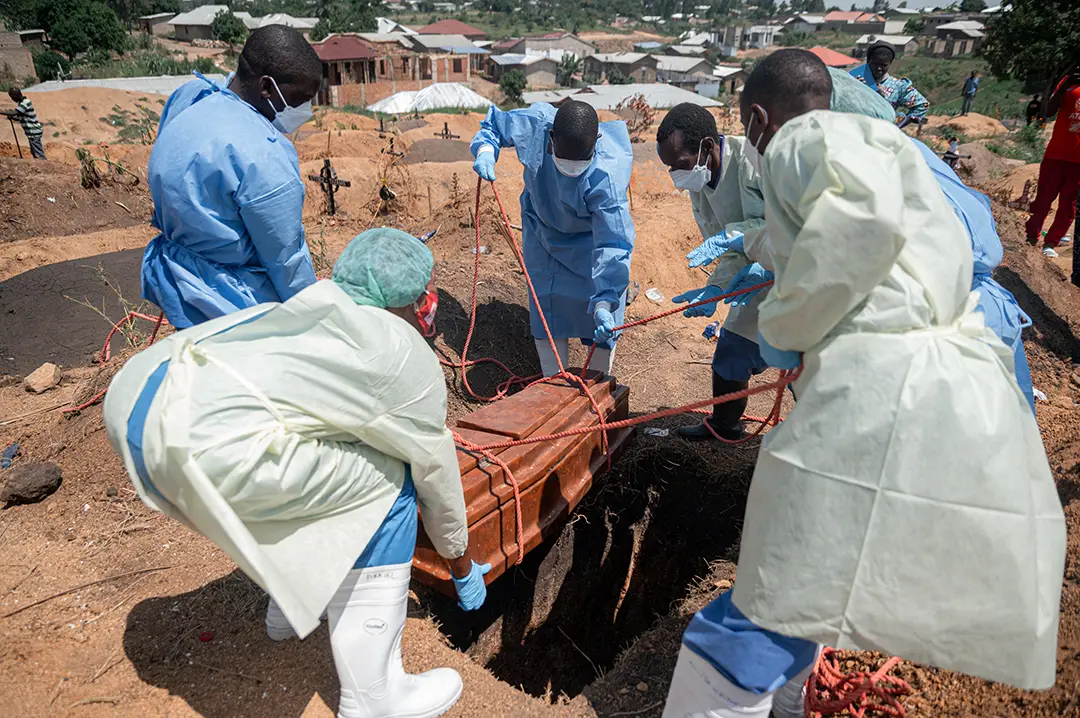
“We need a sustained, large-scale operation that gets ahead of the virus,” Fletcher said during a virtual meeting on September 1. “Expanded treatment capacity. More safe and dignified burial teams. Better access for humanitarian workers and supplies. We cannot fight Ebola in isolation. People need functioning health services, clean water, sanitation, food, protection and livelihoods. Above all, they need trust.”
Health officials have said up to 70% of new cases are recorded outside areas that conduct contact tracing and that the disease is spreading rapidly. Contact tracing helps find people exposed to the virus early so they can be treated quickly if they show symptoms, which include high fever, severe headache, loss of appetite, muscle and joint pain, sore throat and extreme fatigue.
“We are chasing the virus; the virus is ahead of us,” Dr. Mohamed Yakub Janabi, the WHO’s regional director for Africa, said in a report by The Associated Press.
Ebola is highly contagious and can be contracted from bodily fluids such as blood, semen or vomit, and from contaminated surfaces. A vaccination campaign began August 27 in Kisangani, capital of Tshopo province, where healthcare personnel and other workers on the front lines of the country’s response received the first of 50,000 doses. Another 20,000 doses are allocated for a clinical trial.
“We have decided to use the tried-and-true Ervebo vaccine to first protect those on the front lines — our healthcare providers,” DRC Health Minister Dr. Samuel-Roger Kamba said in an AP report. “But also to then move on to people who have had significant contact with patients so that we can protect them as well, and finally, if all of this is formally confirmed, we are going to expand the vaccine rollout to include all at-risk individuals.”
There is no guarantee the vaccine will halt the virus’s spread. The current outbreak is fueled by the Bundibugyo strain, and Ervebo is approved against the Zaire strain. A WHO Technical Advisory Group on July 31 cited three studies published since the outbreak began that showed some ability of Ervebo to stimulate a response to the Bundibugyo virus. These studies were cited as reasons to test Ervebo’s effectiveness against the Bundibugyo virus.
Three other vaccines are being developed to address the Bundibugyo virus. The International AIDS Vaccine Initiative (IAVI), University of Oxford and Moderna, the pharmaceutical company, are leading efforts to develop them.
IAVI is working on a modified version of the Zaire vaccine. It has been tested on monkeys and offered almost 100% protection, the BBC reported. Oxford University scientists are developing their own vaccine technology, and Moderna is using mRNA technology it deployed to rapidly develop COVID-19 vaccines.
“We will move with urgency and scientific rigor to support the response and help bring a potential vaccine closer to the communities that need it most,” Moderna CEO Stéphane Bancel told the BBC.
The Coalition for Epidemic Preparedness Innovations is funding each group.
“A Bundibugyo vaccine could help to control this epidemic and strengthen preparedness for future outbreaks,” Dr. Tedros Adhanom Ghebreyesus, WHO director-general, told the BBC.