

As Vladimir Putin prepares to host his third Russia-Africa Summit at the end of October, observers are looking at previous summits for clues about how to evaluate the promises and deals expected to be inked in Moscow.
The first summit held in Sochi in 2019 was met with “enthusiasm” by the 43 African heads of state who attended, according to Dr. Joseph Siegle, director of research at the Africa Center for Strategic Studies.
“There was a sense that Russia may represent a new source of investment and trade that would open up more economic opportunities,” Siegle told ADF.
So far, those opportunities have failed to materialize. At the first summit, Russia pledged to double trade with Africa in five years from about $20 billion to $40 billion. What happened, instead, was a contraction of trade to $14 billion over five years. It has since rebounded to about $27 billion, but that total is lopsided in favor of Moscow, which exports about seven times more than it imports from Africa. Russia accounts for less than 1% of foreign direct investment on the continent.
“There was a recognition that Russia didn’t really have a lot to offer economically to the continent,” Siegle said, adding that, “by 2023 there was a lot more skepticism toward Moscow.”
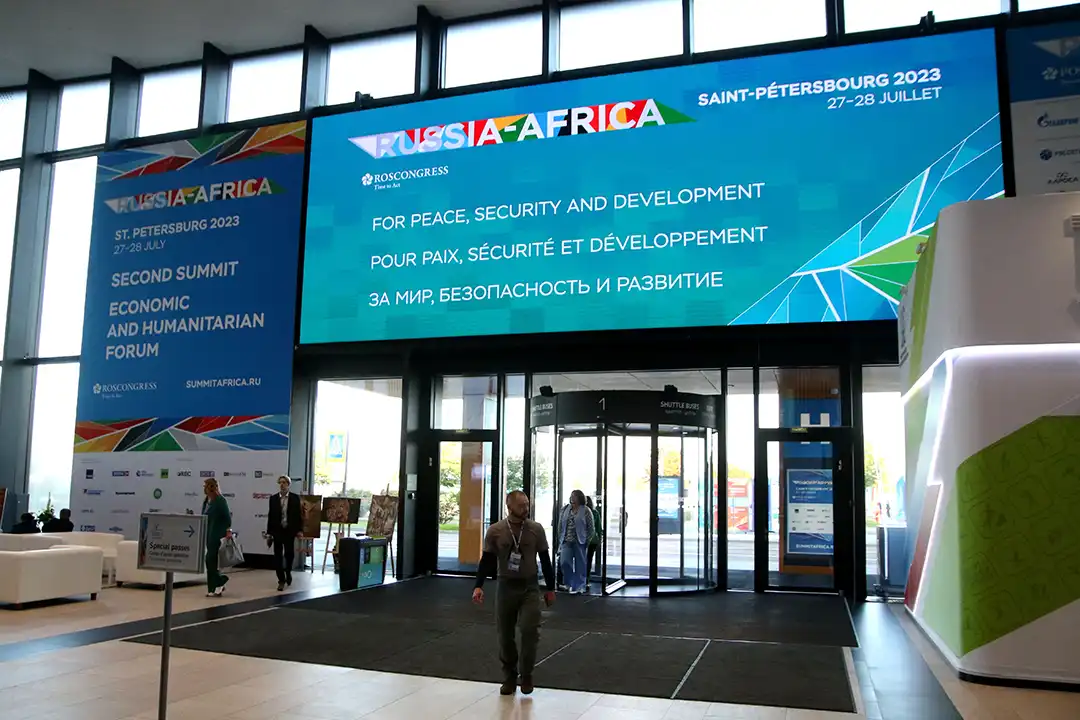
The 2023 summit in St. Petersburg occurred a year after Russia’s invasion of Ukraine with only 17 heads of state in attendance. The meeting took place as Russia was attacking commercial vessels on the Black Sea and blockading vital shipments of grain and fertilizer to the continent.
One of the highlights of the summit was a pledge by Putin to donate 25,000 to 50,000 tons of grain to six African countries. But observers noted that this pledge to preferred countries accounted for only a small fraction of the hundreds of thousands of tons being held up by Russia’s blockade of shipments on the Black Sea.
“The donations were a drop in the bucket to the constrictions on grain, fertilizer, and fuel that have been caused,” Siegle said.
As of 2026, attacks on commercial vessels continue. In July alone, Russia launched at least 23 strikes against the port infrastructure of Greater Odesa, where most of Ukraine’s wheat and agricultural products are stored and shipped. Goods destined for Africa and elsewhere continue to be stuck in storage facilities in Ukraine and Russia due to the war. Prices of food and fertilizer remain elevated.
Egypt, the top global buyer of wheat from the region, will receive about one-tenth of the amount it did last year, Reuters reported.
“When Russia attacks vessels in Odesa Bay, it is not merely disrupting Ukraine’s exports — it is increasing the risk of a genuine global food crisis,” Illia Kabachynskyi wrote for United24 Media. “This global price effect falls hardest on countries that already spend a disproportionately large share of their budgets on food imports.”
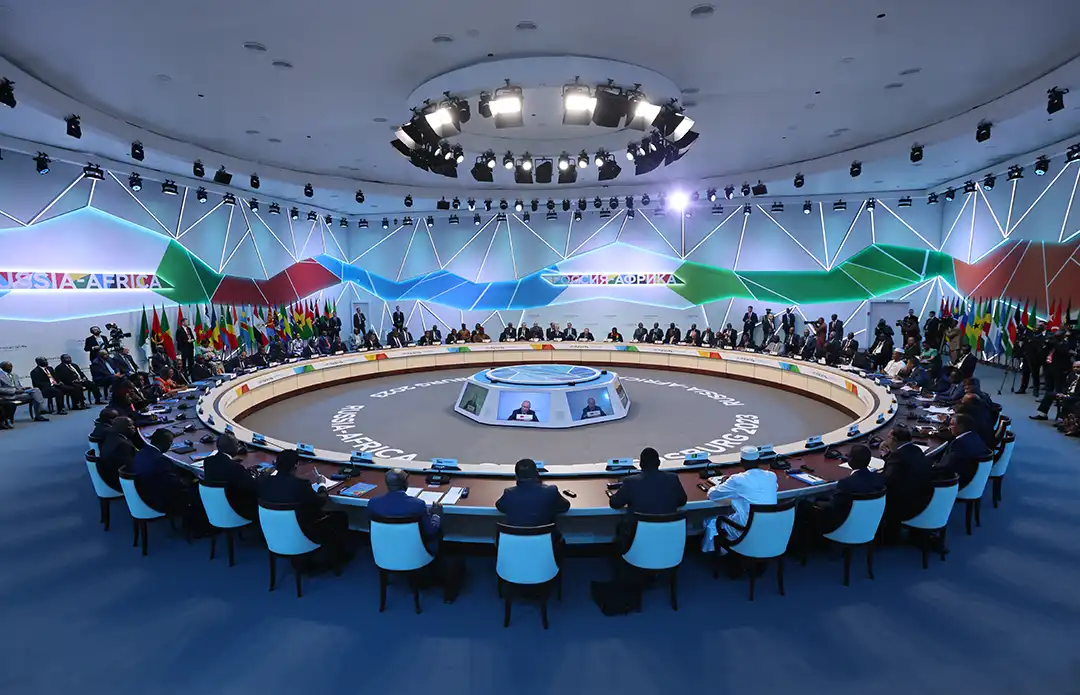 The 2023 summit was marked by a pledge to forgive $23 billion in Soviet-era debt owed by African countries. But observers noted that this debt was so old that it was unserviceable by modern Russia.
Siegle called the pledge “symbolic.”
“Those debts were incurred so far back that they weren’t actually adding to the interest and debt burdens that African countries were paying and therefore did not change the economic picture that they are facing,” he said. “So, officially, it wipes the slate clean and allows relationships to move forward, but from a practical standpoint it didn’t mean that much.”
Another feature of the summits has been the signing of military cooperation agreements. More than 40 African countries have reportedly signed such agreements with Russia.
However, experts have pointed out that military-to-military cooperation remains very small in scope. The primary tool of engagement continues to be mercenaries with the state-backed Africa Corps present in the Central African Republic, Libya, Mali and elsewhere.
Writing for Nigeria’s This Day news site, researcher Oumarou Sanou said the pitch to African nations at the summit is principally one of “regime protection” made to the increasing numbers of leaders who take power through coups or other non-democratic means.
“Moscow’s pitch to Africa rests on a narrower premise than its rhetoric suggests, not development, not shared prosperity, but protection, delivered through private military contractors and now the state-run Africa Corps,” Sanou wrote.
As the third summit approaches, observers are tallying a lack of tangible results from earlier events, including the proposal that summits would soon take place in Africa.
“Between the promise of a rotating host country which never materialized, unmet trade goals, and economic commitments that remain limited, several announcements made at previous summits are struggling to produce the results that were hoped for,” analyst Mustapha Bature Sallama wrote for the Modern Ghana website.
Approximately 17 heads of state have confirmed attendance for the 2026 event with some delegations reportedly questioning why they are being asked to fly to an active war zone. Sallama said the location alone highlights what he describes as an unequal partnership.
“The fact that a third consecutive summit is being held in Russia illustrates the disconnect between the rhetoric of a ‘partnership of equals,’ and a relationship whose agenda, priorities and organization continue to be defined, largely, from Moscow,” Sallama said.
Tale of the tape: Promises meet reality as third Russia-Africa summit approaches
Pledge
In 2019, Russia promised to double trade with Africa to $40 billion annually.
Reality
Trade dropped to $14 billion and has only rebounded to $27 billion, with the trade balance heavily in favor of Russian exports.
Pledge
Russia said it would donate wheat and fertilizer to address disruptions caused by its war against Ukraine.
Reality
Blockades continue to disrupt shipping in the Black Sea and attacks on commercial infrastructure have sent shockwaves through grain and fertilizer markets. Russia delivered 25,000 to 50,000 tons of grain to six countries, but that represents a small fraction of pre-war exports.
Pledge
Russia announced a debt forgiveness program for African countries
Reality
The $23 billion in forgiven debt was from the Soviet era and, experts say, was unserviceable and does not affect the debt burden of modern African countries.
Pledge
Russia announced military cooperation agreements with 40 African countries.
Reality
Moscow’s security engagement on the continent remains largely conducted by Africa Corps mercenaries which operate in a handful of countries. Billed as counterterror forces, they have failed to halt the spread of terror in the Sahel and now mainly offer “regime protection” for autocratic leaders.
Pledge
Statements at the 2023 summit indicated a future summit would take place on the African continent.
Reality
The 2026 summit is set to take place in Moscow, forcing attendees to travel to an active war zone.