

As Mozambique’s battle against terrorists nears a decade, the country is investing in a new center to understand the problem and support the fight.
It created the National Centre for the Prevention and Combating of Terrorism and Violent Extremism in 2025 under the control of the Mozambique Defense Armed Forces. In April of this year, members of the counterterrorism center (CTC) met with the United Nations Counter-Terrorism Committee Executive Directorate to identify ways the U.N. can support an integrated national counterterrorism response in Mozambique.
According to analyst Borges Nhamirre of the Institute for Security Studies, the new CTC is a crucial step toward addressing the ongoing threat from Islamic State-affiliated terrorists calling themselves al-Shabaab. Mozambique’s group is separate from the group with a similar name operating in Somalia. However, Nhamirre noted, the agency remains an underfunded work in progress. Its 40 staff members come from various branches of the military and national police, a situation that risks continuing the ongoing dispute between the two agencies over who has jurisdiction in Cabo Delgado.
“Another risk is that staff are recalled before they have mastered their functions, or just as they are settling into their new roles,” Nhamirre wrote.
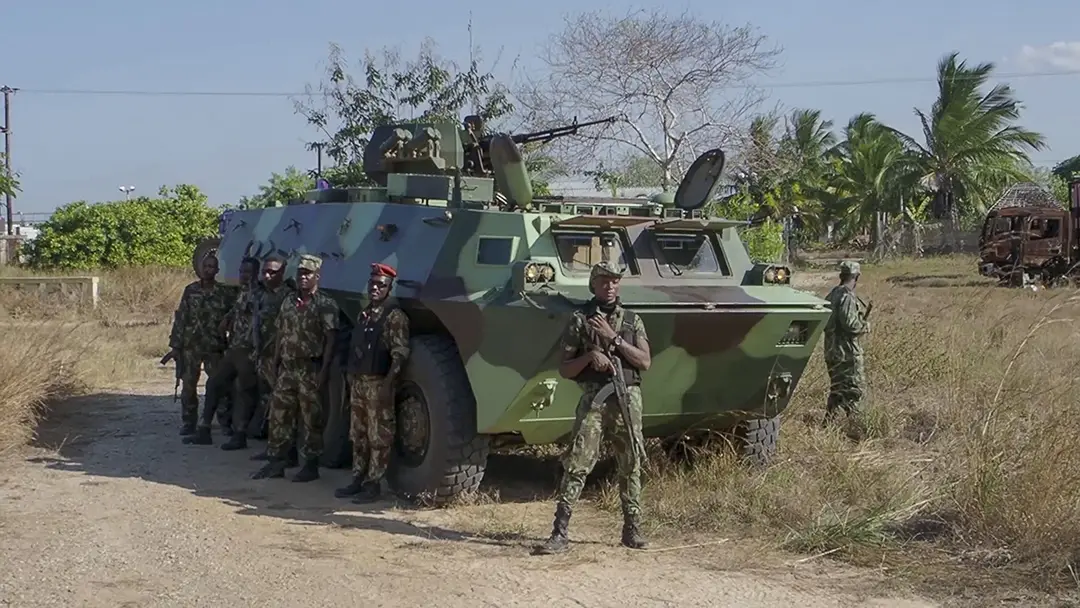
Mozambique’s approach to more than 2,500 terrorist attacks in its northeastern province has faced criticism. The government has relied on its own military, Rwandan security forces and a since-concluded peacekeeping mission by the Southern Africa Development Community (SADC) to confront the terrorists. However, poor coordination among the groups has undercut the response, according to Nhamirre.
The new CTC seeks to compensate for those shortcomings. It includes two units: one dedicated to research and the other to coordinating counterterrorism operations. Under its mandate, the center also will assess potential vulnerabilities, methods of radicalization and the drivers of violent extremism.
Community awareness and social integration programs will aim to disrupt al-Shabaab’s efforts to radicalize and recruit Cabo Delgado’s young people, many of whom are unemployed. The center will work with financial institutions to identify and interrupt terrorists’ illicit financing. This non-militarized approach is meant to address the economic and societal grievances that drive people toward terrorism in Mozambique’s poorest province, Nhamirre wrote.
Cabo Delgado sits at the country’s northern frontier, 2,000 kilometers from the government in Maputo. The distance has led residents to feel neglected and resentful toward those in power. Some of that resentment comes from the sense that they see little benefit from the extraction of the region’s natural resources, including natural gas, timber and rubies, according to researcher João Feijó with the Observatório do Meio Rural, a Mozambican research institute.
“It is wrong to think that there is only one phenomenon that is behind the insurgency,” Feijó told Mozambique’s Integrity magazine.
The CTC’s current leader, Brigadier-General Aníbal Manuel Fernando, was appointed by Defense Minister Cristóvão Artur Chume with the advice of the Army and police. Nhamirre cautioned that the security sector cannot rely on a military-first approach to the Cabo Delgado insurgency and must also confront the economic and societal issues fueling insurgents.
The new CTC faces other challenges. The first is extending its reach beyond its headquarters in the capital. Another issue is securing dedicated staff instead of borrowing staffers who could be recalled to the military or police, creating knowledge gaps at the center.
Government funding remains a chronic problem in Mozambique, where even Soldiers serving in Cabo Delgado have gone without pay. Sophisticated counterterrorism operations targeting terrorists’ finances will take expensive equipment, such as anti-money-laundering software, that the CTC currently has no funding to purchase.
“Establishing the center is one positive step, but enabling it to succeed is another,” Nhamirre wrote. “Real political will to counter terrorism requires fully equipping the CTC, departing from its military-centered approach and uniting citizens and stakeholders behind a strategy that balances security, political and socioeconomic needs.”