

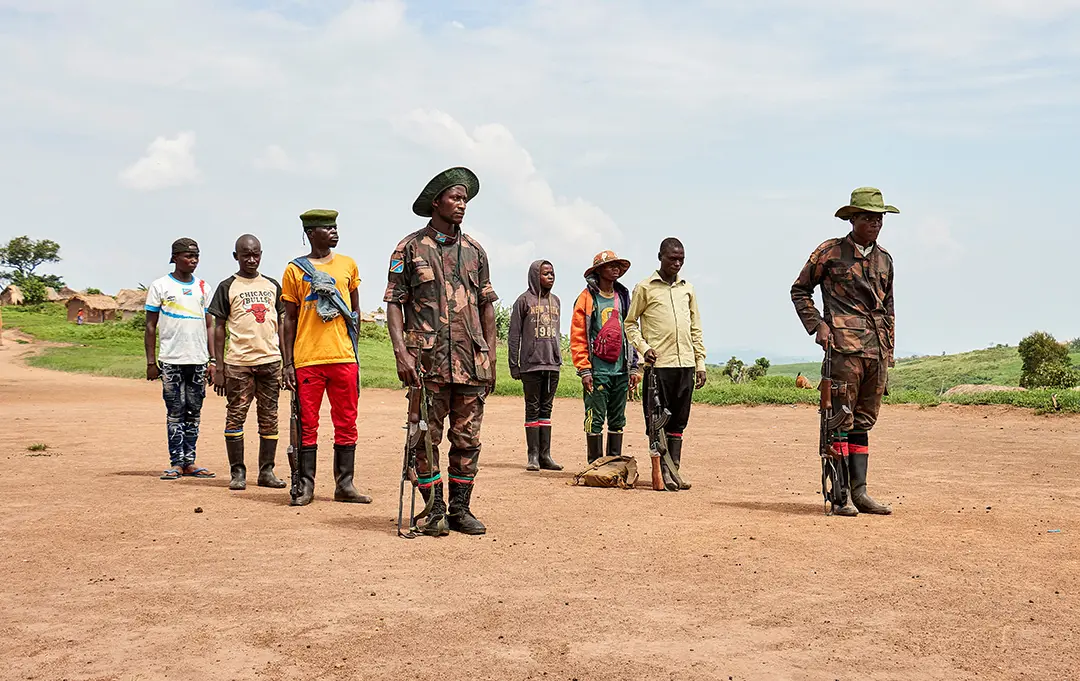
Stretched thin by rising security demands, militaries across Central Africa have turned to local militias for help fighting insurgents. However, those relationships are fraught with their own risks as militias turn against government forces or exploit and abuse the civilians they’re supposed to protect.
The Central African Republic, the Democratic Republic of the Congo and South Sudan demonstrate the risks government forces take when they rely on local, often ethnically aligned militias to supplement their own troops.
Empowering these militias can “create fertile ground for violence and exploitation with little accountability,” researcher Titilope Ajayi of the Institute for Security Studies wrote. It can leave civilians “unable to distinguish who is responsible or where to seek redress,” Ajayi added.
Across the continent, militias have a history of extorting money from local civilians, setting up illegal checkpoints to control commerce, and committing sexual violence.
In the CAR’s southeastern Haut-Mbomou province, the Azandé Ani Kpi Gbé militia, a self-defense group within the Zande community, filled security gaps left by a lack of government forces in the region by driving out rebels — actions militia members say received no recognition from the government.
The 5,000-member militia has offered to become part of the Army, but fewer than 200 have received training.
The militia’s relationship with the CAR military (FACA) has soured in recent months with militia members fighting government forces earlier this year in the Zemio area and later accusing FACA troops and mercenaries from Russia’s Africa Corps of looting Zande communities.
Militia members recently called for the government to investigate the deaths of captured fighters from the Coalition of Patriots for Change, whom the militia claims were brutally killed by Africa Corps and FACA forces.
Militia members told Corbeau News that the captured men “were deceived by the Wagner Group [Africa Corps] under the pretext of a disarmament, demobilization and reintegration process.”
In the eastern DRC, the Wazalendo militia has become a key part of the government’s fight against Rwanda’s M23 militia. Analysts say both governments’ decision to support their respective militias contradicts their own calls for ending the fighting and bringing peace.
Weak supervision by DRC and Rwandan militaries has led to both militias being accused of human rights abuses, including rape, detentions and summary executions in North Kivu and South Kivu. Each militia has enflamed ethnic tensions to recruit new members.
While both militias receive supplies from their associated governments, they also set up roadblocks and extort money from civilians in areas they control. M23 fighters are also accused of raiding hospitals at least six times and abducting Soldiers, patients and caregivers.
United Nations human rights experts have called for an end to the militia-based violence and urged the governments involved to protect civilians from harm.
“The violence is unacceptable,” the UN wrote in a report on M23’s activities. “It must end immediately and be thoroughly investigated so that those responsible are held accountable,”
In South Sudan, communities have formed self-defense militias around youth-oriented social groups that now collect “taxes” and run roadblocks. While some of these militias work with the government, others are actively fighting against it. According to research by the ISS, poorly supplied South Sudanese Soldiers use their ties to local militias to acquire weapons, protection and resources.
“Interviewees said some non-state actors are better armed and more powerful than state security forces,” Ajayi wrote.
As in the CAR and the DRC, the ties between South Sudan’s military and local militias blur the lines of power and leave civilians struggling to seek justice due to confusion about who exactly is responsible for human rights abuses, according to Ajayi.
Across the board, analysts say the ties between Central African governments and local militias create a difficult choice: Exclude the militias and leave security vacuums that insurgents can fill, or work with poorly supervised militias and legitimize their abuses against civilian populations.
“The future of these armed groups is a growing concern,” International Peace Information Service analysts wrote.