

As drones increase in importance to military operations, African tech entrepreneurs want to show that they can build an industry tailored to the continent’s unique needs.
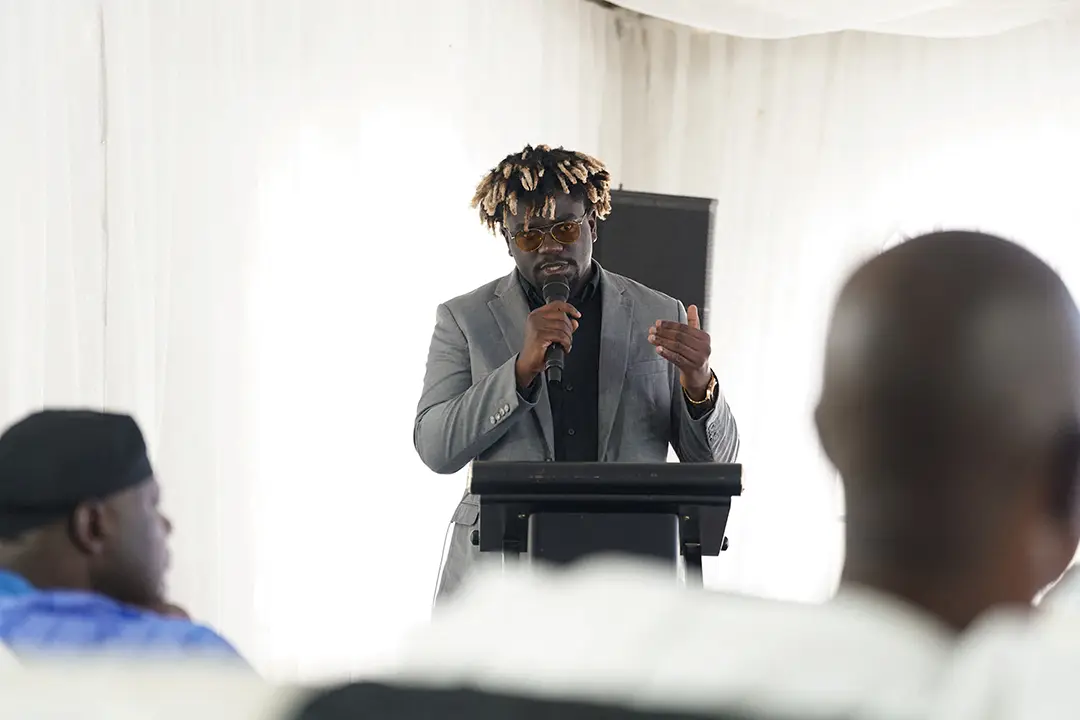
“We now are in a technological arms race against terrorists,” Nathan Nwachuku, co-founder and CEO of Nigeria-based Terra Industries, told military leaders at the recent Africa Chiefs of Defense conference in Luanda, Angola. “We can’t keep relying on multimillion-dollar fighter jets to take out fighters on $2,000 bikes.”
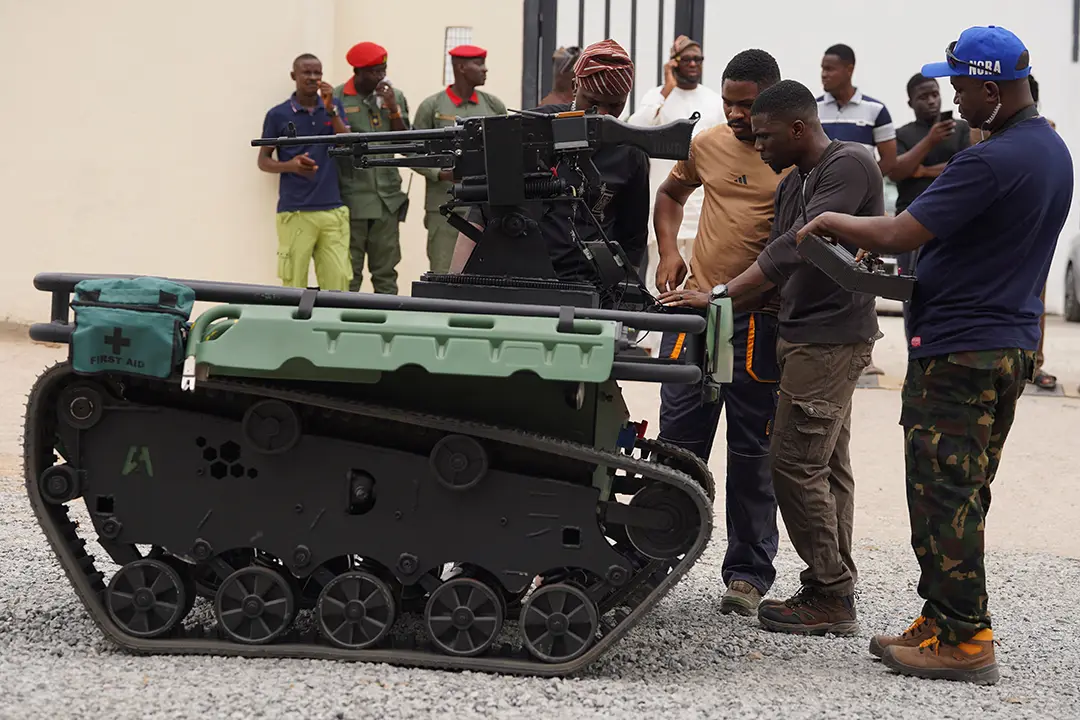
Founded in 2024, Terra Industries builds aerial and ground-based drones in Abuja, Nigeria. It recently announced plans to expand to a new facility in Accra, Ghana, that company officials say will be the largest drone factory on the continent, capable of producing 50,000 drones a year.
“The factory is the ultimate weapon,” Nwachuku said.
In recent years, African militaries have embraced drone technology from suppliers outside the continent. Türkiye, maker of the Bayraktar TB2 and Akinci drones, has become arguably the most prominent supplier.
Governments use those imported drones primarily for intelligence, surveillance and reconnaissance (ISR). At the same time, however, they contend with terrorist groups such as Boko Haram, Jama’at Nusrat al-Islam wal-Muslimin (JNIM) and multiple Islamic State group offshoots that use cheaper, more readily available commercial off-the-shelf drones (COTS) for ISR and as flying explosives.
 Relying on foreign-made drones leaves African governments dependent on other countries for hardware and software updates and repairs, a position that can compromise their sovereignty, Terra’s co-founder and chief engineer, Maxwell Maduka, told War on the Rocks.
“Imported Turkish and Chinese drones are cheap and fly fine, but they are difficult to sustain locally, and do not guarantee sovereignty over software and data,” Maduka said. “There’s also the worry of espionage: If your intelligence, surveillance, and reconnaissance backbone is still linked to these countries, and you can’t audit the firmware, your operational picture is probably insecure.”
Although Terra Industries designs its drones primarily for ISR, the founders recognize that the technology can be converted to other uses.
“Any serious manufacturer knows the technology isn’t hermetically sealed,” Maduka said. “So we assume our drones will be used for defensive kinetic purposes.”
Advocates for Africa’s tech sector see in Terra Industries and other homegrown startups the opportunity to develop technology for Africans by Africans, expanding education and economic opportunities. The African Development Bank estimates that the continent will need 23 million tech workers by 2030.
Nwachuku told defense leaders that his company has been inspired by Ukraine’s innovation as it defends its territory against Russia’s invasion.
“Ukraine is using its tech-savvy population to build up its drone force,” Nwachuku said. “Africa’s defense systems need to be designed for African war fighters.”
As African militaries collaborate against cross-border threats such as terrorism, leaders need to ensure that drone systems and related technology can be shared widely, Nwachuku said.
He also urged African nations to create a pan-African intelligence network to maximize the effectiveness of African-built technology.
“Industry partners need to create open systems that can be adapted and fixed in the field,” he said. “Most nations have exclusive security infrastructure that needs help updating.”
Maduka said homegrown drones are vital to the future of Africa’s defense sector because the continent’s diverse environments — from the heat and dust of the Sahara Desert to the humidity and dense tree cover of the Congo Basin — create conditions that challenge foreign-made technology.
Heat degrades batteries and on-board computers. Dust infiltrates and disables moving parts. Topography makes stable communication difficult. And wind forces operators to work harder to keep drones on target.
“These drones are also mainly designed for other terrains, then sold as a hard-to-maintain generic kit,” Maduka told War on the Rocks. “A single failed part can literally ground a drone for months if there is no in-country support or spares.”