

As the Ebola outbreak in the Democratic Republic of the Congo grew to become one of the deadliest on record, authorities in neighboring Uganda used a range of tactics to keep the virus at bay.
So far, the measures have paid off. On July 16, Uganda began a 42-day countdown to the outbreak being declared officially over inside its borders. The World Health Organization (WHO) requires countries to complete two consecutive 21-day incubation periods without a new case before declaring an outbreak’s end. Conditions, however, are not the same in the Democratic Republic of the Congo.
The DRC reported 2,073 confirmed cases of the rare Bundibugyo strain as of July 14, according to a report from the European Centre for Disease Prevention and Control. Of those, 796 had died. Uganda has had 20 confirmed cases with two deaths since the outbreak began.
Uganda has long been a leader in dealing with Ebola. It saw its first outbreak in 2000, and has had several since. The Uganda Virus Research Institute (UVRI) in Entebbe has helped the nation discover, isolate and respond to a number of diseases, such as chikungunya, West Nile and Bwamba fever.
When Ebola struck West Africa, the African Union tapped Ugandan Maj. Gen. Julius Facki Oketta, former director of Uganda’s National Emergency Coordination and Operations Centre, to head its multinational response, the AU Support to Ebola Outbreak in West Africa, known as ASEOWA. Healthcare workers staffed treatment units in the affected areas.
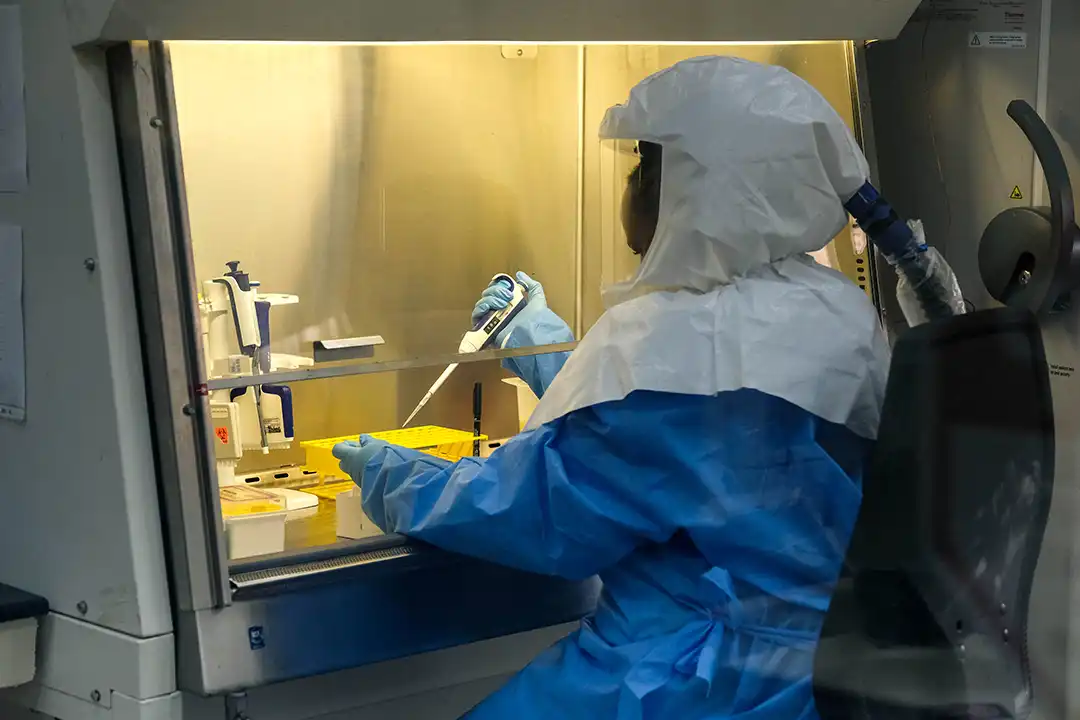
Uganda’s actions in the current outbreak have prompted a mix of praise and criticism. The Ministry of Health in late May decentralized testing from the UVRI to regional laboratories in Arua, Fort Portal, Gulu, Mbale and Mbarara. Doing so meant test results came back in hours instead of days.
The move helps authorities “detect, isolate and treat Ebola cases at the earliest possible stage,” the ministry said, which speeds up officials’ ability to trace the contacts of those infected. Ebola spreads through direct contact with infected people’s body fluids. Certain traditional burial practices, such as washing the bodies of loved ones, can lead to infection.
The Center for Infectious Disease Research and Policy at the University of Minnesota on July 10 reported that the DRC outbreak is the third-largest on record and could surpass the 2014-2016 West Africa Ebola pandemic that killed 11,325 people, mainly in Guinea, Liberia and Sierra Leone. The DRC reported 1,596 cases in the first six weeks of the current outbreak. Only 994 had been reported over the same span in West Africa in 2014.
Ugandan authorities have worked aggressively to halt the virus’ spread. President Yoweri Museveni and other government leaders outlined several actions at a June 10 meeting in Entebbe with WHO Director-General Dr. Tedros Adhanom Ghebreyesus. One was the government’s decision to cancel the June 3 Uganda Martyrs Day celebration at the Namugongo Martyrs Shrine. The annual holiday event attracts more than 3 million people from Uganda and other countries and could have been a “super-spreader event,” Tedros said.
Dr. Diana Atwine, Uganda’s permanent secretary in the Ministry of Health, told meeting attendees that the ministry identified four locations just inside the DRC for medical camps to support Ebola case management. The goal, she said, was to reduce the number of patients crossing into Uganda for treatment.
“We have so far sent 50 health workers with four laboratories and these have been set up in four different locations,” Uganda’s health minister, Dr. Chris Baryomunsi, told the United Kingdom’s The Guardian newspaper for a July 16 report. “We agreed that if they require additional human resources, we shall send more depending on how the situation progresses.”
Cross-border incursions from the DRC are of particular concern. Dr. Daniel Kyabayinze, Uganda’s director of public health, told The Wall Street Journal that his country had closed border crossings with the DRC. The Africa Centres for Disease Control and Prevention (Africa CDC) opposes travel bans and border closures, claiming that experiences show the tactics are of little benefit. Instead, countries should improve screenings and disease surveillance.
“Being prepared will reduce the risk of the virus spreading locally in the event of an imported case,” Salim Abdool Karim, chair of the Africa CDC’s Emergency Consultative Group, said in a news release. “Preparedness builds confidence in the local response and reduces community anxiety and concern that often follows the discovery of an imported case of Ebola disease.”
Uganda has banned public gatherings and events and deported Congolese people who cross the border. Authorities also sent out health workers with megaphones to advise citizens against hugging and shaking hands, the Journal reported. Museveni regularly addresses the nation on TV to promote hygiene. “We must stop careless behavior,” he said, according to the Journal. “Why do you shake hands? Just wave.”