

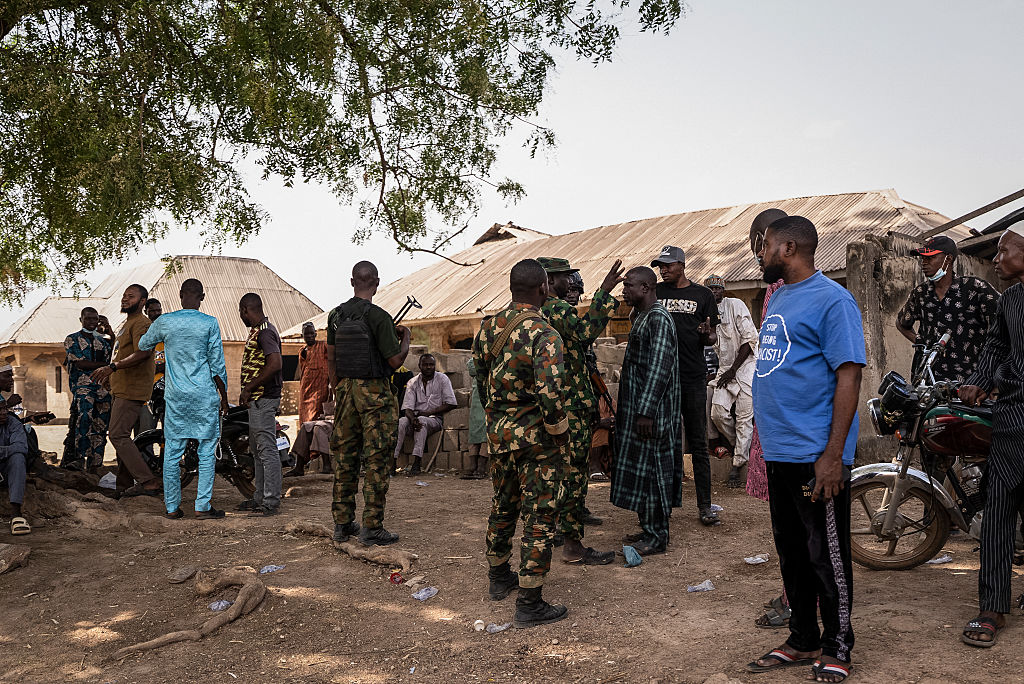
Boko Haram’s Jama’atu Ahlis-Sunna Lidda’Awati Wal-Jihad (JAS) and other terror groups are increasingly launching attacks around Nigeria’s forested Borgu-Kainji axis. Analysts say these groups are using tactics long employed in the Lake Chad basin and are establishing a foothold in the sprawling area linking northwest to southwest Nigeria.
In recent years, terrorists have used Kainji Lake National Park, a 5,300-square-kilometer former tourist attraction, as a base to launch attacks in the porous tri-border region Nigeria shares with Benin and Niger, according to the Institute for Security Studies (ISS). The Borgu Game Reserve is located within the park.
The number of violent events involving jihadist groups in the region rose by 86%, and the related fatalities increased by 262% between 2024 and 2025, the Armed Conflict Location & Event Data project reported.
JAS, the al-Qaida-linked Jama’at Nusrat al-Islam wal-Muslimin (JNIM), Lakurawa and Ansaru-Mahmuda groups are known to plant roadside bombs and commit mass killings and abductions in the region. Led by Abubakar “Sadiku” Saidu, the JAS on May 15 abducted at least 45 students and school officials during an attack on three schools in southwest Nigeria’s Oyo State.
Nigerian President Bola Ahmed Tinubu characterized the JAS as “cowardly and barbaric” after a February 3 attack that killed about 200 people in the town of Woro, just south of the Kainji park. Some of the victims were shot to death, others were burned alive. About 40 people were kidnapped. The Woro attack came less than 4 kilometers from Nuku, where fighters with JNIM launched their first assault in Nigeria in October 2025.
Kabir Adamu, a security analyst at Nigeria’s Beacon Security and Intelligence, said responses from state security forces have been insufficient to stop terror attacks in the area.
“In simple terms, [the attacks] say more is required” from the state, Adamu told Al Jazeera. “The operations have been effective in killing some of the bandit commanders. We also know some of their leaders have been arrested, and they are currently being prosecuted. But the law enforcement component that would dominate the environment and prevent this group from moving around and operating is missing.”
According to Taiwo Adebayo, a researcher at the Institute for Security Studies, Nigeria’s counterterrorism efforts have mostly been reactive and narrowly focused. The Nigerian Armed Forces in February launched Operation Savannah Shield in response to escalating violence, particularly near the Kainji park, where JAS was driven after suffering military defeats in other parts of the country.
However, Adebayo argues that the operation is too heavily focused on Kaiama, a town in northwestern Kwara State, and does not address the terrorists’ roving nature. A pattern of recent bomb attacks suggests that JAS may have established an improvised explosive device manufacturing facility inside Kainji park.
“This would represent a major leap in capability,” Adebayo wrote.
According to the researcher, the Kainji park’s poorly governed forests, waterways and porous borders provide ample cover for terrorists in terrain that offers many escape routes. The terror groups are now operating in overlapping areas and occasionally cooperating, which complicates security efforts. Terrorists have exploited these factors and begun taxing logging and artisanal mining to fund their operations and “purchase local cooperation,” Adebayo wrote.
“If these dynamics continue unchecked, the axis could become a stable base for armed groups, serving as a gateway to the more stable southwestern Nigeria and coastal West Africa,” Adebayo added. “That could shift attention and resources away from Lake Chad, further complicating national and regional security priorities.”
Adebayo urged the Armed Forces of Nigeria to take a more preemptive posture in the region, including expanding the scope of Operation Savannah Shield and adopting a more offensive, less reactive strategy. He called for military efforts to be combined with better governance to boost local resilience and avoid a security vacuum.
“Security forces must also target the terrorism-financing mechanisms evolving in the axis, and crack down on criminal control of logging and mining,” Adebayo wrote. “Given the transnational dynamics of the threats, progress will depend on cross-border cooperation with Benin and Niger, regardless of strained political relations.”