


Africa’s nations are partitioned by 83,500 kilometers of political land borders, but only a third of those are effectively demarcated. Many border regions also are sparsely populated, largely unsecured, and far from national capitals and government control centers.
Border regions traditionally have been perceived as marginal, porous, insufficiently defined and poorly managed, leading to significant security challenges such as terrorism, criminal trafficking and illicit migration.
These areas have become potential hot spots of socioeconomic and political tensions, intra- and interstate armed conflicts, and breeding grounds for various nonstate armed groups. The regions also face enormous migratory movements and are the scene of terrorism; organized crime; and the illegal trafficking of people, goods, natural resources, drugs and firearms.
Criminal and terrorist groups are growing and diversifying along African borders. Recent developments have shown that these groups increased transnational connections and have a growing capacity to challenge the authority of states and regional institutions.
Consequently, deteriorating border conditions in various regions undermine global initiatives to combat terrorism and all forms of transnational crime. These challenges and threats do not have the same significance for all African countries, but they remain a persistent source of instability across the continent. No nation can address them alone.
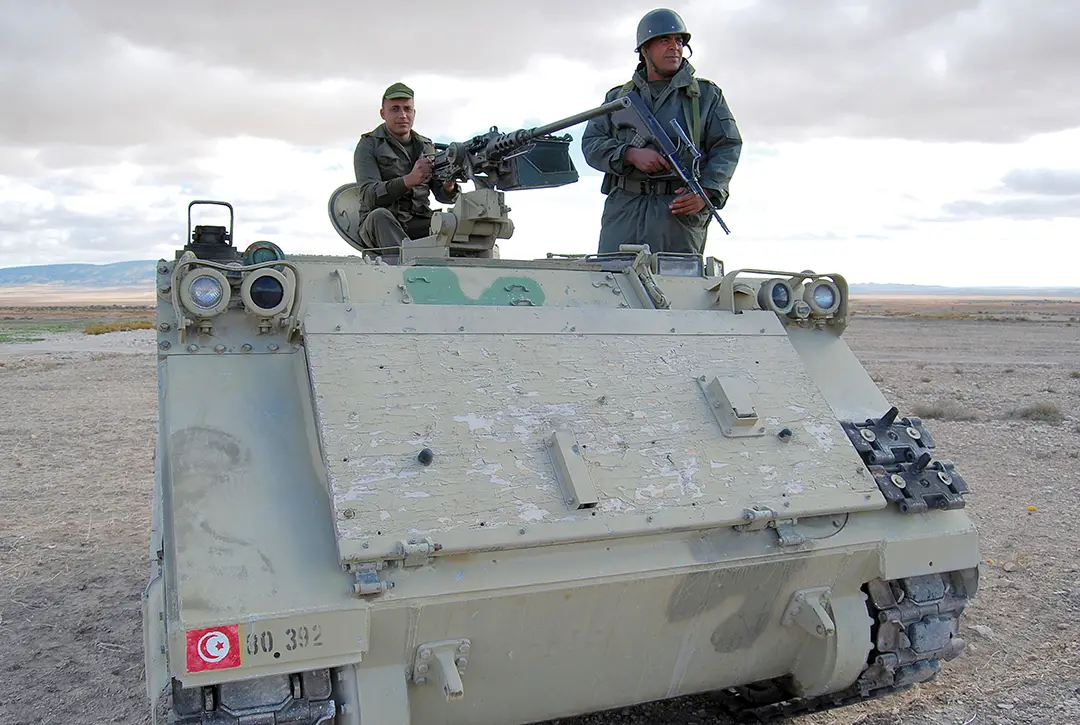
Diverse Terrain
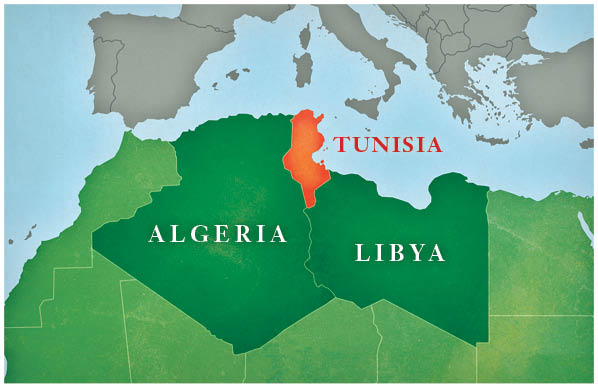
Tunisia’s borders are naturally permeable and diverse. They are forested and mountainous in the north, rocky in the center, and vast and desertlike in the south. The country covers 163,000 square kilometers and shares a 1,033-kilometer land border with Algeria to the west and a 473-kilometer boundary with Libya to the southeast. Its Mediterranean coastline stretches for 1,288 kilometers to the north and east.
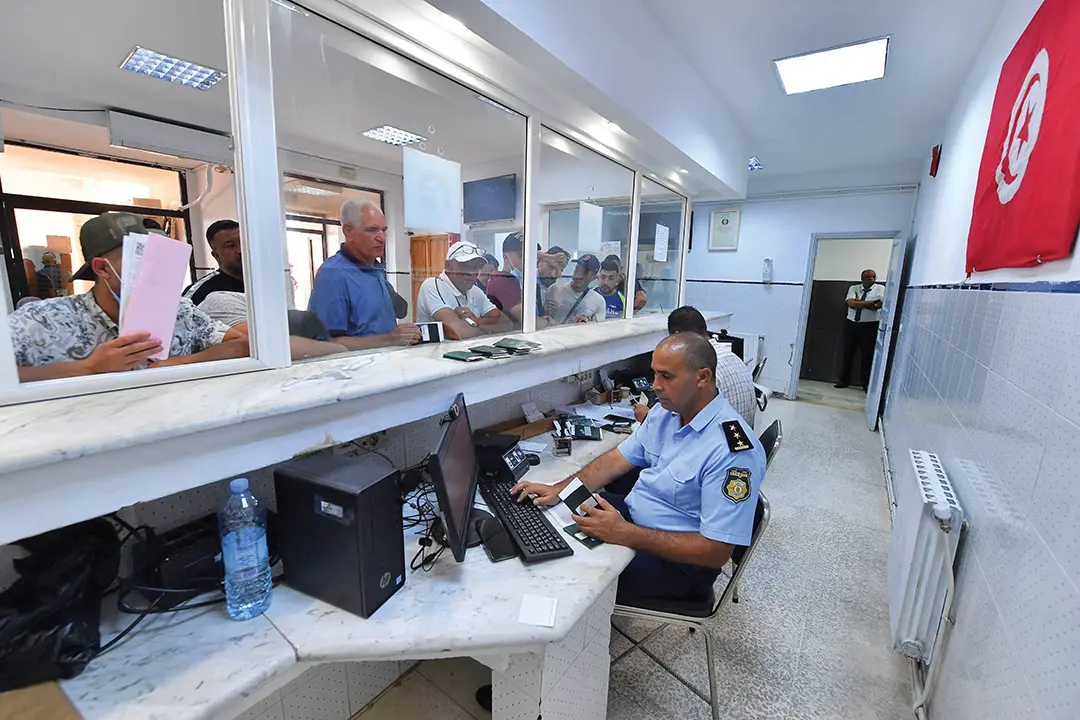
The country has nine international airports, 12 land border crossings and 21 ports, forming a network of 42 official crossing points jointly administered by customs and police services. Police handle travelers and their documents, while customs agents focus on transported goods intended for international trade.
Outside of these regulated crossing points, land and maritime border surveillance primarily is the responsibility of the Directorate General of Border Guards, a structure attached to the National Guard under the Ministry of the Interior. This institution includes land-based and maritime branches tasked with ensuring security in border areas, combating illegal migration and cross-border crime, and performing functions similar to those of customs police.
Addressing Border Security
Nations have expended enormous efforts to confront border issues at national, regional and continental levels. Nevertheless, many are inadequate given the scale of the challenges.
These efforts generally are reactive and mitigate only effects associated with insecurity. The lack of long-term prevention strategies aimed at anticipating imminent risks and eradicating the root causes of border problems is regrettable. Furthermore, various national, regional and continental plans struggle to be implemented due to insufficient political will and an uneven response from different stakeholders to collectively address common challenges.
These problems can arise from strained relations due to territorial disputes; rivalry, mistrust and suspicion; a desire to forge bilateral alliances with foreign powers at the expense of continental integration; prioritizing national interests over regional and continental integration; institutional compartmentalization that stifles collaboration; regional conditions that favor isolationism; and the persistence of crises and instability in some countries.
Tunisia’s Challenges
Since its independence, Tunisia has faced a multitude of border management challenges. These difficulties stem from geographical, political, economic and social factors. Among the main concerns are the presence of terrorist groups along its borders, the intensification of irregular migration, and the increase in smuggling and illicit trafficking, particularly of fuel, narcotics and firearms. This trafficking funds and supports criminal and terrorist organizations. The ongoing Libyan crisis significantly amplifies the scale and nature of the threats Tunisia faces.
Furthermore, armed groups continue to operate along Algerian borders, and major terrorist organizations such as the Islamic State group and al-Qaida in the Islamic Maghreb, originating primarily in the Sahel, seek to consolidate and expand their North African presence.
Several internal issues compound Tunisian border challenges. The national economy, weakened by successive crises, significantly limits the government’s capacity to effectively manage borders, which often are characterized by rugged terrain conducive to the illegal movement of goods and people.
The current border management system relies on a disparate patchwork of laws and regulations that assign responsibilities to various agencies. Procedures are rigid and centralized, and the political discourse remains largely focused on security, to the detriment of communities’ socioeconomic concerns and the unique historical and geographical characteristics of border regions.
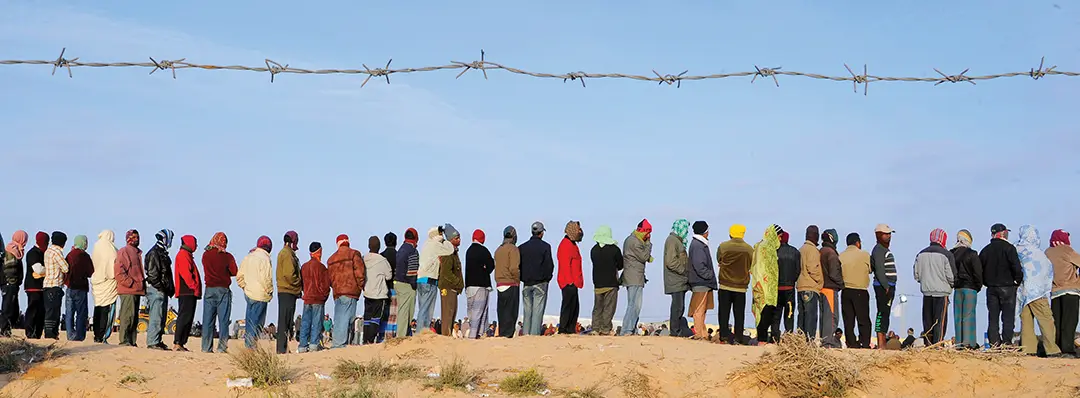
Tunisia is emerging as a transit country for migrants from other parts of Africa. This transformation has disrupted already fragile balances and further complicated the regulation of cross-border migration flows.
The outbreak of the first Libyan civil war in February 2011 forced hundreds of thousands of foreign workers to flee to Tunisia between March and October 2011. The majority of them were repatriated to their countries of origin within a few weeks, although a small number settled temporarily in Tunisia.
Tunisia also receives immigration primarily from Sub-Saharan Africa, including students, economic migrants, and refugees and irregular migrants fleeing conflict zones. According to the Tunisian Forum for Economic and Social Rights, the number of irregular Sub-Saharan migrants is constantly increasing.
Tunisia Takes Actions on Borders
Tunisian authorities have opted for a holistic and balanced approach based on security and development. This approach encompasses political, social, economic, cultural, religious, legislative and security dimensions. It also upholds close cooperation at local and global levels.
In this context, Tunisia has adopted two complementary strategies: a national border security strategy and a national migration strategy. Both are structured around a multidimensional approach that prioritizes prevention and includes a comprehensive and coordinated control and response mechanism.
Through the border strategy, the government has reorganized and strengthened security on the ground. Advanced units have been repositioned to enhance synergy between security and military forces and to prevent risks.
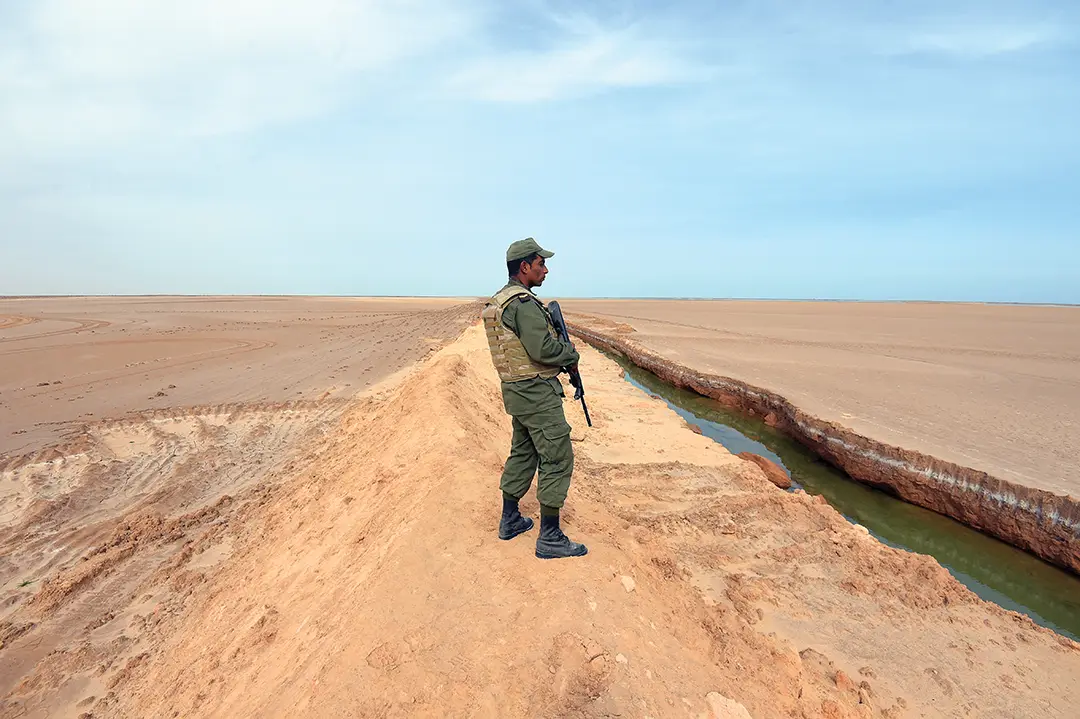
A buffer zone along southern borders includes several joint checkpoints between the national army and border guard units. Construction of a 2-meter earthen barrier along the southeastern border prevents vehicle crossings and smuggling. An electronic surveillance system strengthens border control with Libya.
Authorities also have acquired modern equipment to optimize airport and border controls and strengthened coordination between national border management stakeholders. A joint command has been established to supervise and coordinate ground operations. New initiatives train, equip, and support officers and agents who operate in remote border areas.
The national border security strategy seeks to improve operational and technical skills of border personnel, optimize use of available equipment and infrastructure, and harmonize practices at border crossings to guarantee security and facilitate the legitimate movement of people, services and goods. This approach includes rigorous measures against corruption and smuggling, thereby preventing cross-border infiltration.
Tunisia also has developed a National Migration Strategy designed through close collaboration with local and international stakeholders, civil society and the Tunisian diaspora. It proposes an inclusive and comprehensive vision based on respect for fundamental rights while promoting sustainable development, democratic governance and strengthened social cohesion.
The strategy is based on the following values: good governance in migration at the national and regional levels, respect for the human rights and dignity of migrants and their families, recognition and appreciation of the role of Tunisians residing abroad in the socioeconomic and cultural development of the country, and promoting enhanced coordination and cooperation among all stakeholders. The strategy establishes a permanent, inclusive and participatory dialogue with Tunisian civil society organizations and associations representing Tunisian migrants abroad, combating human trafficking and exploitation, and integrating migration issues into all sectoral policies.
Collaboration is Crucial
Technical, human and financial resources, and robust international cooperation based on solidarity and mutual trust are essential to support these strategies. To this end, African countries must combine their efforts and pool their resources to maximize their potential and prospects. Each nation must make its resources available to its community and neighboring countries.
Tunisia has prioritized an approach based on strategic cooperation with various nations and international institutions. This collaboration has fostered fruitful alliances, contributing to the development of an innovative border management policy. The main objective is to improve institutional mechanisms by drawing on the most successful experiences at the regional and global levels, while also rationalizing the use of resources allocated by international partners. As a result, Tunisian border services now operate in synergy with their counterparts in neighboring countries. This strategy is based on mutual trust, transparency, equitable partnership, respect for national sovereignty and the inviolability of recognized borders.
Thus, Tunisia has concluded several agreements with neighboring countries. These agreements initially focused on demining and the demarcation of common borders. Subsequently, various bilateral and multilateral conventions were signed to promote cross-border development projects in key areas such as health, transportation, trade, the environment, civil protection and disaster management. These agreements also include reciprocal commitments aimed at facilitating access, free movement, and the right of residence, work and establishment for nationals of each country. Some conventions even provide for specific arrangements, such as grazing access during droughts or obtaining permits for livestock to move between territories.
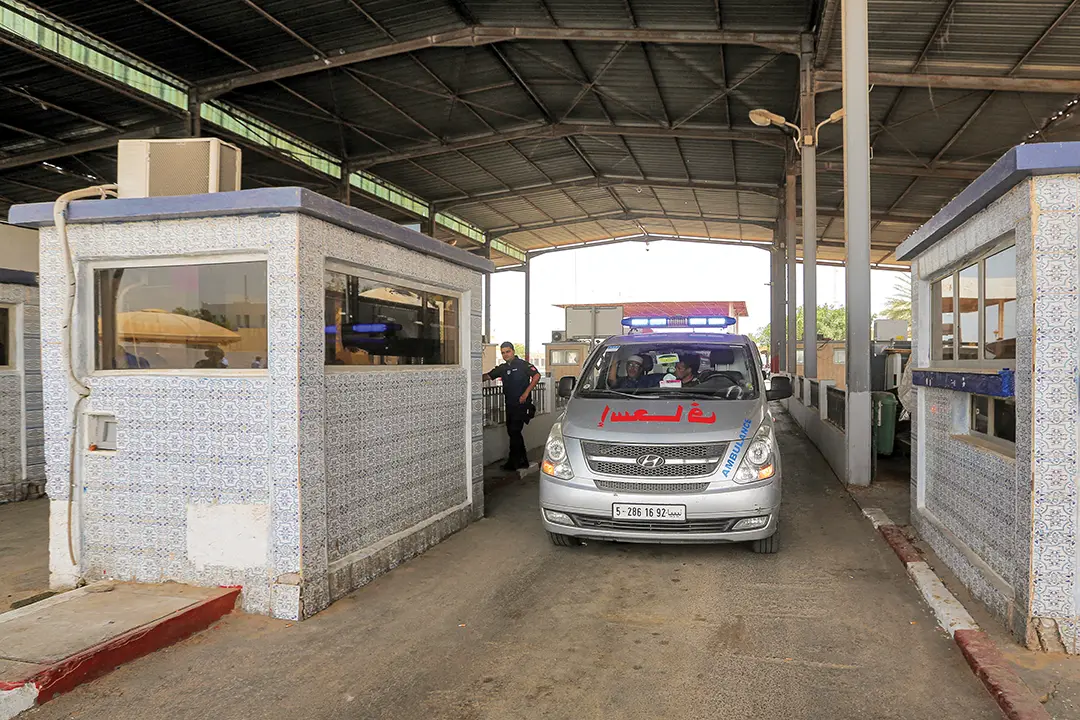
Tunisia has established joint commissions with its two immediate neighbors to address border security. Interactions between Tunisian and Algerian authorities are regular and productive thanks to a permanent organization and a stable structure. Negotiations with Libyan representatives are more challenging due to the difficulties associated with the absence of a single, legitimate central authority.
It is crucial that African nations identify their own challenges, determine their specific needs and take ownership of financing their initiatives so that their partners can contribute without bearing the entire burden and associated consequences. Doing this enhances efficiency, generates substantial savings, and positions Africa as a continent where cross-border travel and commerce can occur efficiently and safely. Border issues can no longer be viewed as peripheral. They are now central to national security and economic development in Africa. By prioritizing collaborative border security, African countries can make major economic strides and help make the continent better integrated.
About the author: Retired Col.-Maj. Sakli is the former central director of the Tunisian border guards and currently works as an independent border security expert and trainer. He is motivated by a desire to improve border security and cooperation on the African continent.