
A militia that was trained and armed by Russian mercenaries in the Central African Republic is turning on the CAR government and wreaking havoc.
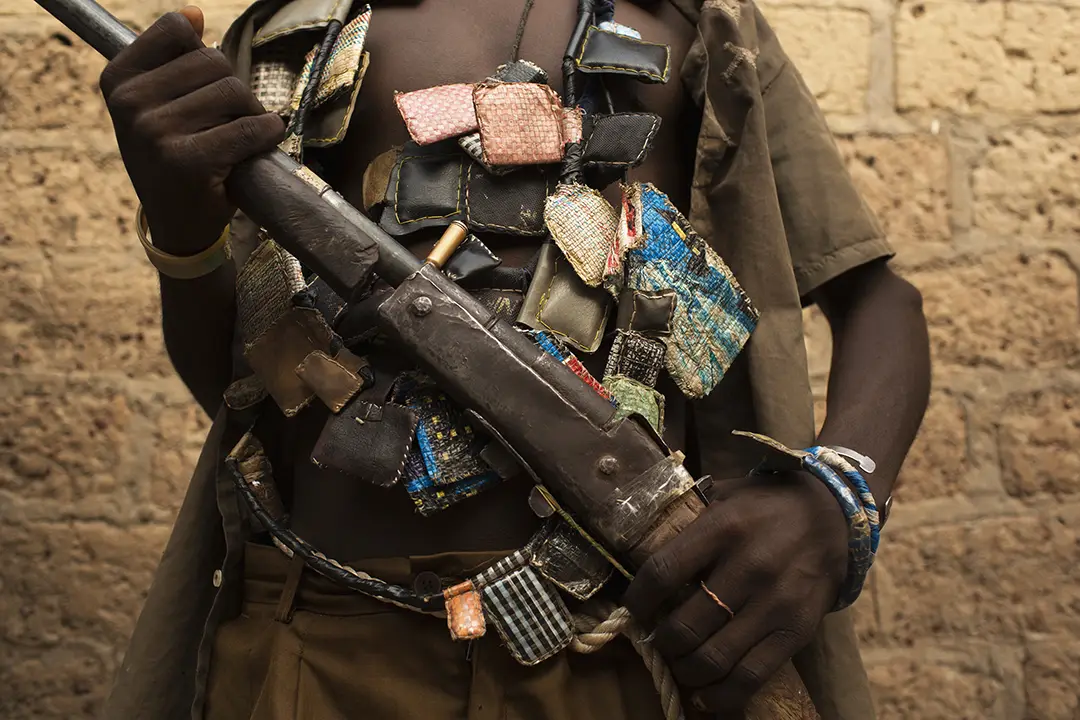
The Azande Ani Kpi Gbe (AAKG) took up arms in 2023 in the southeast of CAR near the border with South Sudan and the Democratic Republic of the Congo. The group billed itself as a defender of the ethnically Azandé people who live in the tri-border area. Clashing mostly with ethnic Fulani fighters, the group won control over the town of Bambouti, giving it access to gold mines and cross-border weapons trafficking.
The CAR government, which had sustained military losses in the region, saw an opportunity to co-opt the group. In 2024, hundreds of Azandé fighters received training from Russian Wagner mercenaries. They were integrated into the Central African Armed Forces in a unit known as Wagner Ti Azande (WTA), which operated alongside Russians.
For a time, the CAR government saw it as a success story.
“We provided them with training. They are sons of the country who wanted to defend their territory. That was only natural,” an advisor to CAR President Faustin-Archange Touadera said, according to Agence France-Presse.
However, while fighting alongside Wagner, the Wagner Ti Azande as well as other AAKG fighters were accused of war crimes including targeting Muslim communities and refugees. A U.N. report found they were “creating a climate of terror” through a public execution, attacks on a Fulani camp that killed 12 civilians, and efforts to “cleanse” the Dembia area of Muslims.
“These horrible crimes must not go unpunished. Accountability is fundamental to ensuring such violations never happen again,” U.N. High Commissioner for Human Rights Volker Türk said in 2025 when the report was released.
It was not long before AAKG fighters turned their guns on their erstwhile allies. The AAKG voiced anger over the terms of their integration in the CAR military and the fact that the government signed a peace deal with a rival militia known as the UPC. During a heated exchange, Russian mercenaries lynched an AAKG member, prompting the militia to expel its Russian trainers.
Since then, the government has been unable to disarm AAKG fighters, and the group has continued to launch attacks. In one incident, militia members kidnapped four civil servants in Bambouti and made ransom demands of millions of CFA francs. During the national election in December 2025, AAKG militants attacked convoys, campaign teams, public officials, military positions and civilian infrastructure, the U.N. reported.
“By relying on the Zandé militia, the CAR authorities exacerbated rather than relieved tensions in the prefecture,” the International Crisis Group reported.
The AAKG is also reportedly forming alliances with Azandé groups in South Sudan and the DRC, widening the scope of ethnic conflict. Experts point to it as a case study of why nations should not arm ethnic militias and outsource security provision to untrained, undisciplined fighters.
“The AAKG case is especially revealing because it demonstrates a consistent pattern in Russian military influence operations: short-term tactical gains through proxy formation followed by long-term instability,” the Robert Lansing Institute for Global Threats and Democracies Studies reported. “The result is a rapidly expanding threat environment that risks reopening dormant conflict corridors from South Sudan to DR Congo.”