

As African nations seek to disrupt terror organizations, they increasingly face the challenge of dismantling terrorists’ multifaceted financial systems.
This is particularly true in East Africa, where al-Shabaab and Islamic State-Somalia (IS-S) use extortion, smuggling, money laundering and illicit taxes to collect hundreds of millions of dollars.
Al-Shabaab’s tentacles spread throughout Somalia’s economy, allowing the terrorist group to raise an estimated $200 million a year to finance its operations. IS-S raises at least $1.2 million a year through its criminal activities and shares some of these funds with other Islamic State groups through its al-Karrar office, a regional command center based in Somalia. Al-Karrar supports Islamic State operations across eastern, central and southern Africa.
While al-Shabaab, IS-S and other terror groups use traditional methods, such as hawala, to move money, they are also embracing digital technology such as cryptocurrency to manage their transactions. That could give law enforcement agencies an advantage when it comes to tracking transfers — if they have the technology, including anti-money laundering AI software, and the skilled personnel to do it.
“These tools can enable analysts to rapidly collect, process, and synthesize large volumes of data, particularly in resource-constrained settings with small analytic teams,” analysts Daisy Muibu and Nicole Mazurova wrote recently for the African Center for Strategic Studies.
Enforcement agencies that investigate terrorist financing are improving, but critical gaps in evidence handling and specialized expertise remain, according to analysts. In many cases, African nations struggle to acquire the technology and train the personnel to track terrorist groups’ illicit finances. Somalia, for example, still relies largely on paper documents to trace financial transactions. Enforcement staff are often inexperienced in investigating digital crime and handling digital evidence. Further complicating things, a lack of uniform technology makes it difficult for nations to collaborate on investigations.
“Despite notable advancements in strengthening countering terrorism financing in East Africa, terrorist groups like al-Shabaab continue to adapt and exploit institutional gaps,” Muibu and Mazurova wrote.
Kenya has become a model for bridging the gaps among enforcement agencies that investigate and prosecute crimes related to terrorist financing. Interagency guidelines connect the Anti-Terrorism Police Unit with the Financial Reporting Centre, and the Office of the Director of Public Prosecutions. The Financial Reporting Centre uses its ties to the Directorate of Criminal Investigations and the Asset Recovery Agency to deploy multiagency financial crime units against money laundering along the country’s borders.
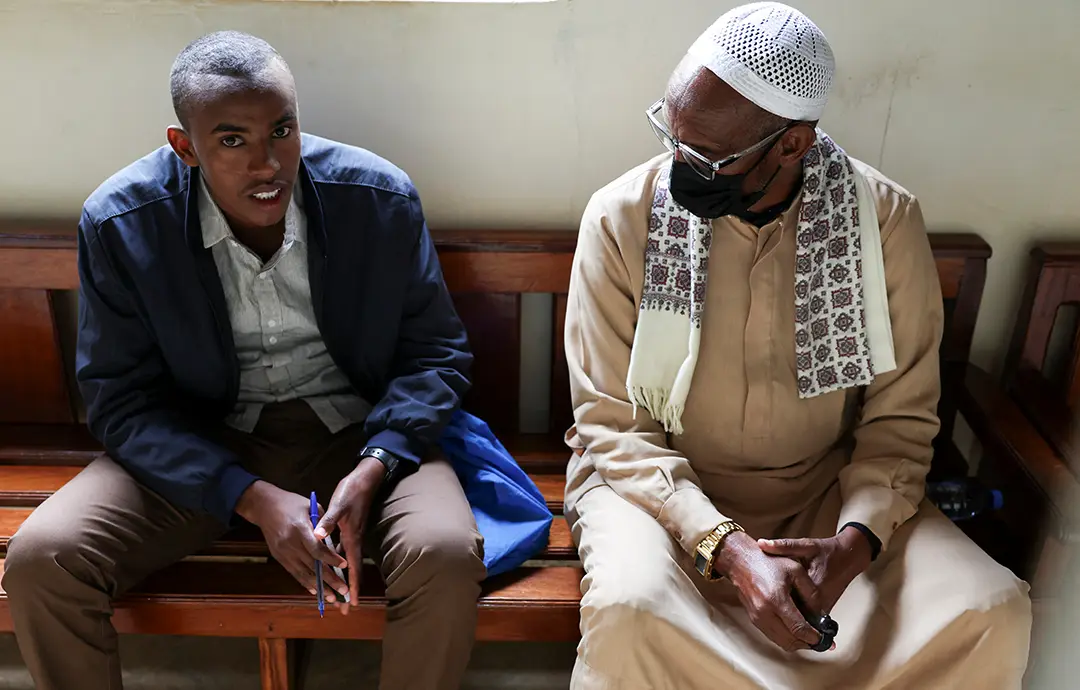
The 2025 conviction of two men involved in funding al-Shabaab’s 2019 attack on the Dusit D2 Hotel in Nairobi showed how collaboration among security forces, financial investigators and prosecutors can disrupt terrorists’ financial operations, Muibu and Mazurova noted.
In 2025, Puntland troops captured of IS-S’s finance chief Abdiweli Mohamed Aw-Yusuf. That operation demonstrated the role military intelligence can play in disrupting terrorist finances in conflict zones. However, troops frequently lack the training in chain of custody and other concepts crucial to collecting and preserving evidence that can be used to prosecute terrorist financing cases.
To disrupt terrorists’ financing networks, experts recommend that African nations work together to share resources while boosting enforcement personnel’s skills for tracing cryptocurrency transactions, preserving digital evidence, and investigating the increasingly complex ways terror groups move their money.
“Strengthening these skills will bridge operational gaps with law enforcement, enhancing the investigation, interdiction, and prosecution of terrorism financing networks,” Muibu and Mazurova wrote.