

Analysts often say that creating economic growth is a key counterterrorism tool in regions where terrorists recruit new members.
Across West Africa, for example, coastal countries’ border regions are typically far from the central government and lacking in both resources and employment opportunities. Analysts note that such conditions tend to build resentment among those populations, making them vulnerable to the propaganda of terrorist groups.
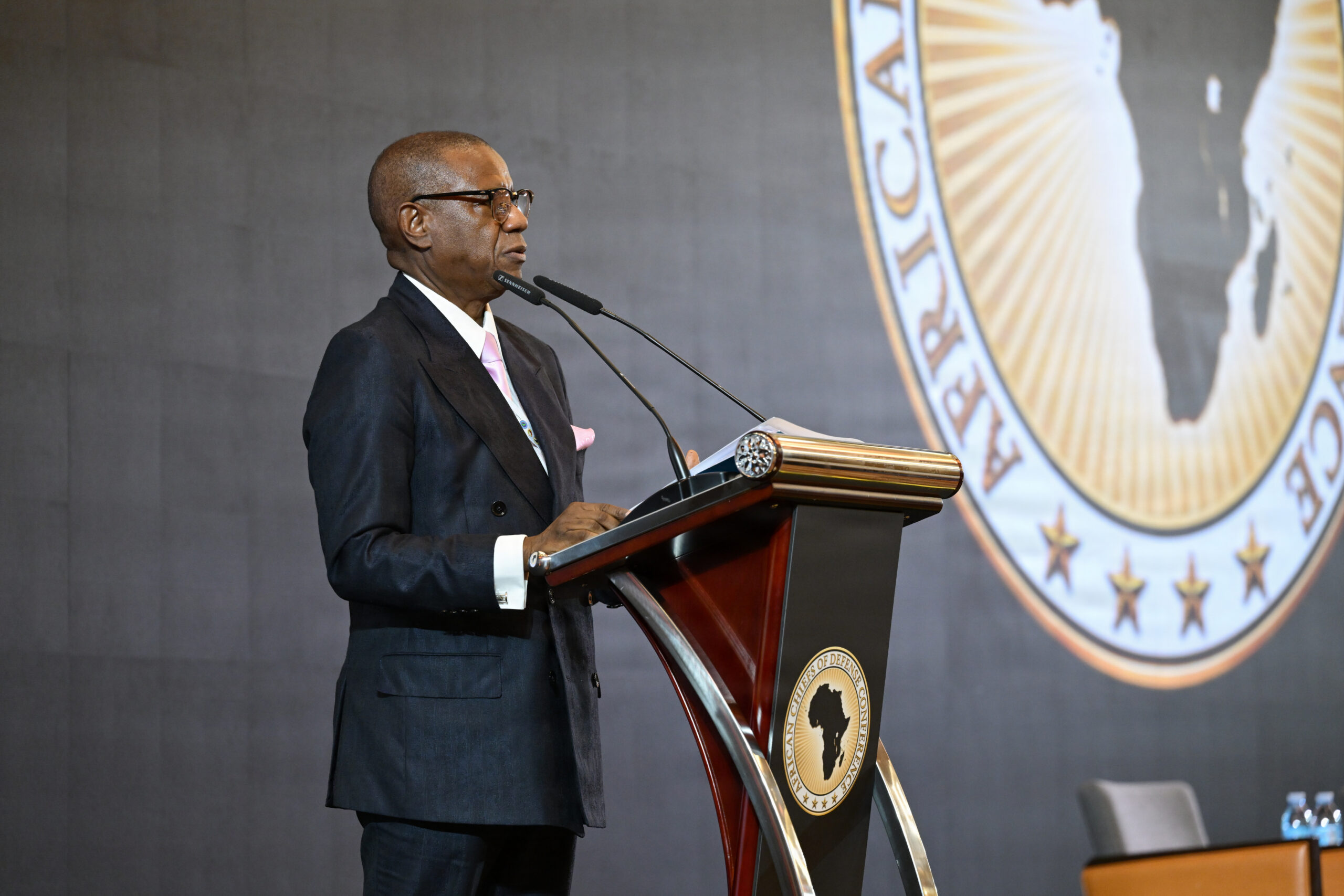
According to former Angolan minister of state and current law professor Dr. Carlos Maria Feijo, security and economic growth are intertwined: Security creates the environment that makes economic growth possible and economic growth creates the conditions that improve security.
“Too often, conventional thinking sets military expenditure against development expenditure, as though they were quantities that subtract one from the other,” Feijo told the continent’s top military leaders at the African Chiefs of Defense conference in Luanda, Angola.
“The challenge before the Chiefs of Defense … is to understand that your mission, rightly understood, is to create the conditions for investment to see in Africa not a risk to be avoided, but an opportunity to be embraced,” Feijo added.
By investing in job creation, education and infrastructure, governments and international organizations can reduce the appeal of extremist groups, according to researchers with the Borgen Project.
Côte d’Ivoire provides an example of how that approach to counterterrorism can work. According to the International Crisis Group (ICG), Côte d’Ivoire responded to extremist incursions several years ago by boosting security along its northern border while adding economic investments designed to alleviate poverty where extremist groups seek recruits.
The economic investments included apprenticeships to address high youth unemployment and credit to help residents expand their own small-scale businesses. Those investments have helped Côte d’Ivoire avoid a major terrorist attack since 2022, according to the ICG.
“The dual approach Côte d’Ivoire’s government has adopted in managing the jihadist threat has likely helped thwart attacks,” the ICG wrote. “Yet Côte d’Ivoire cannot afford to be complacent.”
Economic activity cannot thrive amid the kind of uncertainty in environments where terrorism and criminal behavior thrive, Feijo said.
“When the Armed Forces ensure that a railway runs, that a port operates without disruption, that a border is not a free gateway for illicit trafficking, they are conducting, in the strictest sense, an economic policy of the first order,” Feijo said. “Stability is not decreed: it is built. Prosperity is not imported: it is cultivated upon the firm ground of security.”
To build economic prosperity, African countries must invest in the kind of security that can subdue illicit activities, such as smuggling and trafficking, secure their country’s borders and undermine the kind of disinformation that can drive discontent, he added.
“The response to these challenges does not, happily, require the invention of new institutions,” Feijo said. “It requires that we activate, with method and political will, the architecture we already possess.”
He cited the example of his own country, Angola, and its ongoing recovery from nearly 30 years of civil war, as an example of the union of security and economic growth. By some estimates, Angola could have up to 20 million unexploded landmines still buried across its countryside. Governmental and nongovernmental organizations have spent decades locating and disarming mines that hinder agriculture and other economic development. In Benguela and Huambo provinces alone, crews have removed more than 280,000 pieces of unexploded ordnance.
“Here, on Angolan soil, lies the paradigm of the whole relationship between security and prosperity,” Feijo said. “First the ground is disarmed; then it is sown.”