Instability has been a fixture in Central African Republic since at least 2004, when a three-year civil war engulfed the country followed by years of insurgent battles. In an effort to restore order, the government invited Russian Wagner Group mercenaries to serve as trainers in early 2018.
By 2019, Wagner had more than 1,000 mercenaries in the CAR, where they embedded in the nation’s political, economic and social institutions, targeting gold, diamonds and timber for extraction. What has emerged is a conflict economy where mercenaries and others profit from continuing chaos in the nation.
“Wagner not only infiltrated local markets through force and intimidation but also secured a foothold in President Faustin-Archange Touadéra’s government, installing a Russian national as his chief security advisor,” Christopher Faulkner and Raphael Parens wrote for the Georgetown Journal of International Affairs.
In 2021, Wagner and government forces launched a nationwide military effort sold as a stabilization campaign, but which “shifted beyond counterinsurgency into a broader process of territorial, political and economic consolidation,” according to a June 2026 report for the Global Initiative Against Transnational Organized Crime.
Now, government and Wagner forces have combined to leverage an economy that once sustained rebel groups into networks that prop up Touadéra’s government and enrich Russia.
“Local elites, together with foreign security partners, co-opted armed groups and economic operators, have used coercion and organized crime to consolidate power, control resources and advance their financial interests, turning the CAR into a node for powerful transnational criminal networks,” according to the Global Initiative report, “Malicious Markets: Mapping the violent criminal ecosystem in the Central African Republic,” by Nathalia Dukhan and Ruben De Koning. Rwanda, Türkiye and the United Arab Emirates are among the other countries exerting influence in the country.
Russian mercenary involvement in the CAR is nakedly transactional. Its growth is intended to combine security, economics and politics to control natural resources to “entrench long-term Russian influence,” the 72-page report states.
“With Russian backing, Touadéra has consolidated political authority, and Wagner-linked and allied actors have become embedded in key ministries, the security apparatus, the customs administration and strategic resource sectors,” Dukhan and De Koning wrote. “Rather than delivering stability, Bangui and Moscow have deepened and systematized patterns of coercion, extraction and predation.”
The report argues that government gains against armed groups have not eliminated “conflict profiteering” from mines, trade routes and taxation, but shifted it to “government-linked players and networks and individuals within the government that are profiting from different sectors,” De Koning told The Africa Report magazine.
Russia in particular has profited from the CAR’s gold and fuel trades. Wagner has built an “illicit fuel supply chain” to cover its joint military operations with the government and its mining operations, the Global Initiative states.
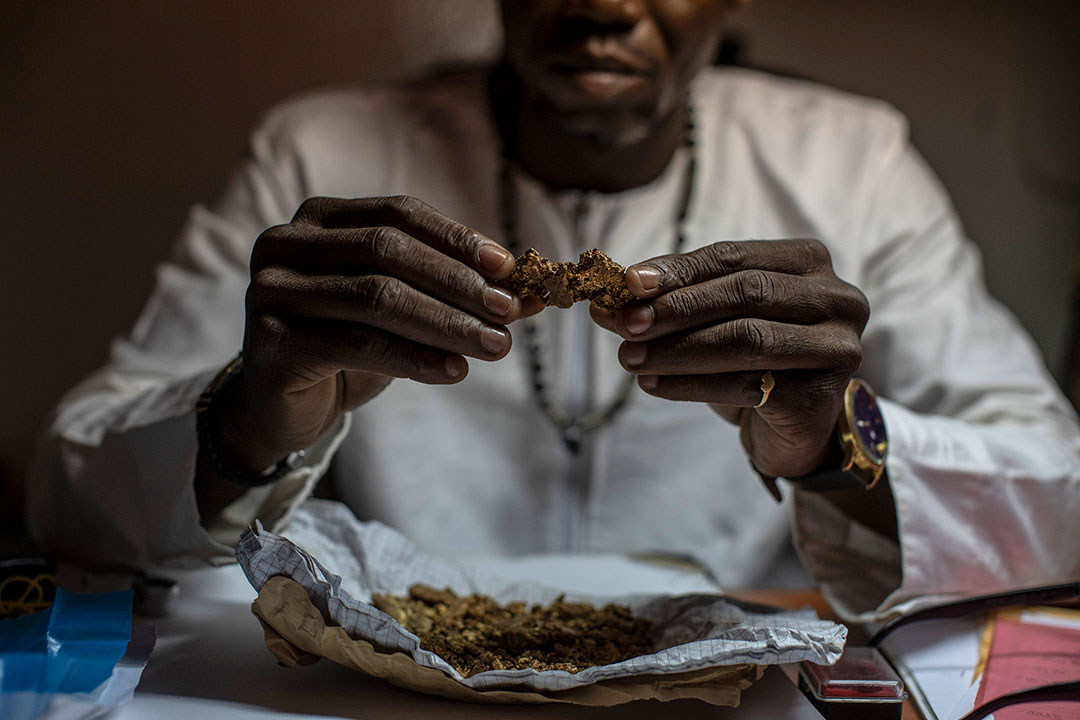
De Koning told The Africa Report that the breadth of Wagner’s involvement in the CAR’s gold trade surprised him. “What shocked me was the extent and the sheer volume of particularly the gold that has been extracted from the country,” he said, adding that Wagner-controlled interests produce about 5 metric tons of gold each year.
“This is gold that is worth an export value of about $250m, but on an international market it can easily go to $500m,” he said.
Starting in 2021, the Global Initiative reports, Russian and Rwandan forces recaptured key mining areas across the country, denying armed groups territorial control. As a result, more gold from artisanal sources has been exported through formal channels. In 2023, gold exports reached 1.7 metric tons. Exports were expected to total about 2.5 metric tons in 2025 but had hit up to 7 metric tons by year’s end.
That is “well beyond the artisanal production capacity, so it must include industrial gold and most likely gold from Wagner’s concessions,” De Koning told The Africa Report.
Although the Russia-CAR security arrangement somewhat unique on the continent, the Kremlin’s desire to drain African nations of their resources, particularly gold, is not. Russian forces took more than $2.5 billion in gold from Africa between February 2022, when Russia invaded Ukraine, through the end of 2023, according to The Blood Gold Report.
Russian gold profiteering comes mainly from the CAR, Mali and Sudan. Wagner gained exclusive rights to the Ndassima mine, the CAR’s largest, and Russia controls a major refinery and is the “dominant buyer of unprocessed Sudanese gold” in that nation, according to the report. In Mali, Russian mercenaries are paid millions of dollars a month in cash from the ruling junta, which relies on gold mining companies for most of its tax revenue. This arrangement bypasses sanctions, which are sidestepped by “complex smuggling routes and corporate subterfuge tactics” in the CAR and Sudan, the report states.