
A propaganda video showed a boatload of heavily armed Boko Haram fighters heading toward a Lake Chad island held by their rivals, soldiers from the Islamic State West Africa Province (ISWAP). The Boko Haram fighters noticed another boat nearby and chased it down, guns blazing. After a couple of minutes, the Boko Haram fighters celebrated as blood clouded the water.
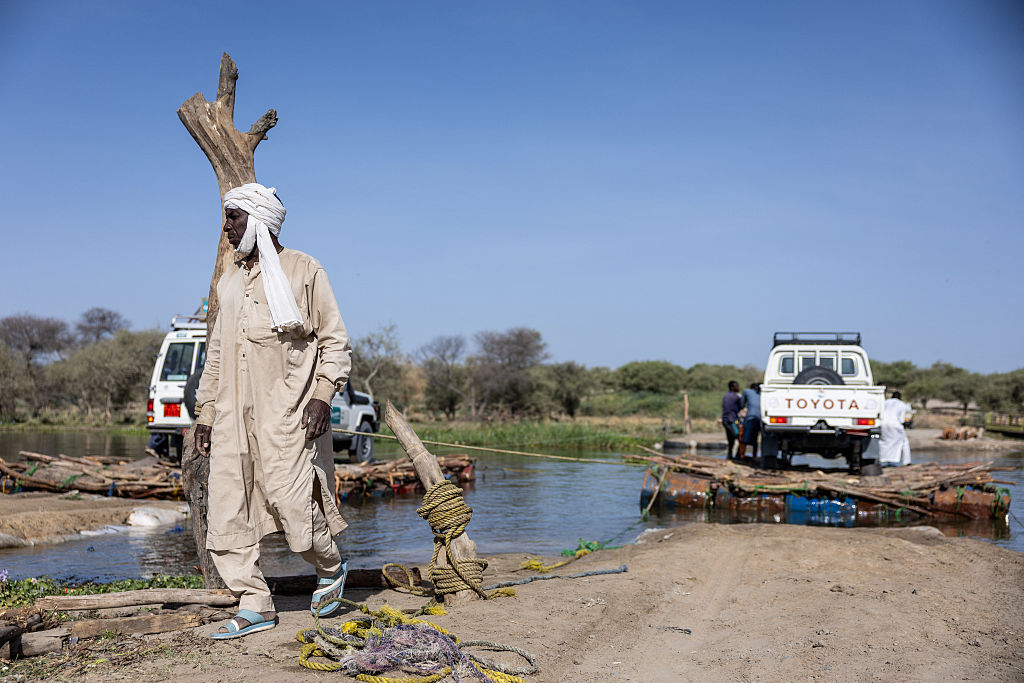
Videos produced by both terror groups suggest that the massive basin straddling the porous, largely ungoverned borders of Cameroon, Chad, Niger and Nigeria has become a war zone, with civilians caught in the crosshairs. In their back-and-forth battle for control of the islands, the groups have increasingly kidnapped and extorted their victims to fund their operations.
Both groups seek to expand their influence and dominate regional trade. ISWAP alone collects an estimated $41.5 million annually by extorting fishing communities on Lake Chad, according to the Daily Telegraph newspaper. The group uses artificial intelligence in its communications and drones and other advanced weaponry in attacks on other terrorists and state forces.
Former terrorist Bahana Alhadji told the newspaper that ISWAP often spares civilians, while Boko Haram kills with impunity. On May 4, Boko Haram killed 24 Chadian Soldiers and wounded 46 in an attack on the Barka Tolorom military base on the shores of Lake Chad. The terrorists killed two Chadian generals in an attack two days later, after which Chad declared three days of national mourning.
Alhadji said he joined Boko Haram at 22 because he could no longer make a living as a fisherman on Lake Chad. He was offered three teenage wives upon joining the group but has since left it after several years. He now lives in a displacement camp in western Chad and recently recalled battles with Chadian and Nigerian forces, as well as ISWAP.
“I have killed many people,” Alhadji told the Daily Telegraph. “The toughest fighting was with ISWAP.”
High-Level IS Leader Killed
Militaries have focused more heavily on ISWAP since the group launched a wave of deadly, complex attacks on military camps in Lake Chad border zones last year. On May 16, a joint Nigerian and U.S. strike killed Abu Bilal al Minuki, identified as the IS group’s director of global operations, in northeastern Nigeria. On June 3, the Nigerian military killed more than 50 ISWAP members and another top commander during battles across Borno State.
Analysts warned that, despite the losses, the group remains dangerous.
“Targeted leader killings yield mixed results and tend to have more symbolic than practical impact,” wrote Raoul Sumo Tayo, a senior researcher at the Institute for Security Studies. “In ISWAP’s case, al-Minuki’s death would undoubtedly undermine group morale and force members to refocus on ensuring their survival. The strike could also lead to retaliatory attacks by jihadists, if only to regain the psychological advantage.”
A June 5 attack on a Nigerian Army base in Borno State killed at least eight Soldiers and wounded several others, although the Army did not specify which group was responsible. However, more than 400 women and children abducted by Boko Haram were released in early June by the group in Gwoza, Borno State, which is part of the basin.
Catastrophic Humanitarian Crisis
The effects of ongoing violence on local populations are catastrophic, particularly in Cameroon’s Far North region, Chad’s Lac region, Niger’s Diffa region and northeast Nigeria. According to the United Nations Office for the Coordination of Humanitarian Affairs, there are more than 3.25 million internally displaced people and refugees in the region and, as of April 29, 8.2 million people needed humanitarian aid. Many of the 7.4 million people facing acute food insecurity are children.
Cameroon’s Far North is home to more than 476,000 people displaced by violence along the border with Nigeria, where fears of attacks and kidnappings influence how people work and access health care. Boko Haram, ISWAP and other armed nonstate groups conduct regular raids on the Far North departments of Logone-et-Chari and Mayo-Tsanaga, involving shootings, looting of food and livestock, abductions and killings.
“People are afraid to go farming,” Wasa Hassan, a local community health worker, told Doctors Without Borders (MSF). “Kidnappings for ransom have become common, and fear dominates daily life.”
Last year, MSF teams conducted more than 45,000 outpatient consultations, performed more than 1,600 emergency surgeries, treated 2,250 malnourished children and supported more than 1,000 pregnant women.
“Access to health care remains a major challenge,” said Dr. Michel Madika, MSF’s medical coordinator in Cameroon. “Poverty, under-equipped health facilities, staff shortages, recurrent epidemics, and food insecurity continue to affect people’s health.”