
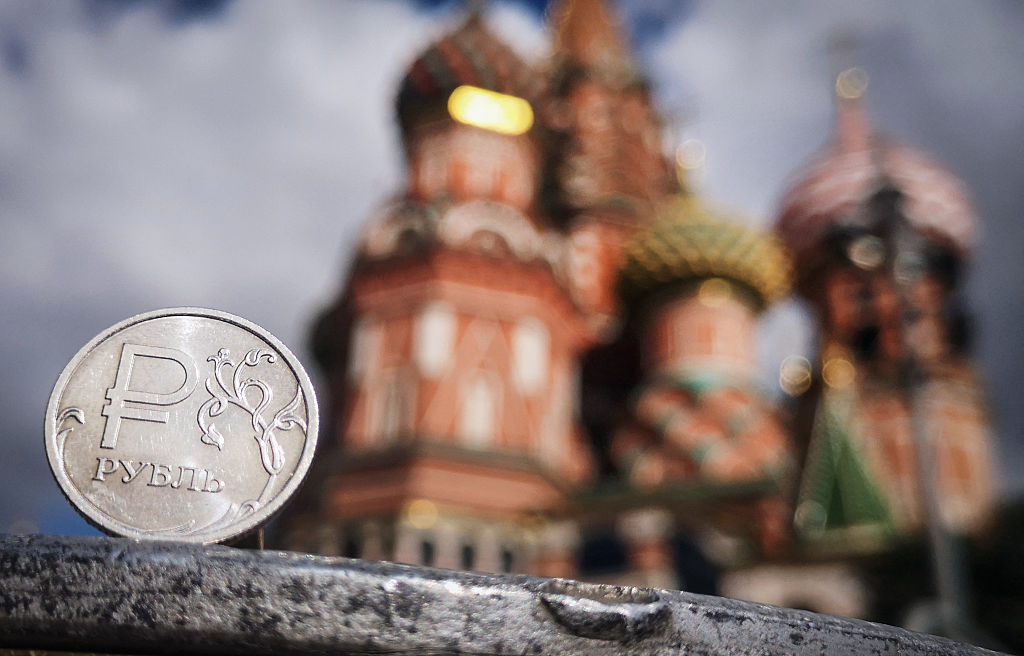
Russia is attempting to build its own financial system in Africa using a cryptocurrency tied to the ruble in what experts believe is an effort to evade international banking sanctions imposed after the 2022 Ukraine invasion.
According to the Center for Information Resilience (CIR), the currency, known as A7, already has found users in Nigeria and Zimbabwe. Togo could be next — the company that owns the currency is advertising for a project manager to develop a system for it there.
A7 was started in 2024 by Ilan Sor, a Moldovan oligarch in partnership with Promsvyazbank, a lender tied to Russia’s defense industry. Both Sor and Promsvyazbank (PSB) are under international sanctions. The A7 project connects two trends in Africa: the rapid expansion of cryptocurrency for daily transactions and Russia’s growing footprint on the continent.
Since Kenya launched its M-Pesa digital currency in 2007, cryptocurrencies have evolved rapidly into a popular form of money, particularly among consumers without bank accounts. Between 2024 and 2025, cryptocurrency transactions across sub-Saharan Africa jumped 52%, according to a report by industry expert Chainalysis. That was more than double the 24% increase between 2023 and 2024.
Collectively, sub-Saharan Africa conducted more than $205 billion in crypto transactions between 2024 and 2025. While that total represented the smallest cryptocurrency economy globally, the market is growing rapidly.
Cryptocurrency allows people to receive remittances from friends and relatives working abroad without going through traditional banking systems. Crypto systems have also become popular for cross-border business-to-business transactions in Nigeria and South Africa, the continent’s leading crypto markets. Ethiopia, Kenya and Ghana round out Africa’s top five crypto markets.
Nigeria leads Africa in crypto adoption and ranks sixth worldwide. A devaluation of the naira in March 2025 caused a spike in crypto use as people bought tokens as a hedge against inflation, according to Chainalysis. In Nigeria, “persistent inflation and foreign currency access issues … have made stablecoins an attractive alternative,” the analysts reported.
Meanwhile, Russia continues to seek ways to evade international sanctions to fund its invasion of Ukraine. In recent years, that has meant trading mercenary services via the Wagner Group, now the Africa Corps, for mining rights to diamonds, gold and other precious metals.
The introduction of ruble-based cryptocurrency marks a shift in strategy, according to CIR. A7’s target market includes large companies, small businesses and individual users, CIR analysts wrote in a recent report.
A7 recently opened an office in Nigeria, and Nigerian businessman Chidiebere Emmanuel Ajaere has registered two businesses, A7 Africa and A7 Nigeria, in Kyrgyzstan, the home base of A7, according to CIR.
Authorities with A7 quietly visited Madagascar and Togo in January. Around that same time, Africa Corps mercenaries arrived in Madagascar. Two months later, A7 began recruiting for someone to set up a network in Togo.
“These developments may indicate that A7’s operation is entering a new phase in which it is more directly integrated into the machinery of the Kremlin’s strategic and military operations internationally,” CIR analysts wrote. “This has implications for the nature of the risks posed by A7’s network and for the responses necessary to combat them.”
The A7 system promotes itself as a source of international import-export services, currency exchange, international payments and purchases, and passive income generation. It claims to have more than 10,000 users. Every purchase of an A7 coin puts cash — so-called “fiat money” — into PSB, which profits from interest on the money it holds, CIR researchers noted. That’s money that can then flow into Russia’s defense industry.
It’s not clear, however, that using A7 coins for financial transactions is legal.
“The blending of traditional, fiat-based and more novel cryptocurrency strategies for moving money across borders is likely to present a significant challenge to existing sanctions regimes,” CIR researchers wrote. “This raises the question of whether simply buying tokens could itself be a potential sanctions violation.”