
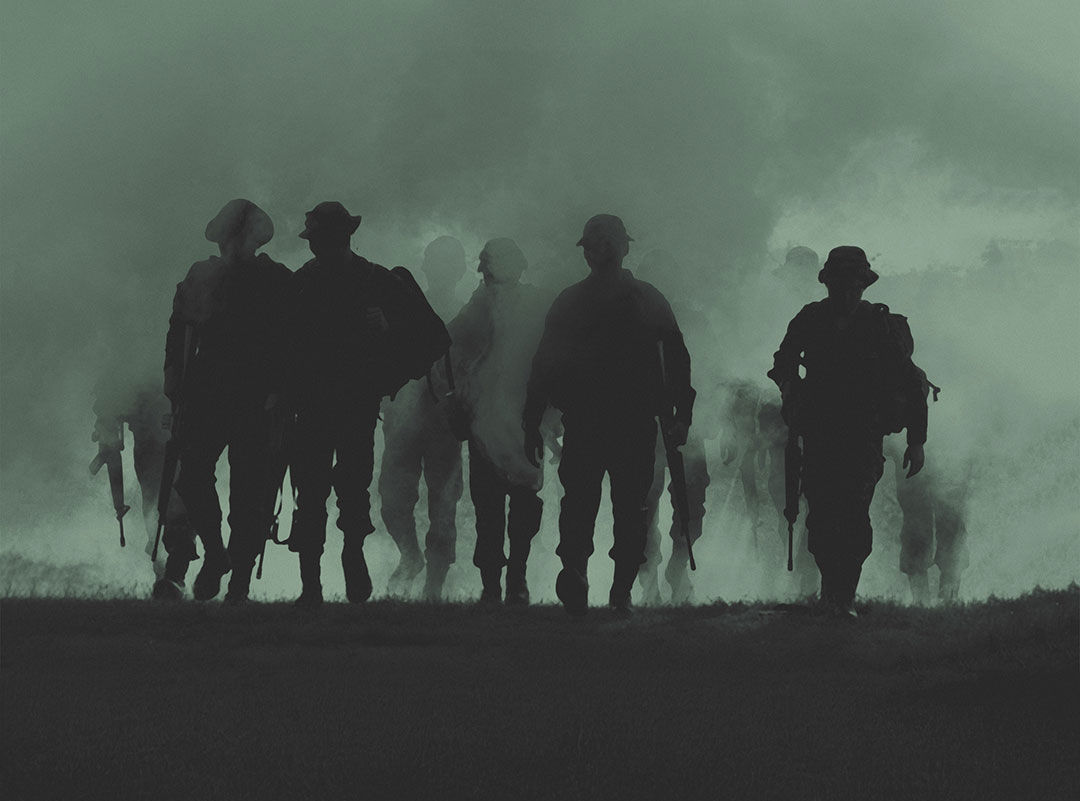
African governments for decades have grappled with the destabilizing effects of private military companies (PMCs), mercenaries and paramilitary groups, which are paid to protect leaders or fight alongside government forces in conflict zones — often without regard for local populations.
Mercenaries such as Russia’s Africa Corps, formerly the Wagner Group, are accused of committing atrocities against civilians in the Central African Republic, Libya, Mali, Mozambique and Sudan. These veteran troops fight and spread the Kremlin’s geopolitical agenda for pay. However, a new wrinkle in the continent’s war on terror is developing as seasoned, foreign terrorists are offering their services to insurgents, often for ideological reasons.
Aries D. Russell, of London-based Aries Intelligence, characterized these organizations, especially those trained in Iraq and Syria, as “black market PMCs.” They have rotated between terrorist conflicts in the Horn of Africa and the Sahel.
These groups are “organized, operational entities that offer military-style services — training, advising, tactical support — to jihadist groups, even if informally structured or loose in governance,” Russell told ADF. “While these groups are ideological and networked rather than profit-maximizing corporations in the Western sense, they do behave like contractors or subcontractors in a militant ecosystem. They differ from conventional mercenaries in their ideological as well as transactional orientation. They do not always fight purely for pay.”
The Nexus of al-Shabaab and the Houthis
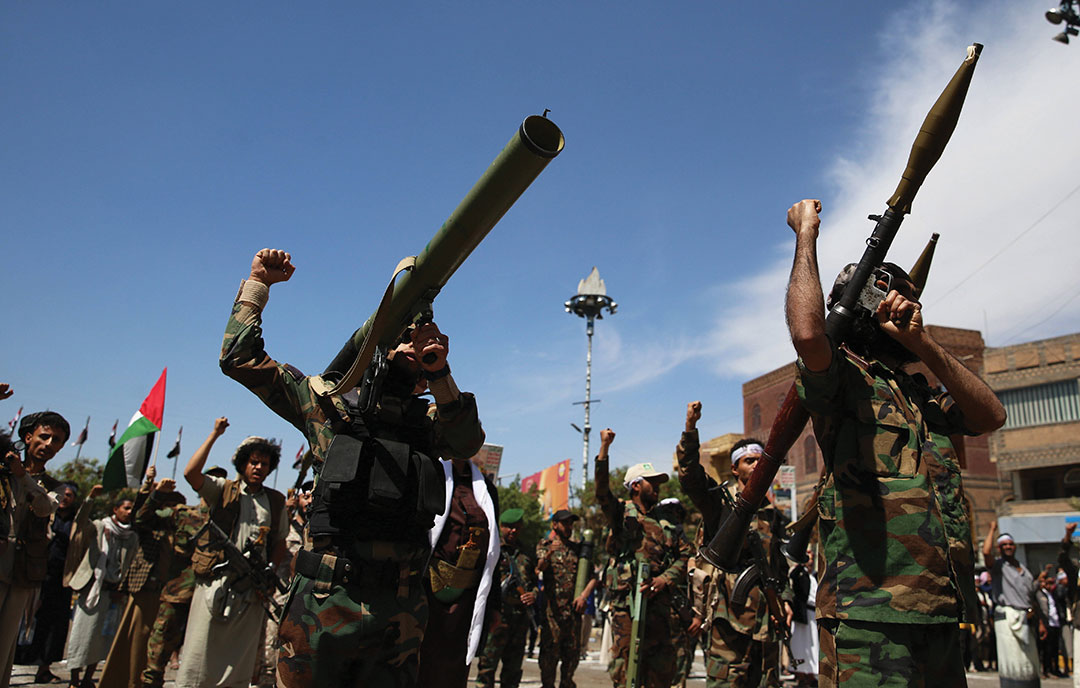
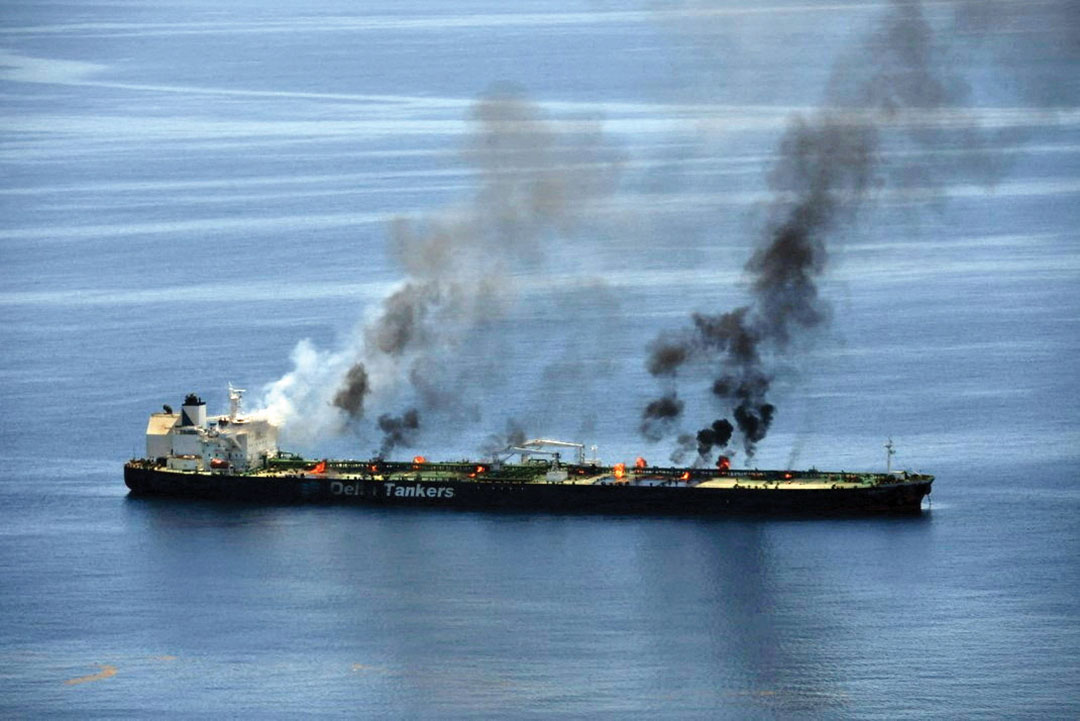
Ties between Yemen’s Iran-backed Houthi rebels and al-Shabaab, the terror group that controls areas in central and southern Somalia, exemplify this trend. In 2024, the Houthis agreed to supply al-Shabaab with weapons and technical assistance in return for ramping up piracy and kidnappings for ransom in the Gulf of Aden and off Somalia’s coast, which are among the world’s busiest shipping lanes.
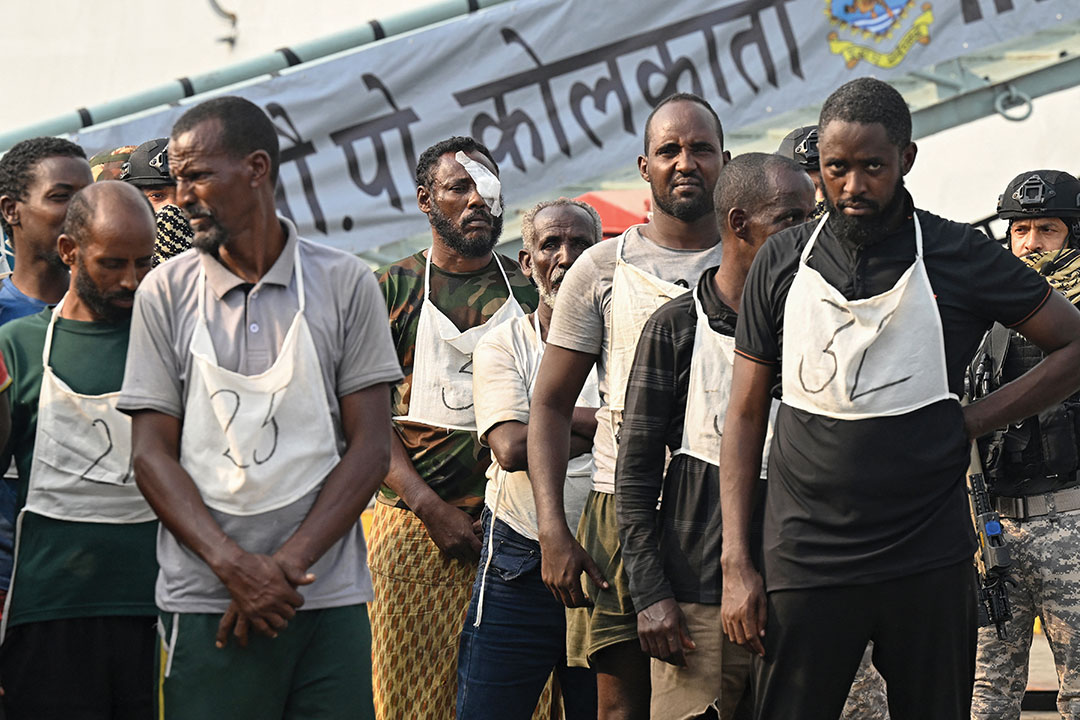
The Houthis had increasingly attacked ships transiting the Red Sea in response to Israel’s war against Hamas, which began in October 2023. This drew the attention of international counter-piracy naval resources deployed in the region and acted as a distraction, allowing Somali pirates to stage a comeback. In 2024, al-Shabaab reached a deal to provide protection to Somali pirates in exchange for 30% of all ransom proceeds and a cut of any loot. Chaos ensued.
After a six-year lull in major Somali pirate attacks, more than 20 attacks were recorded between November 2023 and April 2024, although the number dropped to three in the first half of 2025. Two Somali gang members said they were taking advantage of the Houthi distraction to get back into piracy.
“They took this chance because the international naval forces that operate off the coast of Somalia reduced their operations,” a pirate financier who goes by the alias Ismail Isse told Reuters.
As Russell noted, the Houthis have received advanced military training in Iran, Iraq and Lebanon, where they gained skills such as missile assembly and drone coordination. He wrote that they pass that knowledge on to al-Shabaab and the Islamic State in Somalia (ISSOM), which primarily operates in mountainous areas in the country’s semiautonomous Puntland region.
Al-Shabaab fighters also have traveled to Houthi-controlled ports in Yemen, where Hezbollah and Houthi instructors introduced them to drone deployment, missile coordination and asymmetric warfare techniques.
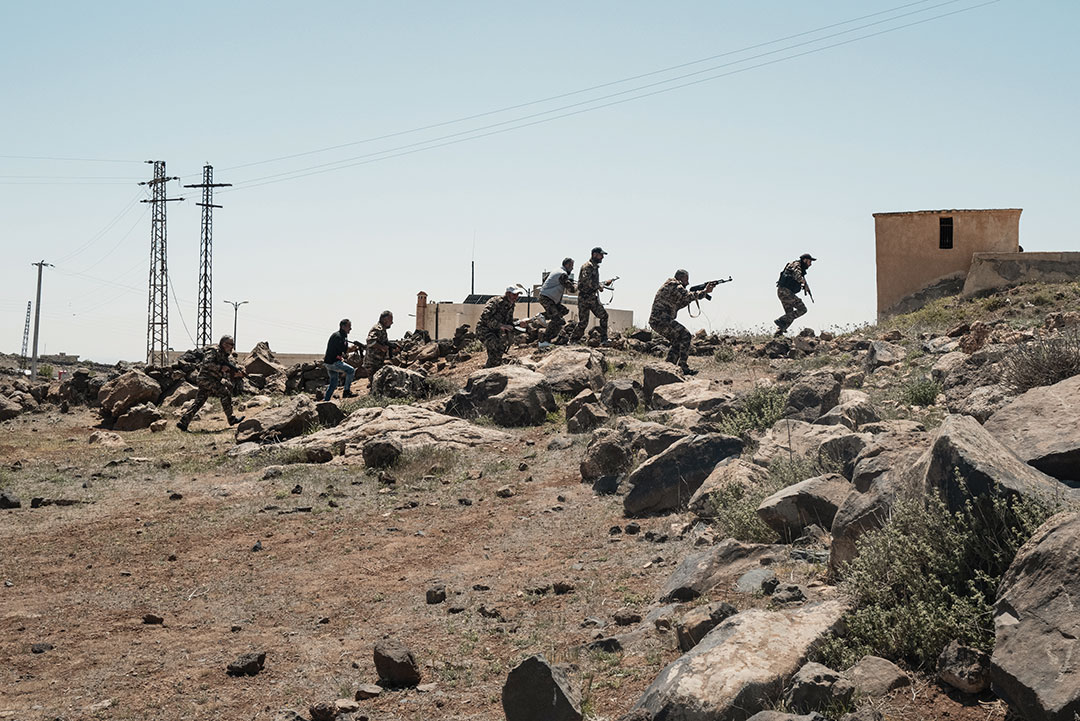
“This diffusion helps explain why Middle Eastern insurgent tactics are increasingly seen in Africa and elsewhere,” Russell wrote.
The Houthis supply the terrorists with weaponized drones, surface-to-air missiles and other materiel that has been traced to Iranian stockpiles. Iran supplies these weapons, which violates a United Nations arms embargo on Yemen. In January 2025, ISSOM launched two drone strikes against security forces in Puntland. This was the group’s first known use of the technology, according to the Armed Conflict Location and Event Data project.
“The adoption of this technology by one terrorist group means the ideas will proliferate in the region and be picked up by others, even if there are no direct ties between those groups,” Taimur Khan, of Conflict Armament Research, told Somalia’s Hiiraan Online news website.
‘New Frontier in Insurgent Collaboration’
The Houthis in July 2025 used long-range missiles, suicide drones, explosive-laden naval drones and fast-attack skiffs in a sophisticated attack on commercial shipping. According to Russell, the operation’s complexity and coordination suggest that regional partners, including al-Shabaab, may have assisted with surveillance, targeting data or maritime strike coordination.
“This transactional exchange, combat skills traded for access or logistics, represents a new frontier in insurgent collaboration,” Russell wrote. “What began as an Iranian investment in a Yemeni proxy is now influencing conflicts hundreds of miles away.”
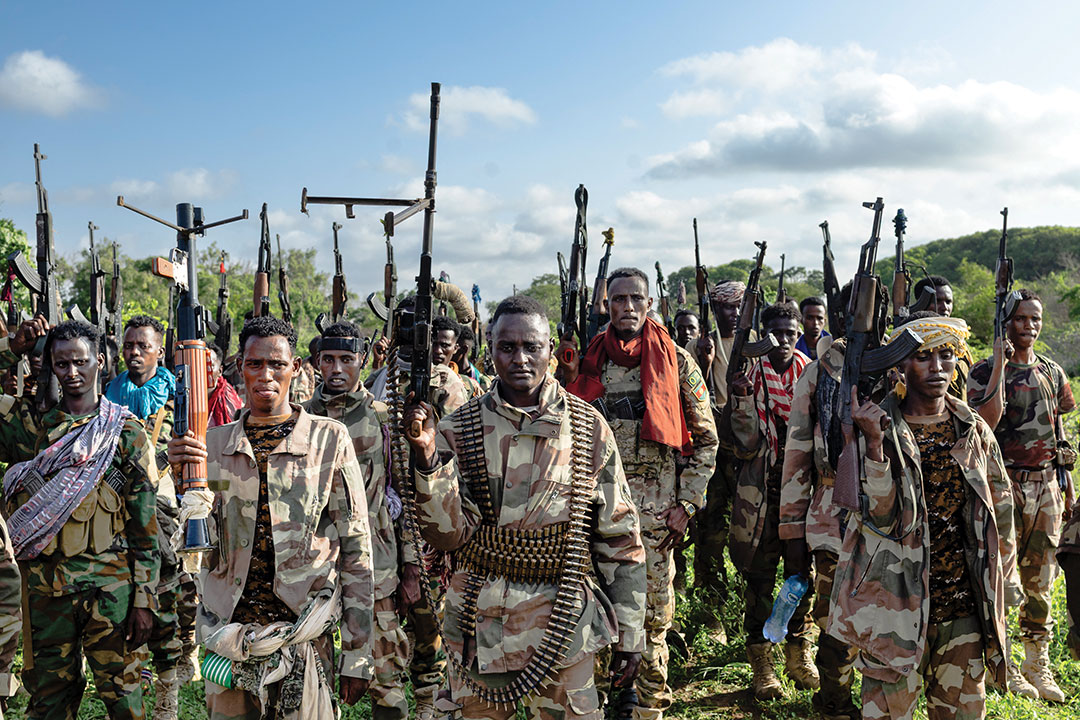
Al-Shabaab and the Houthis formed an alliance despite their differing religious and political positions. Al-Shabaab members follow Sunni Islam and are an al-Qaida affiliate. The Houthis are Shiites, as are Iranians. Analysts at the Carnegie Endowment for International Peace warned that ties between the Houthis and al-Shabaab give Iran “strategic depth,” while destabilizing East Africa, threatening Djibouti, Ethiopia and Kenya. Smugglers across Somalia and northern Kenya also offer the Houthis greater opportunities to ship arms out of the Indian Ocean or by land to the Gulf of Aden.
Russell said the jihadist PMC model could be replicated in Libya, around the Horn of Africa, across the Sahel and into West Africa.
“The market conditions exist: porous borders, entrenched jihadist demand, cheap COTS [commercial off-the-shelf] drones and monetizable training,” he told ADF. “Expect growth wherever there’s access to smuggling infrastructure and ideological or transactional alignment.”
The Turkish-Syrian Connection
Syrian fighters affiliated with the Syrian National Army (SNA), a coalition of armed opposition groups that works closely with Turkey in northern Syria, have in recent years been hired to fight and provide security in Burkina Faso, Niger and Nigeria. Some, but not all, of these fighters are jihadists. An SNA fighter using the pseudonym Deyri told the Middle East Eye (MEE) news outlet that the recruits operate in groups, rather than individually.
“The command is not in Syrian hands,” Deyri told MEE. “Sometimes we sign up for the protection of Turkish businesses, sometimes for fighting the Islamic State, and sometimes for guarding mines or factories.”
Most of these fighters allegedly are recruited by SADAT International Defense Consultancy, a private Turkish military company, although SADAT denies this. According to MEE, the Syrians sign contracts for six months to one year and are paid $1,500 monthly. Some of the fighters said they agreed to work as mercenaries in Africa because of high unemployment in northern Syria caused by the country’s long-running civil war.
“The main reason I left is because life is hard in Syria,” Omar, a young Syrian fighter in Niger, told Agence France-Presse. In northern Syria, “there are no job opportunities besides joining an armed faction and earning no more than 1,500 Turkish lira ($46) a month.”
The Syrian Observatory for Human Rights and friends of mercenaries who have worked in Niger told the BBC that Syrians had ended up under Russian command fighting in the border areas between Burkina Faso, Mali and Niger.
Life as a foreign fighter in the Sahel region is tough. Their phones are confiscated upon arrival. One Syrian fighter said they can contact their families once every two weeks, or less, and their communications must go through their Nigerien superiors.
According to the Nordic Monitor news website, Turkey has transported thousands of Syrian jihadist fighters to Libya to bolster Turkish-backed factions. MIT, Turkey’s intelligence agency, handled the vetting and selection process for the fighters. Nordic said MIT has collaborated with jihadist groups in Syria since 2011.
‘World’s First Jihadi PMC’
Russell traced the rise of black-market PMCs to Malhama Tactical, a Syria-based outfit founded by Uzbek veterans linked to al-Qaida affiliates. Known as “the world’s first jihadi PMC,” Malhama Tactical operates as a freelance jihadist special operations unit. Established in 2016, it has trained militants from Jabhat Fateh al-Sham and other insurgent factions, blending front-line experience with a sophisticated social media presence to advertise its services.
Known for being well trained and well equipped, Malhama Tactical set a precedent that was followed by units such as Muhojir Tactical, which consists mainly of Uzbekistani, Chechen and other Central Asian fighters; Yurtugh Tactical, a Uyghur-led jihadist PMC; and the jihadist group Albanian Tactical, all of which operate in Syria. The newer groups professionalized Malhama Tactical’s model, offering sniper and close-quarter battle instruction, and training on night operations, trauma medicine and drone warfare.
These groups train alongside one another, “creating a transnational network of jihadi special operations trainers,” Russell wrote. “Their tactics now circulate not just on battlefields, but across digital ecosystems, Telegram, Instagram, and closed forums, where instructional videos double as propaganda and recruitment tools.”
Jihadist mercenary units may soon become a regular feature of global conflict, offering “special forces” capabilities to extremist clients in future insurgencies, researcher Sean McFate wrote in a paper published by National Defense University Press.
Russell wrote that the current militant landscape increasingly “resembles a global syndicate,” based on ideology, logistics, consulting and cross-border specialization that is fueled by jihadist PMCs.
“The result is a world where a bombing in Burkina Faso might mirror tactics refined in Idlib [Syria], or where a Somali drone technician replicates Houthi maritime targeting,” he wrote. “This isn’t random adaptation, it’s the emergence of a combat knowledge economy, where fighters trade in doctrine, not just ideology.”