


Islamic State group terrorists have burrowed into the Cal Miskaad mountains in Somalia’s northern Puntland region. From those hovels, hewn from rocks and dirt, fighters have set up fortified camps to attack local security forces.
The rustic setting also belies the group’s capacity for international terrorist financing and fundraising. An Islamic State group (IS) faction that once accepted money from Iraq and Syria now collects and disperses huge sums of money across the continent and beyond. Authorities have traced funds flowing from Somalia to the Democratic Republic of the Congo, South Africa and Uganda.
Money coming to South Africa has been forwarded to Kenya, Mozambique, Tanzania and the United Arab Emirates, The Washington Post newspaper reported.
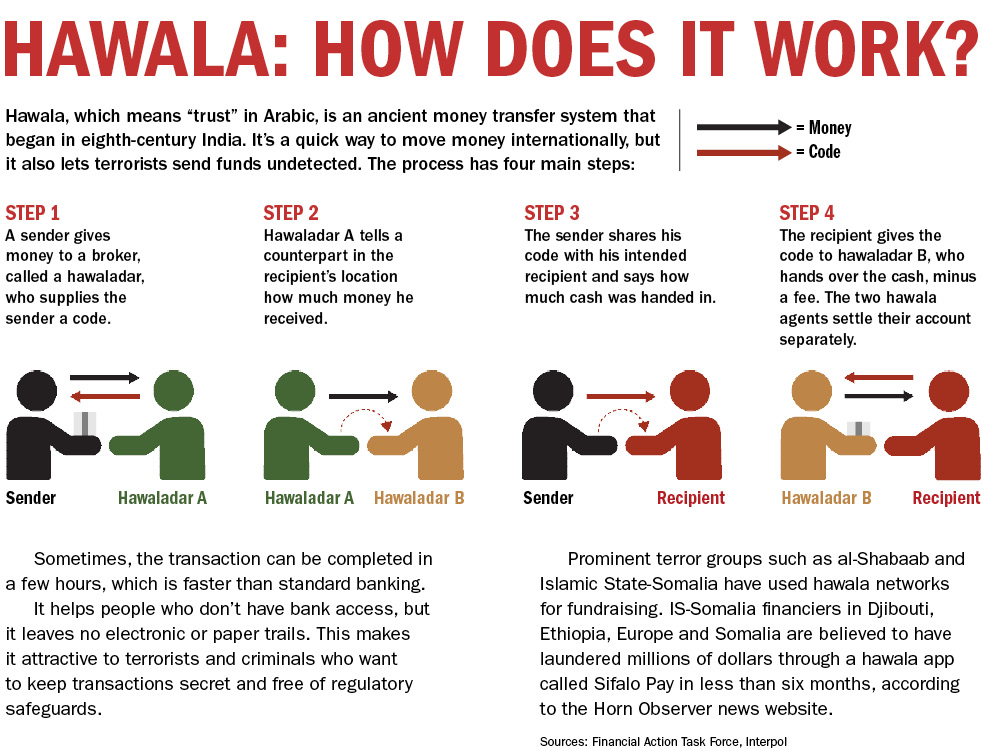
IS-Somalia transfers money, often through mobile devices, to support terrorism across Africa, U.S. Treasury Department officials announced in 2023. The branch raises most of its money by extorting “financial institutions, mobile money service providers, and other local businesses” in Puntland’s Port of Bosaso area. It moves the money via cash transfers and launders it in businesses, banks and through person-to-person transfers known as hawala. IS-Somalia raised about $2 million through extortion rackets, imports, livestock and agriculture in the first half of 2022.
IS-Somalia’s financial tactics represent a sample of the methods that terrorist groups use across Africa. Extortion rackets, cattle rustling, illegal taxation, kidnapping for ransom, gold mine exploitation, cryptocurrency schemes and more fund attacks at home and action across the globe.
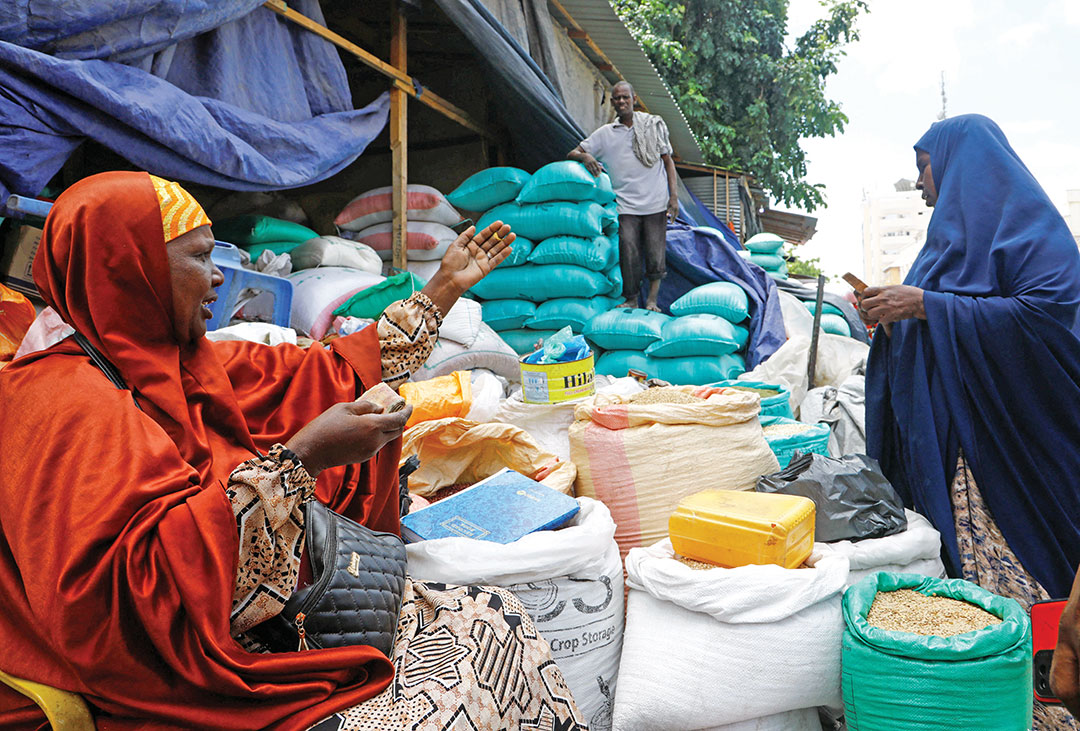
The tactics bolster terrorists in Somalia and Mozambique against multinational military action. In West Africa’s Sahel, al-Qaida- and IS-aligned groups advance largely undeterred in Burkina Faso, Mali and Niger while exploiting artisanal gold mining, cattle markets and more in their desire to swarm into coastal nations. Boko Haram and IS West Africa Province (ISWAP) in the Lake Chad Basin share some tactics, if not the goals, of Sahel militants.
GOLD, CATTLE AND PEOPLE
The al-Qaida-linked Jama’at Nusrat al-Islam wal-Muslimin (JNIM), which is spreading through Burkina Faso and Mali, leverages several funding sources to finance its operations.
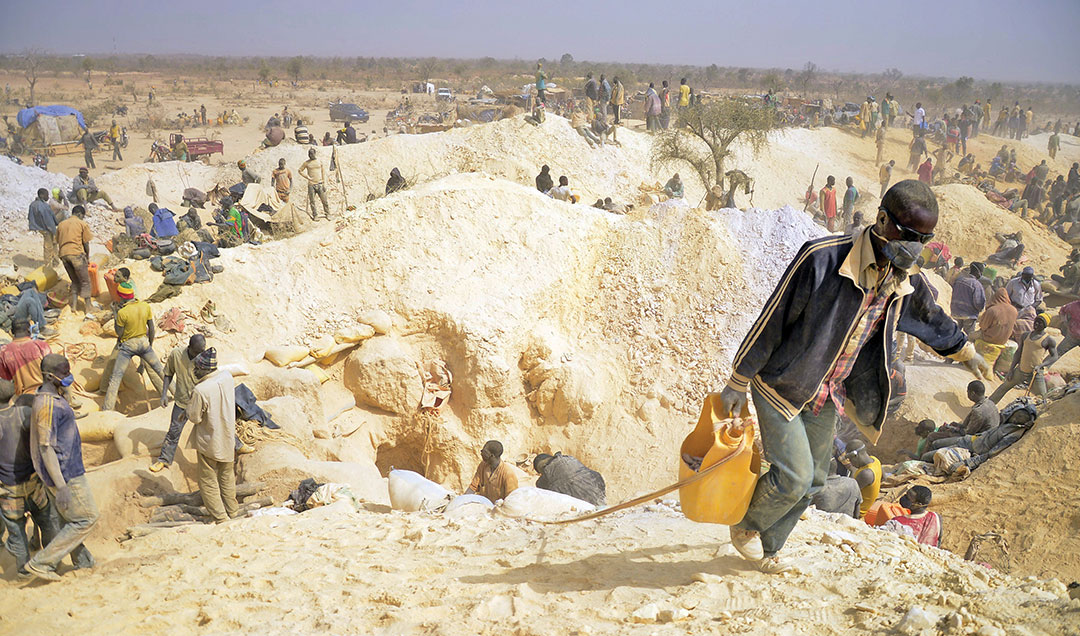
Gold is one source. Artisanal mines dot the landscape in both countries, and their informal operations and lax oversight make them ripe for exploitation. In areas where JNIM is active, those mines generate more than $30 billion a year, according to a May 2025 report in The Conversation by researchers Egodi Uchendu and Muhammed Sani Dangusau.
“The jihadists gain access to gold by controlling mining sites and transport routes to and from mines,” they wrote. “They sometimes allow trusted allies, who include local armed groups, bandits and other criminal networks, to mine in exchange for a payout.”
It’s not clear how much money JNIM makes from mines, but a 2019 Reuters report indicated that mines in areas near attacks produced 727 kilograms of gold per year, valued at $34 million. Since that time, JNIM’s influence has spread considerably, and gold prices have more than tripled.
JNIM and IS Sahel Province (ISSP) also have tapped into regional cattle markets, raising a steady income to buy weapons and fund operations, according to the Global Initiative Against Transnational Organized Crime. JNIM typically loots cattle when attacking villages or taxes herders in areas it controls. It funnels stolen livestock into market streams operating along the tri-border region of Burkina Faso, Côte d’Ivoire and Ghana, where the assets are laundered.
“Through a complex chain of intermediaries, stolen livestock is either sold on key regional livestock markets in the region or on small black markets, before being brought further south in large consumptions markets,” the Global Initiative reports. Terrorists can steal cattle and sell them at discounts to Ghanaian and Ivoirian traders who then resell them at full market price. Gross profits can reach more than $450 per head.
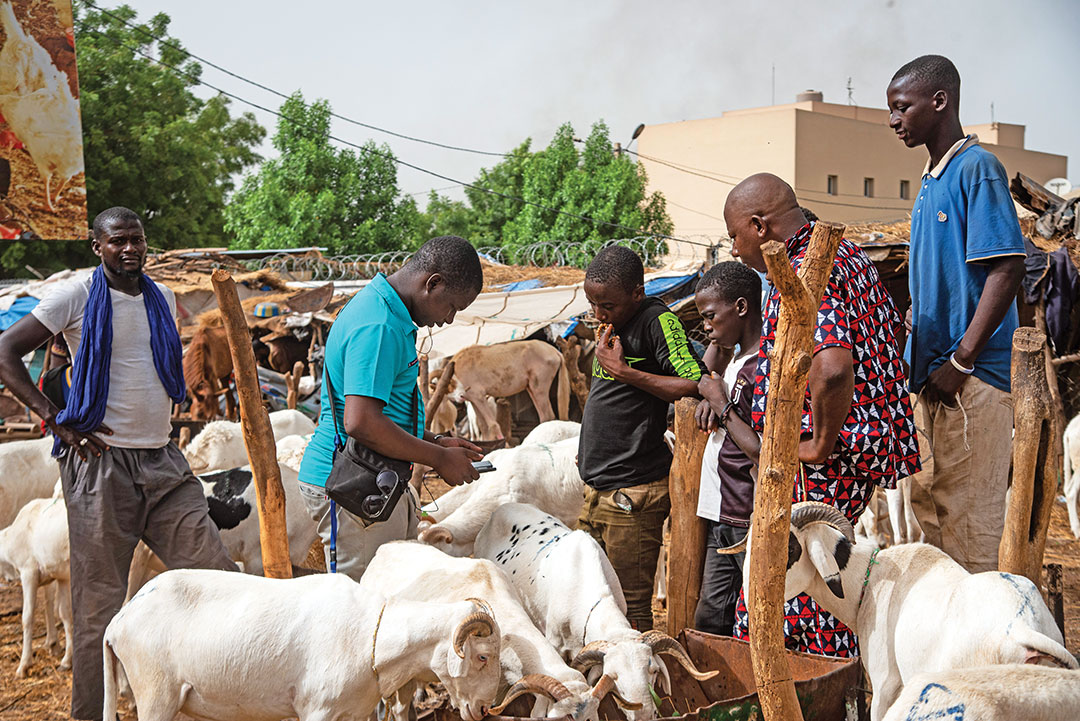
Sahel terrorists also use cattle in ways that don’t involve money. “By embedding themselves within the livestock economy and protecting herder communities in areas where they hold significant influence, these groups also gain legitimacy, building grass-roots support,” the initiative said.
Kidnapping for ransom is prevalent in Nigeria. An August 27, 2025, report by SBM Intelligence, a Nigerian geopolitical research company, indicated that between July 2024 and June 2025, terrorists and criminals abducted at least 4,722 people in 997 incidents in Nigeria. Of those, 762 were killed, and kidnappers got about $1.66 million in ransom payments.
The highest percentage of incidents was in the Northwest, where bandits run rampant. However, in the Northeast, where Boko Haram and ISWAP are most active, the ransom for one judge netted about $500,000 for a Boko Haram-linked group. “Islamist groups’ participation in the economy of abduction is growing, with proceeds feeding insurgency logistics,” the report said.
“The macroeconomic and social consequences are severe,” SBM Intelligence reported. “Insecurity depresses agricultural output, aggravates food inflation and displacement, and continues to disrupt schooling despite fewer mass school raids. Businesses relocate or curtail operations amid extortion risks.”
In Burkina Faso, Mali and Niger, kidnapping for ransom steadily decreased between 2021 and 2024 before a rash of abductions targeted foreign nationals in early 2025, according to the Armed Conflict Location and Event Data project (ACLED). In early 2025, ISSP conducted or sponsored the abduction of six foreign nationals, including an Austrian woman in Agadez, Niger, and four Moroccan truck drivers in Burkina Faso. “At present, this change seems to be driven by the group’s need for resources, given that foreigners command higher ransom fees than local abductees,” according to ACLED.
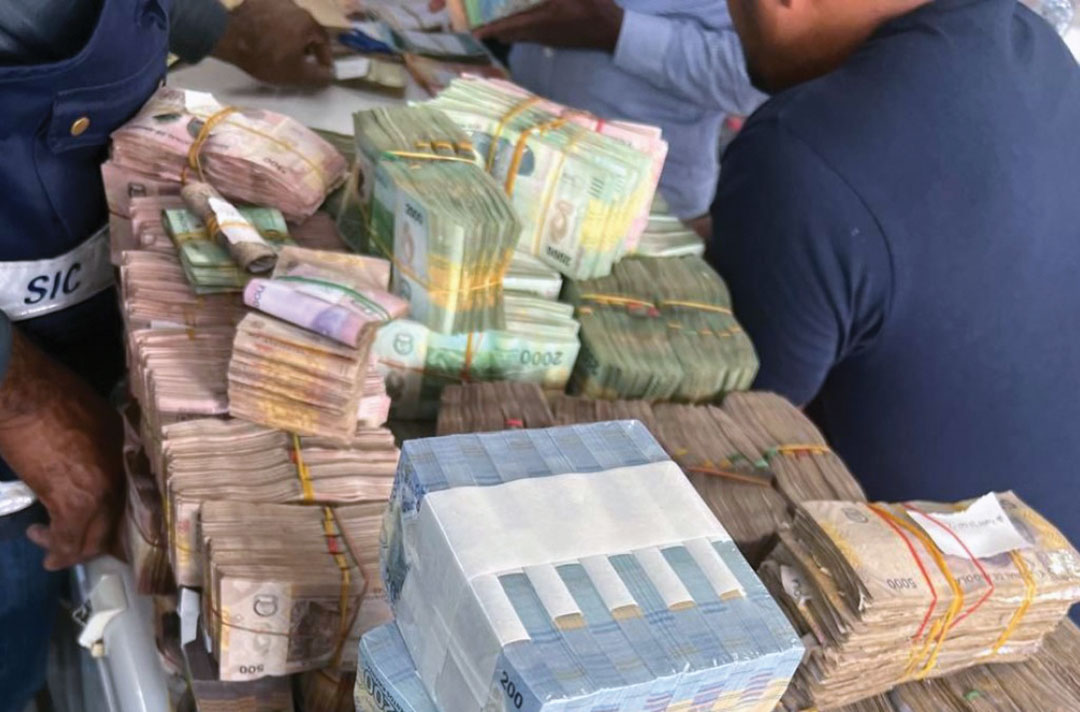
JNIM employs kidnapping as a strategic tool. After moving into a new area, JNIM uses abductions to intimidate locals and gather intelligence. Once the group is established there, kidnapping becomes a way to forcibly recruit young people and skilled workers such as doctors and nurses. Ransom demands remain but are not as prevalent as in past years.
“When JNIM first infiltrates a community, kidnappings spike in number,” according to a 2023 article for ENACT Observer by analyst Flore Berger. “The group targets anyone associated with or representing the authorities and any key influential local figures. The purpose of kidnappings at that point is to intimidate locals, gather data and decrease the number of people who could threaten its establishment in that area — either by having them leave the area or by winning them over.”
EXPLOITING TECHNOLOGY
As internet connectivity rises in Africa, terrorist groups have readily incorporated new technology for recruiting, spreading false information, and raising and transferring money.
Cryptocurrencies offer a new avenue for terrorists to transfer money, and some IS groups are among those using them. However, IS still relies heavily on more traditional cash couriers and hawala networks, according to a 2024 paper for the Combating Terrorism Center at West Point by Jessica Davis, a terrorism expert and president of Insight Threat Intelligence. “This diversification of methods demonstrates that the Islamic State is mechanism agnostic: The group and its supporters will use whatever fund transfer mechanism is fastest, cheapest, and least likely to be detected and disrupted.”
Cryptocurrency use varies among areas. IS groups in the DRC, Mozambique and Nigeria have used cryptocurrencies little, if at all. “For Nigeria, this is counterintuitive, as the country is ranked second in the world for cryptocurrency adoption,” Davis wrote. “Because of this, one would expect to see more use of cryptocurrency by ISWAP. However, since ISWAP is regionally concentrated and much of its revenue generation is done in cash (through taxation and extortion), it stands to reason that it has little use for cryptocurrency.”
Boko Haram, however, uses cryptocurrencies and other digital financial technology to its advantage, according to researcher Oge Samuel Okonkwo.
“Boko Haram leverages cryptocurrency’s decentralized nature to fund its low-cost but deadly operations, including weapons and logistics,” Okonkwo wrote for the website Medium in April 2025. Using anonymous, unregulated peer-to-peer platforms, Boko Haram can “receive funds from local and international sources undetected, underscoring the need for targeted interventions that preserve innovation while enhancing security.”
Nigeria should update regulations on money laundering and terrorist financing, Okonkwo wrote. Blockchain analytics and peer-to-peer trade monitoring can help spot and block suspicious transactions. Because Boko Haram and its financing sources cross borders, Nigerian authorities will have to share intelligence with other Lake Chad Basin nations and international agencies, such as Interpol. To blunt the appeal of crypto schemes in informal economies, the government will have to invest in “education and financial inclusion” to reduce the use of unregulated platforms.
TIES TO CRIMINAL NETWORKS
Africa-based terrorist groups often operate in regions alongside criminal trafficking networks. Terrorists also indulge in practices common to criminal organizations, such as extortion rackets that impose taxes on movement and commerce. Somalia’s al-Qaida-aligned al-Shabaab is notorious for the money it raises — estimated at $100 million annually — through these and other means.
Tracking the multidimensional interplay between criminal networks and terrorists can be difficult. Traffickers can be local or international, and terrorist groups tend to opportunistically exploit funding and resources available to them. And trafficking is only one of many criminal enterprises in regions where terrorist groups hold sway.
Dr. Daisy C. Muibu, assistant professor of security studies at the Africa Center for Strategic Studies, agrees that, generally, terrorists tend to opportunistically participate in various criminal markets. That participation can vary significantly from location to location depending on local dynamics and group influence.
In the Sahel and Lake Chad Basin, it seems likely that terrorists initially took advantage of organized criminal organizations already active in the area through a “marriage of convenience” to support their actions early on, she said.
Likewise, terrorists in Mozambique leveraged criminal networks to “gain financial resources to function,” she said. “So, it’s depending on where you’re talking about, what type of criminal market you’re discussing and then, lastly, which organization you’re talking about.”
Addressing all these variables on a vast continent with so many terror groups that have varying motives is a huge challenge, Muibu said. Improving coordination among government entities, nations, and local groups and leaders will be key.
Afripol and Interpol have worked well together and with individual nations, Muibu said.
From July to September 2025, Operation Catalyst targeted terrorism financing and related crimes, which resulted in 83 arrests. Of those, 21 were for terrorism-related crimes, 28 for money laundering and financial fraud, 16 linked to online scams, and 18 on charges of improperly using virtual assets.
Authorities in several countries screened 15,000 people and entities and uncovered $260 million in official and virtual currencies with possible links to terrorism. Investigators had seized about $600,000 as of October 2025.
“Tackling terrorist financing is particularly complex for law enforcement, as it often cuts across diverse criminal activities, including fraud, kidnapping for ransom, illicit trade, online scams, Ponzi schemes and the misuse of virtual assets,” according to Interpol. “These illegal activities can be linked to terrorism financing directly — when terrorist groups receive funds from such schemes — or indirectly, through money laundering or intermediary networks. These connections highlight how different forms of crime are increasingly intertwined, underscoring the need for a united and coordinated response.”
Angola, Cameroon, Kenya, Namibia, Nigeria and South Sudan participated with Interpol and Afripol. In Angola, authorities arrested 25 people from various countries in a terrorist financing and money laundering operation. In Kenya, two people were accused of recruiting and radicalizing people with money traced to Tanzania and obtained through a cryptocurrency platform.
A fraudulent cryptocurrency investment operation cheated more than 100,000 people in 17 nations around the world out of an estimated $562 million. Investigators found that some of that money possibly was used to finance terrorism.
“The success of Operation Catalyst lies in the synergy and convergence of efforts among national units combating financial crime, cybercrime, and terrorism,” Jalel Chelba, Afripol executive director, said in a statement. “This joint endeavour, dedicated to disrupting the financing of terrorism across the African continent, illustrates how coordinated action between Member States, facilitated by AFRIPOL and INTERPOL, can effectively address complex and evolving security threats. Such cooperation stands as tangible proof that Africa’s law-enforcement community, when united, offers a decisive and appropriate response in the pursuit of a secure and stable Africa.”
Al-Shabaab Remains Fundraising Giant
Despite years of military and territorial setbacks at the hands of African Union forces, Somalia’s al-Shabaab remains resilient through its extensive fundraising capabilities, according to the Africa Center for Strategic Studies.
U.S. Treasury Department officials have estimated that the al-Qaida-linked terrorist group raises as much as $100 million a year. That amount is more than a quarter of the $369.4 million in Somali government revenues for 2024.
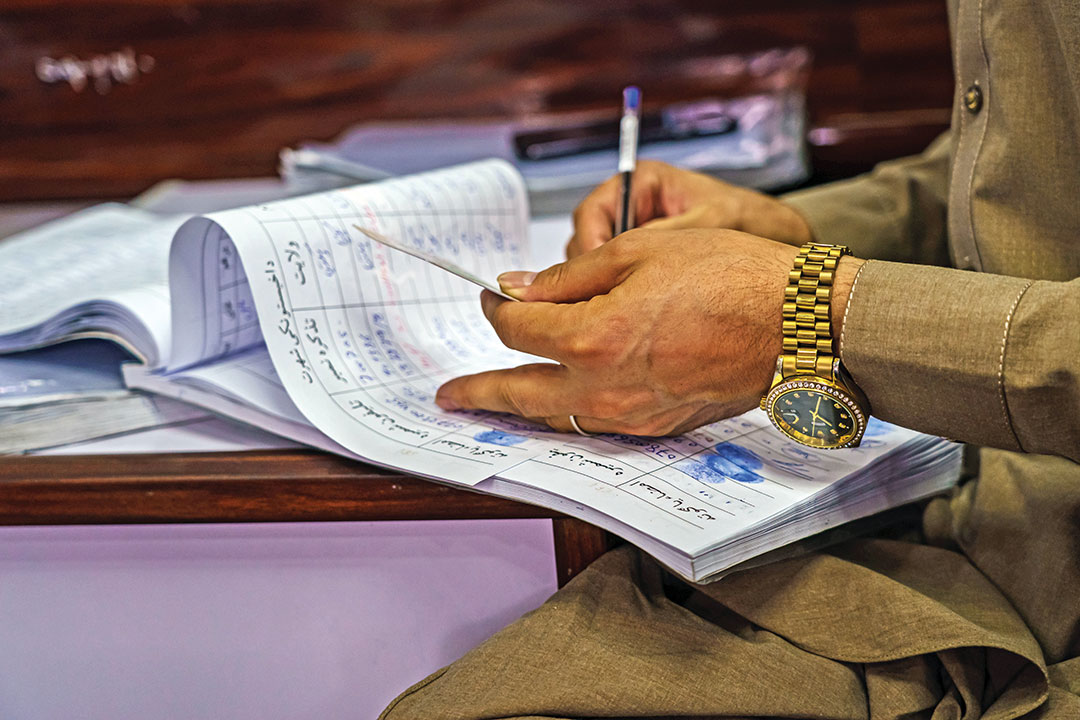
Al-Shabaab has used “a highly centralized system of extortion at ports of entry and roadways for nearly two decades, mostly in the territory it holds in the southern and south-central regions of the country,” Wendy Williams, associate research fellow, wrote in an Africa Center report in 2023. “Its operatives maintain a registry of citizens’ assets for the purpose of collecting an annual 2.5 percent ‘zakat’ tax.” The terrorists enforce the process “through systematic intimidation and violence.”
The group invests in land and small to medium-sized businesses outside areas it controls and has leveraged government influence through corruption and clan leaders. “Through these efforts of infiltration, co-option, and the use of violence, al Shabaab has effectively established the perception of omnipresence and intimidation typical of a mafia-like organization.”
Most al-Shabaab transactions are cash-based or mobile money transfers. The government has devised mobile money regulations and targets taxation checkpoints militarily, but more needs to be done, Williams wrote. Namely, Somalia will need to further professionalize “entities responsible for financial, intelligence, and judicial functions, which are at the forefront of shutting down al Shabaab’s financing and money laundering.”