

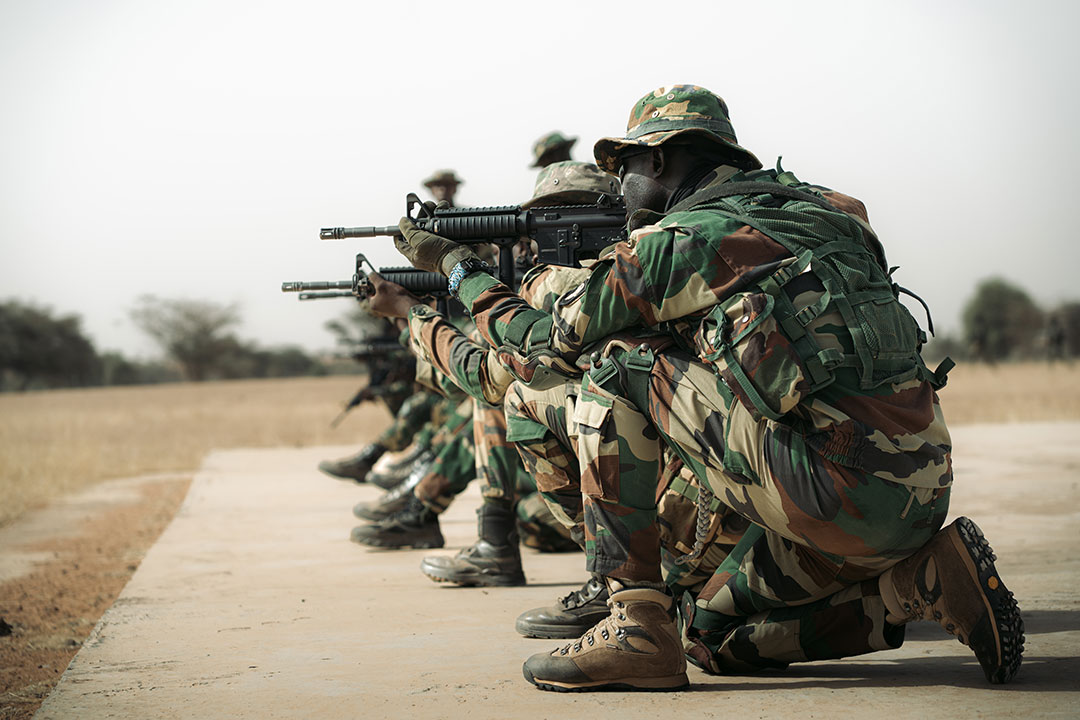
Arms imports in West Africa have climbed in the past decade, even as weaponry sales in much of the rest of the continent have been flat or declined, a 2026 study shows.
The difference is terrorism. West African nations are buying arms primarily to combat surging terrorist groups such as Boko Haram and Islamic State group affiliates. The Sahel region is under constant attack.
Although arms imports by countries across Africa have decreased by 41% over the past decade, West African arms transfers rose sharply, according to the Stockholm International Peace Research Institute (SIPRI), which released a report on global arms transfers in March. The institute reported that the combined arms imports of West African states increased 82% between the periods of 2010-14 and 2020-24. Nigeria accounted for the biggest share, 34%, of arms imports to West Africa in 2020-24.
“The growth in arms imports to West Africa has been striking,” said Katarina Djokic, a SIPRI researcher. “While the volume of imports remains relatively small, it has important geopolitical implications.”
Parts of West Africa now have some of the worst terrorism problems in the world. For example, the Global Terrorism Index 2026 says that Burkina Faso was the nation most affected by terrorism on the continent and ranked second worldwide. Niger, Nigeria and Mali rounded out the top five, respectively.
“Unlike traditional North African arms importers such as Egypt, Morocco and Algeria, which often procure advanced weapons to maintain regional military dominance, many sub-Saharan African countries are increasing military purchases primarily to address internal security threats and insurgencies,” reported Business Insider Africa.
In East Africa, the Sudanese civil war that began in 2023 also has been a destination for arms transfers. Both opposing forces received major arms during 2021-2025.
Arms shipments to the Sudanese Armed Forces (SAF) and the opposition Rapid Support Forces (RSF) have included major hardware, such as four pieces of artillery and at least one air defense system from unknown suppliers to the RSF, SIPRI reported. Transfers to the SAF came from at least five countries. They included drone aircraft, armored vehicles and transport aircraft. SIPRI said the SAF also received one combat aircraft from an unknown supplier.
Other hot spots in West Africa include Mali, where terrorists have been trying to isolate the capital; and Nigeria, which is under constant attack from terrorist groups and criminal gangs. With so much going on, the institute says, it is hard to know precisely what arms are being shipped where.
“Tracking arms transfers to conflicts, especially in Africa, is difficult as they often involve high levels of secrecy,” the institute noted.
Parts of North Africa remain significant customers in arms purchases, according to the institute. Morocco, which ranks 28th globally in arms purchases, and Algeria, ranked 33rd, are by far the largest recipients of major arms in Africa. Researchers say the two countries’ long-running tensions with each other are a major driver of their arms imports.
Nigeria is among several African countries currently committed to upgrading its military equipment. The United States has agreed to $346 million in arms sales to Nigeria, including precision-guided bombs and rockets, Business Insider Africa reports. Nigeria also has a $1.38 billion contract involving fighter aircraft and helicopters from Italy and the U.S.
Mali is also among the current leaders in arms imports in Sub-Saharan Africa, according to the institute. The country has committed to buy ground-attack jets, trainer aircraft, and attack and transport helicopters. Business Insider Africa reported that Mali took delivery of more than 100 military vehicles in 2025.
“The country has also strengthened its aerial capabilities through Bayraktar TB2 drones from Türkiye, while defence reports indicate Mali has reportedly acquired Akinci long-range combat drones to improve surveillance and strike operations,” Business Insider Africa reported.
Senegal also has become a major arms importer in West Africa, increasing its defense spending to modernize its armed forces and address instability across the region. Recent acquisitions, according to Business Insider Africa, have included armored personnel carriers from South Africa and three offshore patrol vessels intended to “strengthen maritime security and protect offshore energy infrastructure.”
Senegal has opened its first military vehicle assembly plant in an attempt to begin building a domestic defense industry.