

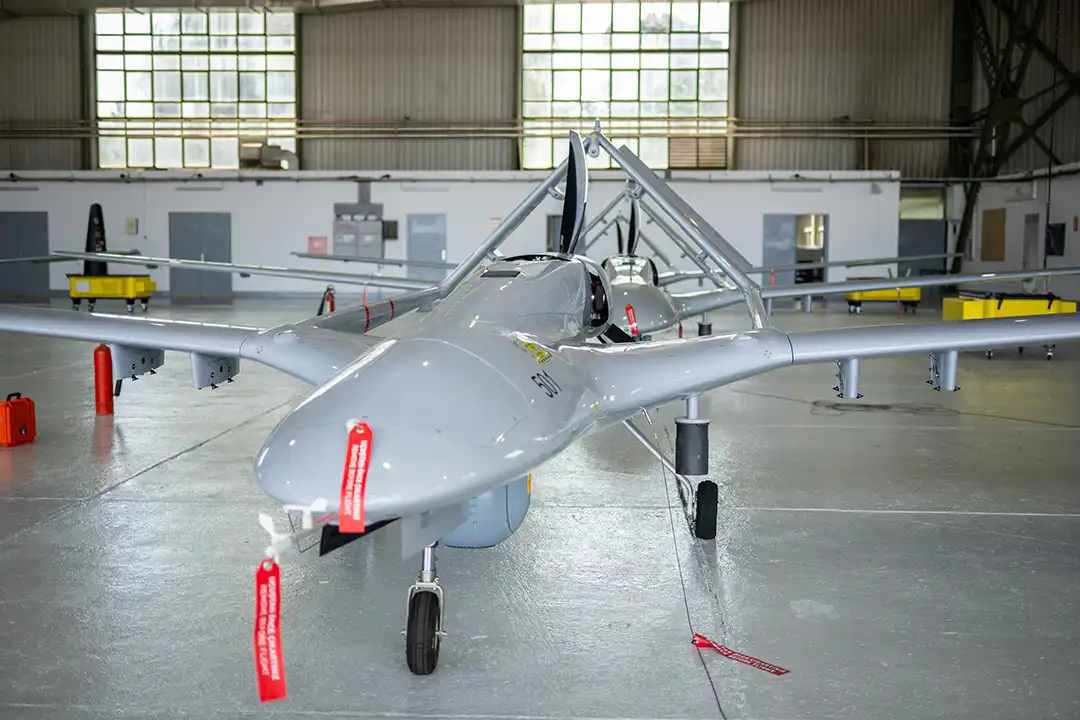
Drones have become an in-demand surveillance tool and weapon of choice with 34 African nations operating drone programs. But a new report suggests that a lack of proper training and oversight has turned drones into a threat for civilians who may be mistaken for military targets.
According to a report by Nigerian nonprofit news organization HumAngle, the race to acquire AI-enabled drones is leaving behind a devastating trail of civilian casualties.
“The weapons are said to be precise, but evidence proves their use has put civilians in harm’s way,” HumAngle reported in a recent study.
Over the past five years, more than 900 civilians have died in drone strikes because either AI systems or operators mistook them for enemy targets, according to analysts.
At the heart of the problem is a lack of in-depth training.
“There seems to be no trace of training pipelines for many African militaries, particularly in Niger, Burkina Faso, Mali, and Ethiopia,” HumAngle reported.
While militaries receive training on the basics of operating drones, for example, there is little training on the more complex issues of situational judgment and mission discipline that help operators evaluate what researchers describe as “ambiguous real-world situations” that can lead to deadly errors involving civilians.
Experts consulted by HumAngle argue that the race to use semi-autonomous drones has outpaced legal frameworks, failsafe mechanisms to confirm targets and training between ground troops and drone operators. Many militaries are still using outdated frameworks and procedures designed for manned aerial vehicles.
“Deploying technology is the way to go for any serious country,” Adejoh Sunday, a senior lecturer with the Nigerian Defence Academy told HumAngle. “But we must ensure that those utilizing this technology are properly trained. If those [military] workforce are well trained, act professionally and understand the ethics surrounding the use of this technology, there won’t be any cause for alarm.”
In its 2025 report, “Death on Delivery,” Drone Wars UK detailed 943 civilian deaths due to drone strikes between 2021 and 2024. Sahelian nations figured prominently in that report, as did Ethiopia, which alone accounted for hundreds of civilian deaths from misguided drone strikes in the Amhara and Oromia regions.
“Drone warfare has been the hallmark of the Ethiopian military campaigns against insurgents in the Amhara axis,” HumAngle researchers noted. Drones played a pivotal role in the Ethiopian government’s fight against rebels in the Tigray region. The government has been battling an ethnically-Amhara militia known as Fano since 2023 as well as separatists in Oromia and other regions.
The Ethiopian military has a history of mistakenly killing civilians in drone strikes that are rarely acknowledged or investigated, according to the HumAngle report.
HumAngle researchers cited one such strike that devastated a monastery in Amhara’s South Wollo Zone, killing two nuns and injuring 11 other people in a remote community where medical help was hard to reach.
Oleksandra Molloy, a drone operations analyst and researcher at Australia’s University of New South Wales, told HumAngle that countries must prioritize proper training to help them avoid civilian harm.
“The effectiveness of drones’ use largely depends on the skills and experience of their operators,” Molloy said. “Accordingly, ongoing training and education are essential to ensure a high level of competence in drone operation and utilization.”