

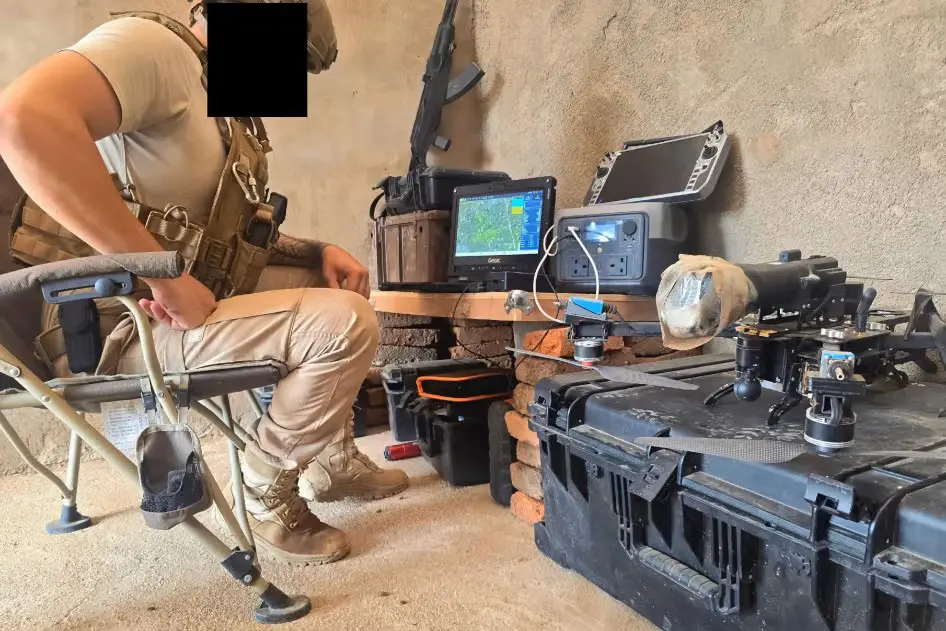
Since Sudan’s civil war began in 2022, mercenaries from Chad, Ethiopia, Libya and South Sudan have operated in the country along with some from distant nations. They include fighters from Russia’s Wagner Group who already had gold interests there, rival Ukrainian drone operators who worked for both sides, and freelancers from the Sahel.
New reporting has revealed that Colombian mercenaries accused of committing atrocities in Sudan were recruited and trained by a shadow network based in the United Arab Emirates (UAE).
The Financial Times (FT) newspaper interviewed seven Colombian mercenaries who requested anonymity before detailing their deployment to Sudan. Some went on to participate in what became known as the El-Fasher massacre in Darfur. Experts say foreign actors have prolonged the war in Sudan by supplying weapons, manpower and funding to the Sudanese Armed Forces and the paramilitary Rapid Support Forces (RSF).
The UAE has denied supporting the RSF with weapons or manpower and says it wants to broker peace in the country.
The FT reported that Global Security Services Group (GSSG), a private security company based in the Emirati capital, Abu Dhabi, sent about 2,000 Colombian mercenaries to fight in Sudan alongside RSF fighters.
One Colombian fighter told FT that about 300 specialists were trained secretly in drone and anti-aircraft operations in the UAE between January and October 2025 before deploying to Sudan. “The project started with Salvadoreans but they lacked discipline,” he told the newspaper for an August 15 article. “After that, they went with the Colombians. We’re very disciplined. We’re used to following orders.”
Six Sudanese former child combatants shared their stories anonymously with The Associated Press, including two who said Colombian mercenaries trained them. The boys said RSF fighters abducted them and took them to a base in Omdurman, where dozens of children also were held, their hands bound at all times.
One said that there were dozens of foreign mercenaries, described by the RSF fighters as Colombians. Speaking through translators, the mercenaries taught the children how to use anti-aircraft guns. They told RSF fighters to bind the children to the weapons so they couldn’t escape, he said.
“When the planes flew overhead, the Colombians would retreat to their bunkers, leaving us outside shackled to the vehicles,” he told AP for a July 30 report.
Conflict Insights Group, a private research firm, assisted the FT with its investigation by analyzing phone tracking data. It tracked more than 40 devices that used Spanish-language settings, following them from Abu Dhabi to a transit point in the semi-autonomous state of Puntland in Somalia and then on to several sites in Sudan’s Darfur region.
“Mercenaries were present when the RSF captured the city and committed some of the most gruesome killings so far this century,” head of Conflict Insights Group Justin Lynch told the FT.
One of the mercenaries who spoke to the newspaper confirmed that he was in El-Fasher.
“The air was thick with flies, drawn by both the dead bodies and the heaps of trash,” he said. “There were bodies that had already turned purple from being exposed to the sun for so long.”
Another confirmed the RSF’s use of child combatants.
“There are kids no older than 12 carrying rifles they can’t lift and bearing the responsibility of a war in which they don’t even know what they’re supposed to do,” he said.