

Zimbabwean researcher Charles Moyo believes that Southern Africa is a region at a crossroads. While it enjoys peace and stability relative to the rest of the continent, it faces the threat of expanding terrorism from Islamic State affiliates in northern Mozambique and eastern Democratic Republic of the Congo.
Moyo, senior researcher and regional policy and research manager at the Southern Africa Centre for Mediation and Extremism Prevention, said illegal gold mining is emerging as a security threat that violent extremist groups can exploit.
“Zambia’s proximity to the Democratic Republic of Congo (DRC) and Mozambique’s insurgency and cross-border mobility increases the risk of gold trafficking and violent extremism,” he wrote in a July 7 analysis for South Africa-based website defenceWeb. He said his report aimed to analyze “how gold rushes, illicit financial flows, and weak regulation could contribute to violent extremism not only in Zambia, but across Southern Africa, and what governments can do to prevent that risk from deepening.”
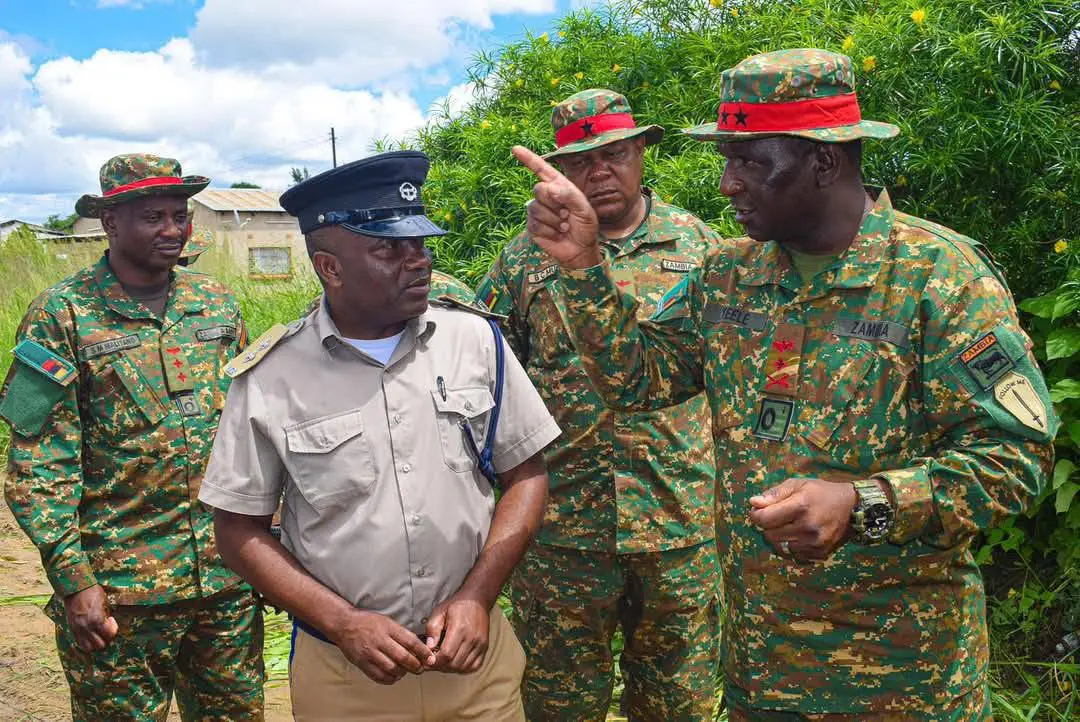
Commander of the Zambia Army Lt. Gen. Geoffrey Zyeele has led intensified efforts to combat illegal mining since January 2025, when he announced a multisector task force comprised of Soldiers, police officers and government officials. By mid-2025, Zambia deployed special forces to the North-Western province to flush out illegal small-scale gold miners.
“Our intelligence shows that some of the individuals involved are highly sophisticated, with others having military training,” Zyeele said in a January 2026 statement. “These are not ordinary miners but organized criminal syndicates.”
Security agencies also detected the presence of surveillance drones, ammunition, explosives and heavy weaponry.
“This elevates the matter to a serious national security concern,” Zyeele said.
The link between gold mining and terrorist activity has been established in the Sahel and the DRC, where illegal coltan and cobalt mining also has been intertwined with armed militias and transnational criminal networks.
Because Zambia’s gold-rich North-Western province borders the DRC and the country also shares a border with Mozambique, which is the epicenter of violent extremism in Southern Africa, Moyo feels the use of the military is justified.
“Mozambique, which is neighbouring Zambia and closer to the mining communities, has seen the Islamic State Mozambique (ISM) going beyond exploiting natural resources grievances into systematically integrating gold, rubies and graphite mining into its operational and financing strategies,” he wrote. “In the same vein, reports have associated gold, especially in Zimbabwe, with smuggling, money laundering and violence by quasi-militias. Such a situation should be prevented in Zambia, as it precipitates to both a national and regional security crisis.”
Moyo warns that ISM could gain access to gold deposits to further fund violence across the Southern African region. Armed miners from different countries also make easy targets for terrorist recruitment with their grievances and undocumented status.
“Whereas Zambia’s gold rush and insecurity within the concerned areas has not been directly connected to extremist groups, if the policing situation remains weak, extremist groups from Mozambique and the DRC may find an opportunity to exploit the gold to fund and sustain their extremist activities,” he wrote. “Radicalization of young people and communities within the gold mining zones could be also easy for such groups given their proximity to arms and radicalization factors.”