
Burkinabe Imam Mohamed Ishaq Kindo spoke publicly in May against proposed legislation meant to restrict religious freedom. The military junta led by Capt. Ibrahim Traoré jailed him days later. It was a typical response by a regime that has abducted journalists, suspended media outlets, and silenced critics with torture and forced conscription.
Exiled Burkinabe journalist Newton Ahmed Barry said the arrest of civilians such as Kindo, a prominent Sunni leader, underscore the government’s controlling strategy.
“This is the logic of this junta and its leader: The more people are afraid, the more they buy their way out of trouble,” Barry told Foreign Policy Journal. “They instill fear and terror in everyone in order to keep them under their control and thus rule in peace.”
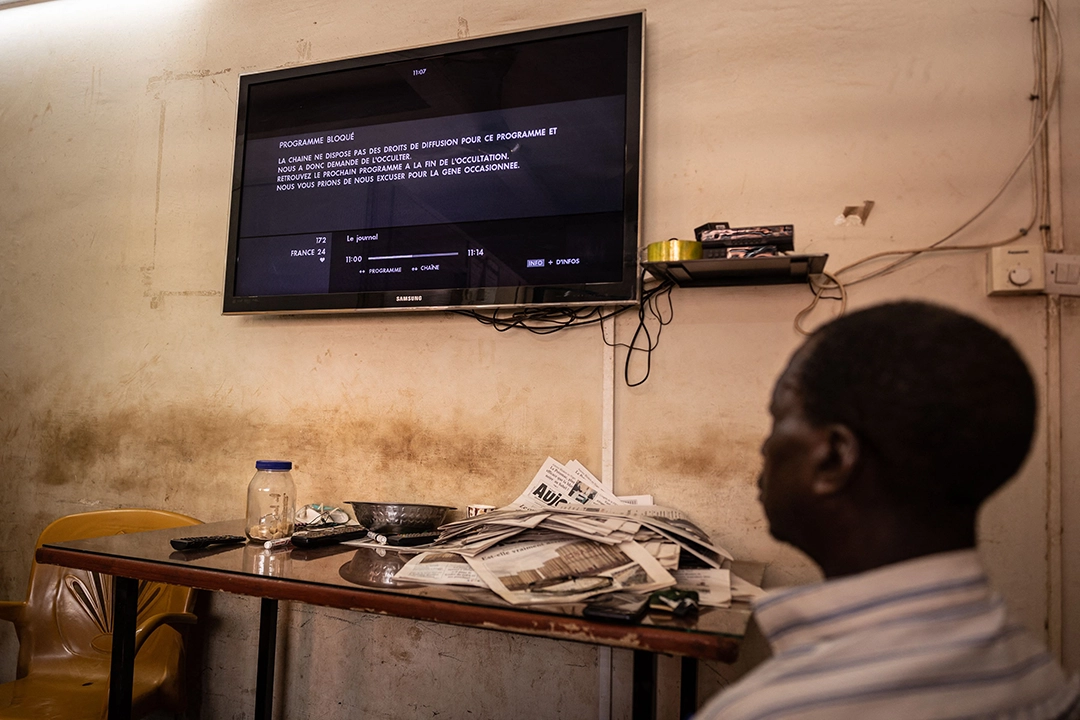
Events similar to Kindo’s arrest also are routine in military-led Mali, which in January banned an influential news magazine, and Niger, which recently suspended nine international media outlets. Analysts say these repressive measures put democracy under siege.
When he assumed power in 2022, Traoré promised a return to civilian rule within two years. However, his mandate to stay in power was extended two years in 2024 under a new charter. This year, he dissolved all political parties and has openly disparaged democratic forms of government.
Paul Amegakpo, a political scientist with the Togolese l’Institut Tamberma pour la Gouvernance, believes the junta is keeping the Burkinabe people from determining their own future.
“It is a fundamental right that the people control the public institutions that decide their fate,” Amegakpo told German news agency Deutsche Welle. “This necessarily includes the right to elect their representatives both at the executive level and in the National Assembly.”
Mali Bans Jeune Afrique
Mali’s indefinite ban of the Jeune Afrique pan-African news magazine in January drew international condemnation from rights groups. The publication had reported on the country’s deepening fuel crisis amid the Jama’at Nusrat al-Islam wal-Muslimin (JNIM) terror group’s siege on the capital, Bamako. Jeune Afrique also reported on military abuses in Burkina Faso and Mali, particularly against ethnic Fulani communities.
Although the magazine also reported on human rights abuses committed by JNIM, the military government led by Gen. Assimi Goïta accused it of defamation and “terrorism apology,” Human Rights Watch reported. Burkina Faso suspended Jeune Afrique in 2024.
Goïta seized power in Mali through two military coups in 2020 and 2021, and the National Transitional Council extended his rule for another five years in 2025. As in Burkina Faso and Niger, which is led by Gen. Abdourahamane Tchiani, civil liberties in Mali have eroded under military rule. The junta also has abolished multiparty politics and shuttered civil society organizations. Tchiani was sworn in as Niger’s president in March 2025 under a new, five-year charter on which the public did not vote.
“It has become more repressive. It’s no longer as easy to speak out,” Ulf Laessing, former director of the Konrad Adenauer Foundation’s Sahel program in Mali, told Foreign Policy Journal. “That is clearly a point of criticism against the government.”
Niger Suspends Nine Media Outlets
Niger’s National Observatory of Communication on May 8 suspended nine international media outlets, including Agence France-Presse, Jeune Afrique and Radio France International, over issues it claimed were related to public order and national stability. Tchiani seized power in Niger in 2023 and also has had journalists arrested and detained.
Alfred Nkuru Bulakali, regional director for ARTICLE 19 Senegal and West Africa, a human rights organization, characterized the suspensions as a “deeply concerning pattern of shrinking civic space and control over information.”
“International human rights law and relevant African principles are clear: restrictions on expression must be exceptional, not the norm,” Bulakali said on the organization’s website. “When applied indiscriminately, as in this case, they not only fail the tests of necessity and proportionality, but entrench the climate of censorship and fear among media, journalists and advocates.”