

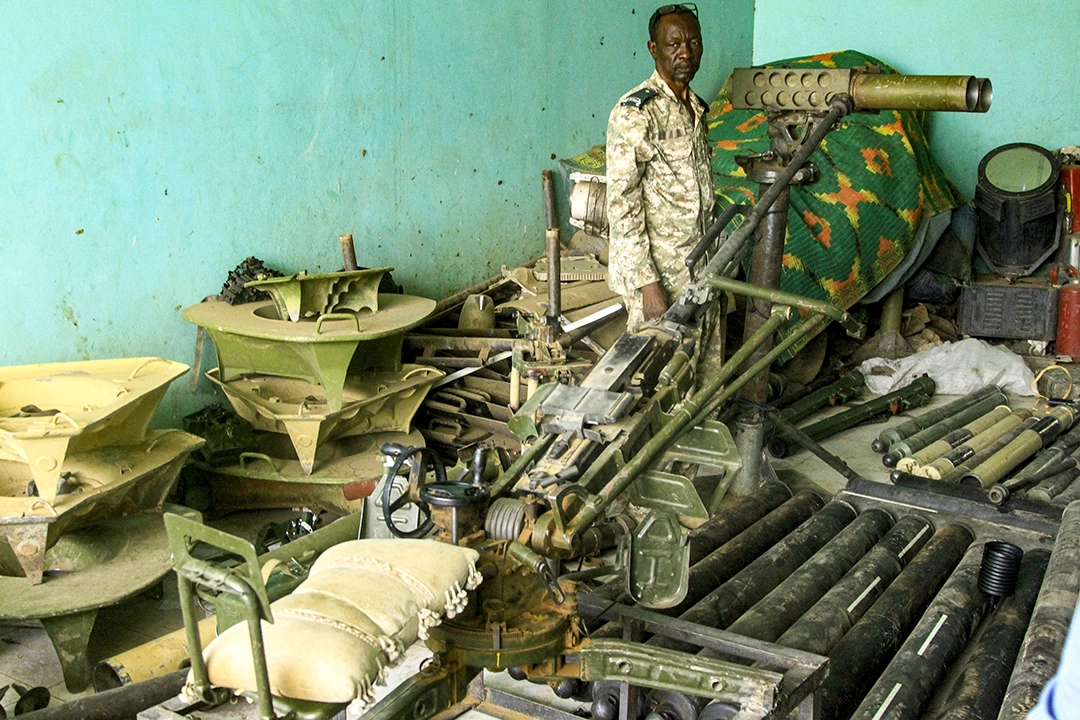
The armed conflict between the Sudan Armed Forces and the paramilitary Rapid Support Forces crossed into its fourth year in April, leaving behind a trail of destruction.
The human toll has been catastrophic, with thousands of lives lost and countless communities torn apart. Huge numbers of civilians have been uprooted from their homes, with many fleeing to safer regions within Sudan, while others have sought refuge in bordering nations. What began as an internal power struggle has grown into one of the most severe humanitarian crises in recent history.
External actors have fueled the ongoing conflict by providing military supplies and equipment, with the United Arab Emirates considered the main backer of the RSF militia. Published reports, including one in The Wall Street Journal, show that the UAE channeled advanced Chinese-made drones and a broader range of Chinese weapons into the hands of this armed group, representing a significant and concerning escalation in foreign involvement in the conflict.
Brian Castner, head of Crisis Research at Amnesty International, condemned global inaction to hold the UAE accountable for transferring Chinese weapons to the RSF and called for an immediate halt to arms transfers. Amnesty documented cases of Chinese GB50A guided bombs and 155mm AH-4 howitzers in the hands of RSF fighters.
“Civilians are being killed and injured because of global inaction, while the UAE continues to flout the embargo. The UAE must halt its arms transfers to the RSF immediately,” Castner said in May.
China has increased its arms exports to Africa in recent years. In 2024, it surpassed Russia as the largest arms exporter to Sub-Saharan Africa, and at least 21 countries received major arms deliveries from China between 2019 and 2023.
In September 2024, China announced a plan to spend $140 million to train 6,000 military personnel in Africa. Moreover, the major Chinese defense firm NORINCO opened a regional office in Dakar in 2023 — its fourth in Africa — and used that presence to expand its sales of military equipment to Burkina Faso, Mali and Niger. In exchange for security assistance, African countries have helped advance China’s geopolitical ambitions, deepening mutual dependence.
Since the outset of the war, the UAE has been funneling a wide variety of Chinese arms to the RSF. These range from guided bombs and howitzers to unmanned aerial vehicles and advanced FK2000 air defense systems. The UAE reportedly buys the weapons, then re-exports them to the RSF via several routes in Libya and Chad. The UAE has officially denied sending arms to the RSF despite widespread reporting on the activity.
Chinese weapons have played a significant role in strengthening the RSF’s military capabilities during the conflict. These arms have helped the RSF make battlefield gains against the SAF. One of the key advantages of Chinese weaponry is its affordability, making it accessible to nonstate armed groups like the RSF. Additionally, these weapons often are supplied without strict government oversight or regulatory checks, making them easier to acquire. As a result, the RSF is expected to grow more dependent on Chinese arms as the conflict continues.
Building on the RSF model, the relationship between Chinese arms dealers and African militant groups could grow closer over time, and China’s weapons could worsen conflicts in other parts of the continent. This expanding reach raises serious concerns among policymakers and security analysts.
There’s a high human cost to letting these weapons flow to the conflict. The RSF uses drones to attack population centers before launching a ground attack, causing severe damage and disrupting critical infrastructure.
The Chinese supply line from the UAE to Sudan is not specifically identified, but generally, the arms are routed to the RSF through neighboring countries such as the Central African Republic, Chad and Ethiopia, according to French newspaper Le Monde.
One way to slow this deadly supply of weapons would be for foreign powers to exert diplomatic pressure on the UAE. A second approach involves escalating the matter to the international stage through the United Nations Security Council. By raising the issue within this global forum, outside parties could draw wider international attention to the illegal flow of arms into the conflict zone.
A central part of this strategy would involve calling on all parties to honor and respect the Darfur arms embargo. This embargo, which was established specifically to prevent the transfer of weapons into the Darfur region, largely has been ignored by various actors. Renewed international pressure could help reinforce compliance with this legally binding agreement. Together, these two strategies represent the most realistic and effective pathways to curb the dangerous spread of Chinese arms in Sudan.
About the Author: Mohamed Suliman is a Sudanese writer and researcher studying how the international flow of weapons is fueling conflict in Sudan. Based in Boston, he holds a degree in engineering from the University of Khartoum.