

Several African nations have signed military cooperation agreements with Russia, pinning their hopes on Moscow as they confront jihadist insurgencies. So far, however, that does not appear to be a winning strategy, analysts say.
In 2025, Togo joined the list of African nations seeking Russian military training and intelligence sharing as it deals with violence spreading from the Sahel into its northernmost province.
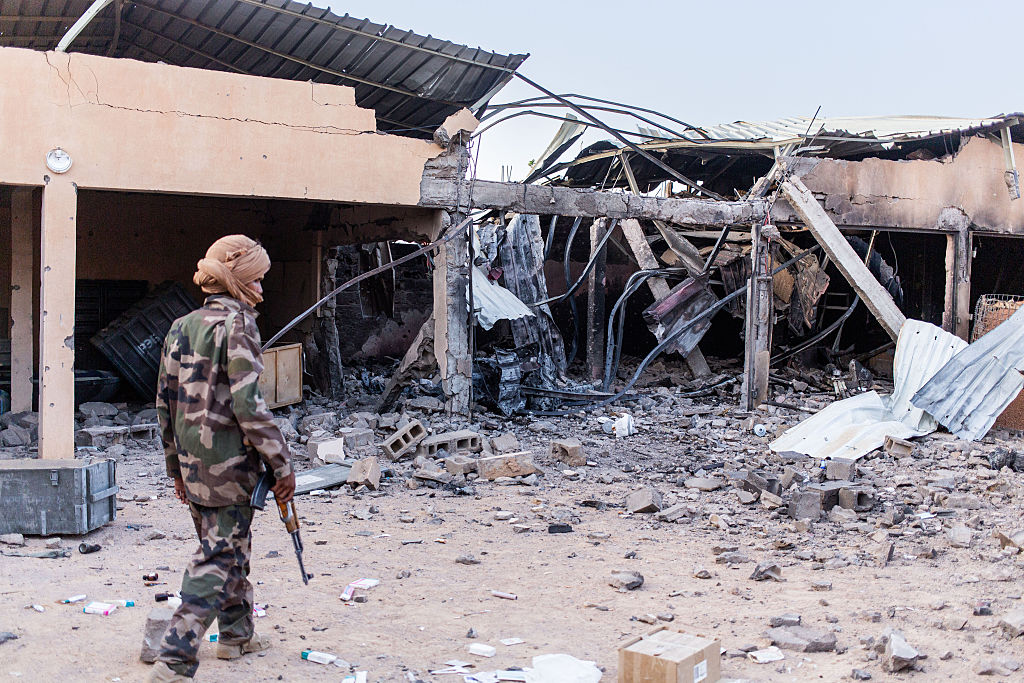
Russia has had mercenaries — first Wagner Group, now Africa Corps — stationed in Burkina Faso, Mali and Niger for several years. The fighters were invited into the region to help the ruling juntas defeat terrorist groups such as Jama’at Nusrat al-Islam wal-Muslimin (JNIM) and the Islamic State group.
To date, those Russian forces’ brutality and indiscriminate violence have served mostly to inflame tensions with the civilian population and drive them closer to jihadist insurgents. In all three countries, Russia’s mercenaries now appear to be shifting their energy more toward protecting the ruling juntas rather than eliminating the terrorist threat.
“Bamako, Niamey, and Ouagadougou have leaned on Russia for battlefield assistance, but Russia has shown little capacity or interest to help these regimes move toward political settlements with armed groups or address the governance deficits that fuel insurgency,” researcher Jean-Hervé Jezequel wrote recently for the Carnegie Endowment for International Peace.
Jezequel’s analysis was part of a broader report, “Russia in Africa: Examining Moscow’s Influence and Its Limits,” that brought together multiple perspectives on the impact of Russia’s presence on the continent.
Russia has built its African relationships using disinformation campaigns to present Moscow as the answer to the region’s persistent problems with insurgencies and terrorism. Thus far, Russia appears to be the biggest beneficiary of those arrangements, according to analyst Priyal Singh, a risk analyst at the Institute for Security Studies (ISS).
“While Russia derives symbolic and broad geopolitical benefits, such as an emboldened international profile, these engagements are mostly opportunistic and transactional,” Singh wrote recently for the ISS. “Its expanded security assistance appears driven by some African leaders’ concerns about regime survival on the one hand, and Russia’s access to critical natural resources on the other.”
Russia’s footprint in the Central African Republic provides an example of how its relationships in West Africa could evolve. Wagner fighters arrived in Bangui in 2018 under a deal that paid for their services through gold- and diamond-mining concessions.
Wagner soon became a key component of the government, providing security to President Faustin-Archange Touadéra, serving as his national security advisor and even overseeing customs and border security. At the same time, Wagner fighters joined the national military in campaigns against rebel groups that resulted in summary executions, violence against civilians and other human rights abuses.
“Moscow continues to try to expand its influence across the continent based on this playbook,” Singh wrote for the Carnegie Endowment.
Russia struck a deal in 2024 with Equatorial Guinea and deployed Africa Corps forces to support President Teodoro Obiang Nguema Mbasogo’s government. It has approached the ruling junta in Guinea and the government of the Republic of the Congo seeking similar agreements.
In the Sahel, the juntas chose to expel French and U.S. forces and United Nations peacekeepers. In doing so, the juntas have made themselves exclusively dependent on Russia for military aid and, potentially, economic aid.
“They are at odds with everybody. They are cornered,” analyst Wassim Nasr with the Soufan Center told ADF.
But Russia increasingly appears to be struggling to hold up its end of the bargains it has struck with African nations. Russia’s military efforts in the Sahel have done little to stop the expansion of JNIM or IS. With its financial resources dedicated to the Ukrainian invasion, Moscow has little to contribute to reconstruction or development aid, Jezequel noted.
Propaganda can polish Russia’s image in Africa, but it can’t substitute for tangible progress, he added.
“Russia may already have reached the high-water mark of its appeal,” Jezequel wrote.