

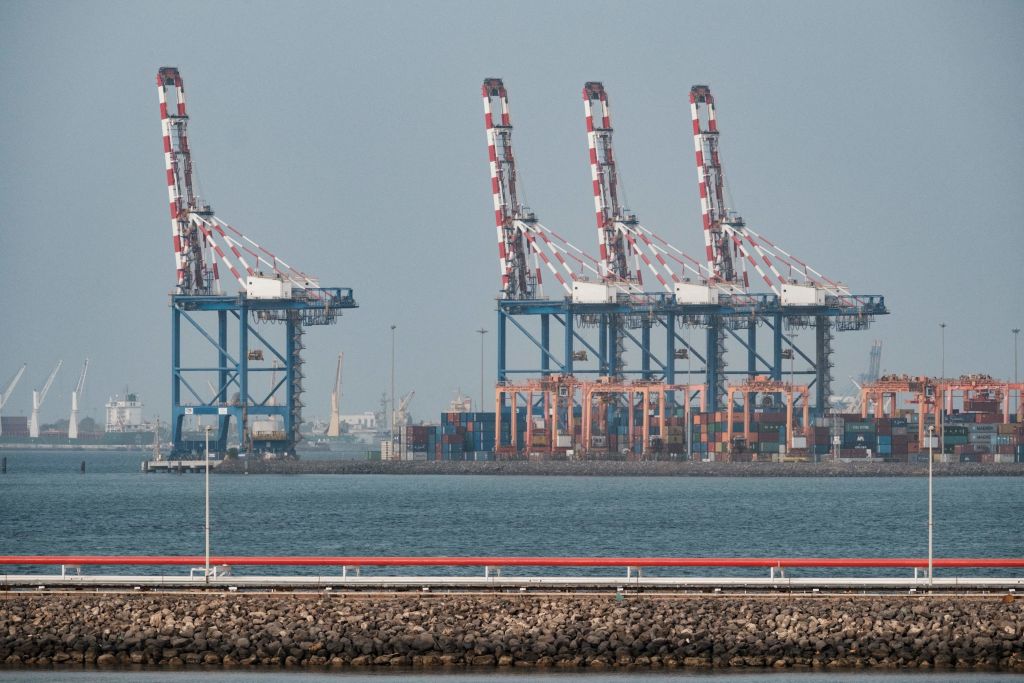
Foreign countries are in a race to secure port agreements along the Red Sea and Gulf of Aden, but an analyst is warning about the risk of such arrangements.
According to Makda Girma, a senior researcher at Horn Review magazine, such deals often allow foreign navies or contractors to make critical decisions that bypass “already-weak local institutions” in and around Somalia. This causes discontent in coastal communities and creates areas where “international security rules trump local fisheries or trade ministries, carving out de facto foreign authority right under the flag of national control,” Girma wrote. He terms these arrangements that give foreign ships open access to East African waters with little oversight “phantom ports.”
Such situations have allowed illegal, unreported and unregulated fishing by foreign trawlers, often from the same countries that simultaneously provide maritime aid and development assistance, to thrive. The foreign vessels are equipped to haul in massive catches compared to traditional fishing canoes. According to Girma, Horn of Africa coastlines have become “a logistics superhighway for global tankers while local artisanal fishing and informal trade, lifelines for food security and jobs, erode fast.”
Abdi, a fisherman in Somalia’s autonomous Puntland region, told Global Voices that he and other fishermen once hauled in substantial catches daily. “Now we bring nothing,” he said.
A 2022 Stable Seas report showed that $450 million is lost each year to illegal fishing in Somalia’s exclusive economic zone, which covers 830,390 square kilometers. The scourge also threatens the livelihoods of up to 90,000 local fishermen.
Increasing illegal fishing in Somalia has coincided with increased piracy. Over three weeks ending May 8, pirates hijacked three ships off Somalia and nearby Yemen. In November 2024, angry local fishermen in the Somali port town of Eyl hijacked a Chinese trawler fishing in a prohibited area and held it for weeks until it was released in exchange for $2 million. One of the hijackers told Al Jazeera that they were not pirates but represented “a community under siege.”
Girma noted several examples of foreign investment around the region.
China built and operates the Doraleh Multipurpose Port in Djibouti, while Emirati investments in Somaliland and Somalia’s autonomous Puntland region have transformed port cities into centers with military support zones, airstrips and deep-water docks. Türkiye has a defense and economic pact with Somalia that gives it operational control over Somalia’s territorial waters, while Ankara also operates the TURKSOM military base in Mogadishu, the capital.
However, “when foreign assistance is accompanied by economic exploitation, promises of peace, sustainability, and recovery are perceived as disingenuous,” maritime security specialist Vladyslav Bondarenko wrote for Global Voices. “This duality continues to weaken the credibility of international actors in Somalia’s coastal regions and complicates efforts to establish a truly inclusive system of maritime governance built on local trust and participation.”
Bondarenko said coastal communities do not want warships for protection and instead seek long-term, civilian-led solutions that include equitable fishing licenses and donor-supported training in maritime security. According to Bondarenko, such efforts helped revive Sri Lankan fishing communities after the country’s civil war ended in 2009. Japan has supported Sri Lanka’s maritime capacity by donating two fast patrol vessels under a $1.3 million grant that was paired with Coast Guard officer training and technical assistance for marine protection.
In Malaysia’s Sabah region, community patrols and the integration of radar surveillance have led to a significant reduction in illegal fishing.
“Somalia’s coastal communities do not need pity — they need consistent, inclusive support, grounded in genuine dialogue, investment, and the rebuilding of trust that has long been eroded,” Bondarenko wrote. “For now, thousands continue to fight for their future amid empty nets, unemployment, hunger, and fading hope.”
Girma argued that the rights of artisanal fishermen should be included in national plans through community fisheries associations, fair revenue shares from port deals, and “hybrid governance that mixes international eyes with local knowledge.”
“Only by putting local agency at the heart of global strategy will the Horn finally escape this political paradox: securing the seas without hollowing out the shores,” Girma wrote. “That human-centered blue security is not wishful thinking, it is the hard-nosed requirement for counterterrorism that works, trade that lasts, and stability the region desperately needs.”