

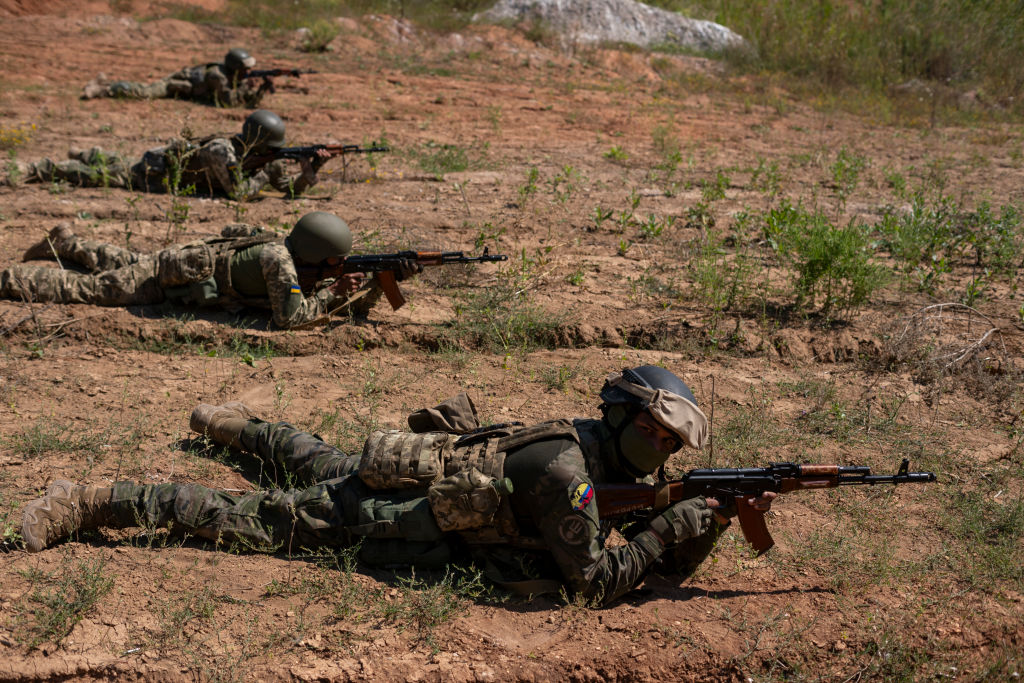
New reporting on Colombian mercenaries in Sudan’s civil war shows how outside forces have prolonged the conflict and eroded regional stability.
With the help of a Libyan militia called the Subul al-Salam Battalion, Sudan’s Rapid Support Forces (RSF) paramilitary group used southern Libya as a transit corridor, support base and rear operations center in its war against the Sudanese Armed Forces (SAF).
The Subul al-Salam Battalion, which is associated with the Libyan National Army, facilitated the transfer of recruits, including Colombian mercenaries, weapons and fuel across the border to support the RSF, according to an April 19 report by a United Nations Panel of Experts on Libya.
“The Panel found that Subul al-Salam was involved across multiple stages of the supply chain to the Rapid Support Forces,” the report stated. “Subul al-Salam exercised functional control over key logistical, security and facilitation components required to sustain the transportation of fighters, fuel, arms and related materiel, including militarized vehicles.”
The experts said the RSF in 2025 used a rear base in Libya controlled by Subul al-Salam to coordinate logistical operations from Libyan territory, access the Maateen al-Sarrah Air Base and use the al-Kufra Air Base, which “served both as transit points for Colombian fighters and as sites for the modification of vehicles imported through Libya.”
Colombian mercenaries supplied by the United Arab Emirates (UAE) gave the RSF crucial military support for and participated in the gruesome siege of El-Fasher, North Darfur, in October 2025, according to an April 2026 report by security analysis organization Conflict Insights Group.
“This is the first research where we can prove UAE involvement with certainty,” managing director Justin Lynch told the BBC for an April 22 article. The group’s report “shows mercenaries involved with drones travelling from a UAE base to Sudan before the RSF takeover of el-Fasher.”
As many as 380 Colombian mercenaries have deployed to Sudan since 2024, according to La Silla Vacía, a news website based in Bogotá, Colombia. The mercenaries, known as the Desert Wolves, were associated with a UAE-based company with documented ties to senior Emirati government officials, the report found. The UAE has repeatedly denied accusations by international groups that it provides support to the RSF.
The Desert Wolves brigade, which is composed of four companies of retired Colombian military personnel, reportedly served the RSF as drone pilots, artillerymen and instructors, including “training child soldiers.” In a February 2026 report, the U.N. said that RSF forces committed “widespread atrocities that amount to war crimes and possible crimes against humanity.”
Lynch said his group’s report assessed that the UAE-backed Colombian mercenary network “bears shared responsibility for these outcomes. The scale of atrocities and siege in el-Fasher wouldn’t have happened without the drone operations the mercenaries provided.”
In Libya, Subul al-Salam “directly supported” RSF armed operations by deploying units, providing foreign recruits and escorting RSF-affiliated factions across Libyan territory. The RSF remained present in Libya during the U.N. experts’ reporting period from October 2024 to February 2026, resulting in armed clashes with the SAF in Libya in June 2025.
Seeking to disrupt the RSF’s supply route, the SAF in November 2025 launched airstrikes that targeted shipments of vehicles and foreign fighters in transit from Libya to Sudan.
Ismail Jibril Tisso, a prominent Sudanese researcher and author, said southeastern Libya has become an open corridor for war.
“Libya has shifted from being merely a neighboring state to becoming a central node in a transnational supply network, fueling the Sudan conflict with foreign fighters and military equipment amid a growing war economy,” he wrote in an April 5 analysis for Sudanow Magazine.
“As the conflict expands, the fundamental challenge remains whether states and the international community can contain these networks and restore regional security — before the entire region devolves into an open theater of endless conflict.”