

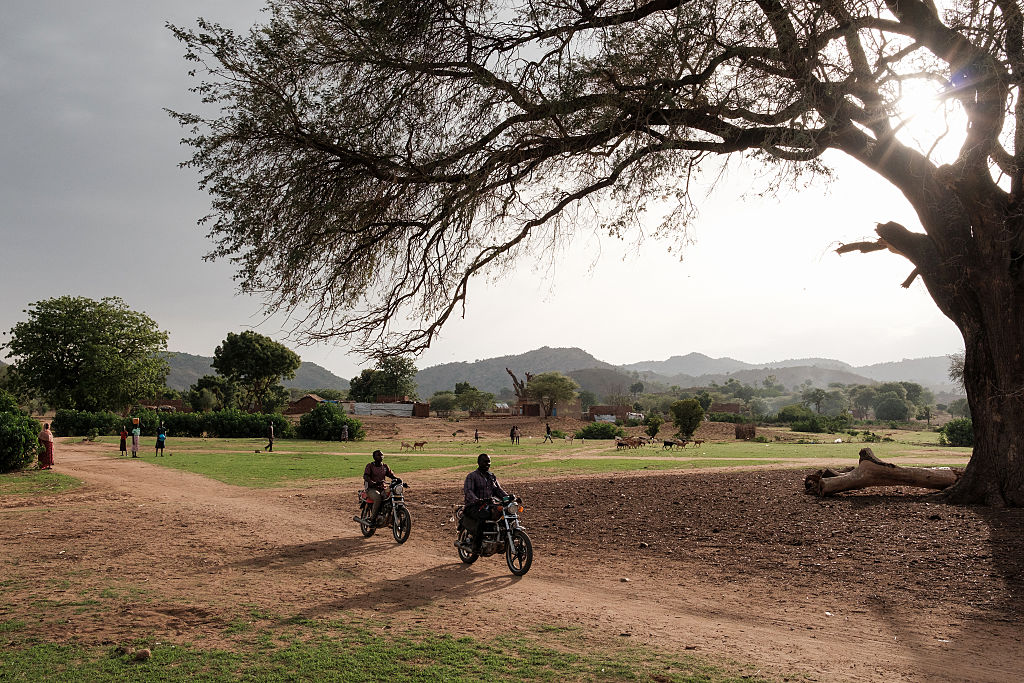
The Sudan People’s Liberation Movement-North (SPLM-N) said a Sudanese Armed Forces (SAF) airstrike that killed at least seven people and injured dozens more during a funeral on March 27 in the Nuba Mountains.
The region near the South Sudan border was far from the front lines when Sudan’s civil war erupted in April 2023, but that has gradually changed since 2025, after the SPLM-N elected to join forces with the paramilitary Rapid Support Forces (RSF) against the SAF. The SPLM-N controls most of South Kordofan State, which encompasses the mountains.
Led by Gen. Mohamed Hamdan “Hemedti” Dagalo, the RSF uses the mountains as a strategic base from which it launches attacks. The RSF holds much of Sudan’s west, and the SAF occupies the capital city of Khartoum and the nation’s east. Although the SAF still controls some towns in the mountains, access to the rugged hills gives the RSF a staging ground for its push to reclaim Khartoum. Analysts say the RSF’s presence around Nuba-area hospitals and markets has turned these bustling areas into potential war targets.
However, Jalale Getachew Birru, a senior analyst at the Armed Conflict Location and Event Data (ACLED) project, is among the observers who are skeptical of how long the RSF and SPLM-N can remain allied. When the RSF and SPLM-N lost control of Kadugli, near the mountains’ northern edge, to the SAF in February, the groups blamed each other for the loss.
“There was a clash where we were keeping an eye to see whether it was a sign for this alliance to finally break, and for them to go separate ways,” Birru said in an April report by German broadcaster Deutsche Welle.
Many Nuba region locals recall brutal attacks by the RSF against displacement camps. They are fearful about the new alliance.
Ethnic tensions among urban Arabs and the Nuba people, and distrust of Khartoum’s government, have fueled longstanding conflict in the mountains, with major escalations in 2011 and after the civil war began in 2023. Renewed regional conflict has taken a severe toll on civilians.
Afra Al Neil Hamed was four months pregnant and had gone to fetch water when a drone struck her home in the South Kordofan town of Ed Dubeibat in November 2025. She heard the explosion and hurried back home but found her husband and teenage son dead. Hamed and her five other children spent a week hiding in the woods before fleeing the town with hundreds of others.
“I started bleeding on the road and walked for seven days,” Hamed, who suffered a miscarriage, told the United Kingdom’s Prospect magazine. “Many women were bleeding on the journey.”
The RSF and SAF each have been accused of committing atrocities against civilians. The war has killed tens of thousands of people and displaced about 11 million, creating the world’s largest hunger and displacement crises, according to the United Nations.
Fighting in the Nuba Mountains also threatens to further destabilize South Sudan, where intensified fighting between opposition groups and government forces in areas bordering the mountains threatens the country’s fragile 2018 ceasefire. Heightened tensions in porous, conflict border areas in Upper Nile and Unity states, and the contested Abyei Administrative Area, drove an influx of Sudanese refugees into South Sudan, fueling an already-dire humanitarian crisis.
In February, the U.N.’s World Food Programme suspended aid delivery to Upper Nile State after repeated attacks on a convoy carrying humanitarian assistance. U.N. Secretary-General António Guterres said in a statement that he was “deeply concerned regarding the impact of the escalating violence” in South Sudan, adding that it “will further harm civilian populations who are already in a vulnerable situation.”
Russia and Iran are fueling the Sudanese conflict with shipments of arms and other goods. They supply the SAF with guns, drones, fuel and parts for fighter jets. Saudi Arabia and Türkiye have supplied drones and other weapons to the SAF, as they seek easy access to the Red Sea.
Eager to project their influence across East Africa and the Red Sea region, the United Arab Emirates has been accused of supplying RSF with weapons and has recruited Colombian mercenaries to fight alongside the paramilitary group. The UAE denies these charges.
The involvement of foreign actors “doesn’t just prolong the violence, but it also makes it very complicated for a political settlement to come in,” Emadeddin Badi, a senior fellow at the Global Initiative Against Transnational Organized Crime, told Prospect.