

A series of explosions at Ethiopia’s defense headquarters and military bases in late September raise concerns that northern rebels might be using drones to extend their fight to other parts of the country.
“The incident appears to point to a significant shift in Ethiopia’s evolving drone warfare: the federal military may no longer have an uncontested monopoly over the use of unmanned aircraft in the country,” the Ethiopian Observer wrote recently.
The Ethiopian government has not officially acknowledged that the explosion at the Defense headquarters was a drone. However, witnesses told the Ethiopian Observer that a small, short-range drone exploded inside the Ethiopian Air Force base at Bishoftu, about 40 kilometers southeast of the capital, Addis Ababa.
Analysts think the drone attacks are a response by the Ethiopian People’s Forces Alliance for Survival to the Ethiopian National Defense Force (ENDF) campaign to put down the ongoing rebellion in Tigray.
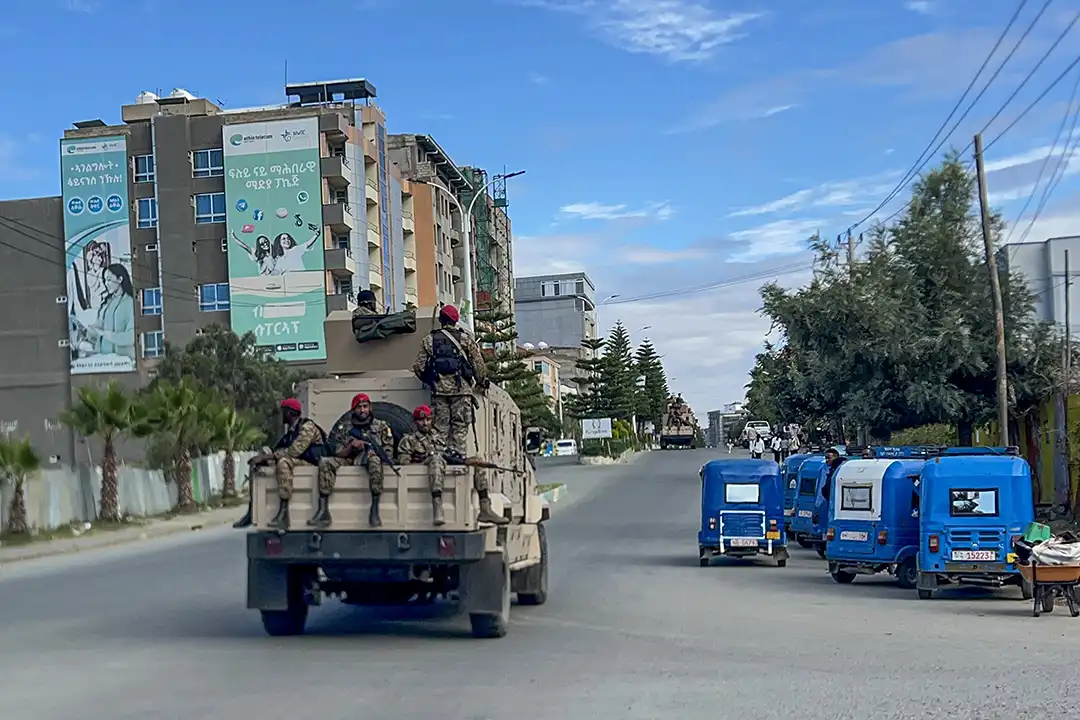
In recent weeks, the ENDF has pushed back rebels, reclaiming the Tigrayan capital, Mekele, and shutting down air traffic to airports in Axum and Shire held by rebels.
Drones played a significant role in the Ethiopian government’s victory over Tigrayan rebels in the previous conflict that ran from November 2020 to November 2022. That war ended with the Pretoria Agreement, which ended hostilities but failed to resolve other issues that drive discontent across the country.
The recent wave of attacks suggests that alliance members have acquired their own drones.
“Even relatively small, short-range drones, can pose a new security challenge to military installations previously considered relatively secure,” the Ethiopian Observer wrote.
The alliance is a collection of ethnic groups from across northern Ethiopia, including the Amhara Fano National Movement, the Tigray People’s Liberation Front, the Oromo Liberation Army, the Ogaden National Liberation Front (ONLF), the Afar Revolutionary Democratic Unity Front (Ugugumo), the Benishangul Peoples’ Liberation Movement and the Gumuz Peoples’ Democratic Movement.
The alliance appears to have internal disagreement, however. The ONLF told Al Jazeera that it supports the alliance’s political goals but not its military aims. The Benishangul and Gumuz movements recently told Deutsche Welle Amharic that they are not part of the alliance.
The alliance’s drone strikes deep in government-held territory appear designed to degrade the military’s air capacity while tying down Ethiopian troops outside Tigray, according to analysts at EurAfrica.
“This campaign also likely aims to symbolically demonstrate the rebel coalition’s capabilities and reach across the country,” EurAfrica analysts wrote recently.
The attack on Ethiopia’s defense headquarters is an assault on a key component of state control by a group whose stated goal is to remove Prime Minister Abiy Ahmed Ali from power, according to Pratibha Thaker, Africa regional director at the Economist Intelligence Unit, a research and analysis group.
“The intended effect may extend beyond physical damage: demonstrating that Addis Ababa is vulnerable, drawing security resources into the capital, and undermining the government’s ability to present the fighting as contained to the north,” Thaker told The Africa Report.
Eritrea appears to be supporting the alliance in response to the Ethiopian government’s desire to create a corridor through Eritrea to the Red Sea.
Stoking conflict in Tigray hampers Ethiopia’s ability to invade Eritrea, according to Jalale Getachew Birru, East Africa analyst for the Armed Conflict Location and Event Data project (ACLED).
“[Eritrea] seeks to create a buffer between Ethiopia and Eritrea by making Tigray hostile to Ethiopia,” Birru wrote recently. “Hence, Eritrean forces entered the war in Tigray to halt the Ethiopian government and allied forces from reaching the border and potentially fighting within Eritrea’s territory.”