

Terror groups and criminal gangs are turning kidnapping for ransom into a lucrative business in Nigeria.
These groups were paid $5.8 million in ransom between July 2025 and June 2026, more than triple the amount paid over the previous period. Kidnappers abducted at least 7,825 people, up 66%, and killed at least 1,142 people, including 895 civilians.
That is according to a report by SBM Intelligence, a consultancy firm in Lagos, which found that 90% of the ransoms paid went to the Jama’atu Ahlis Sunna Lidda’awati Wal-Jihad (JAS) faction of Boko Haram. Two mass abductions by the group accounted for more than $5.2 million in ransom payments.
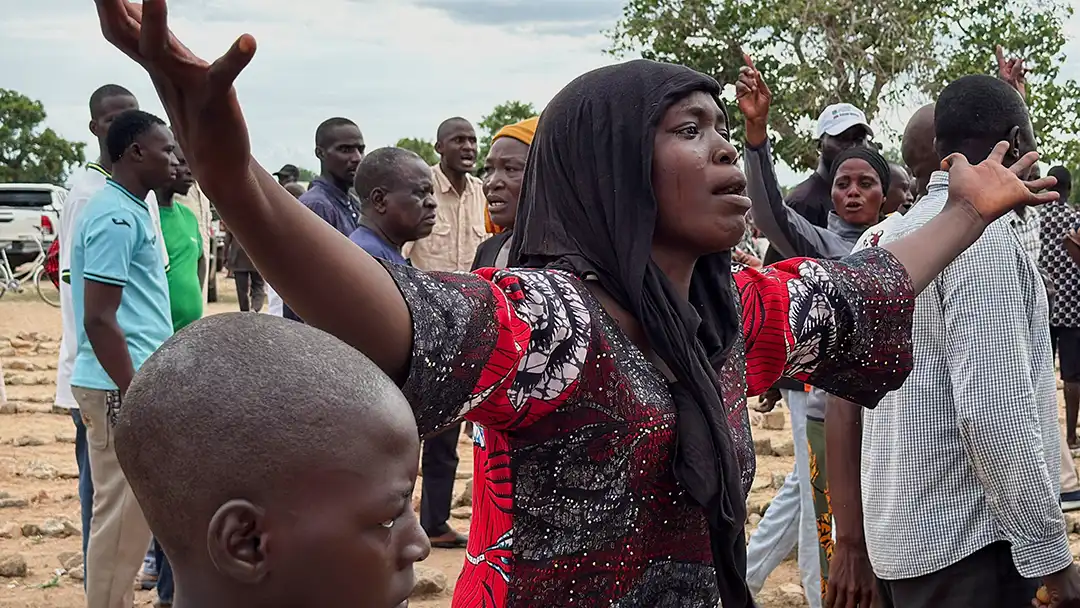
On March 3, kidnappers abducted 416 people, mostly women, children and the elderly, from the Gwoza Local Government Area in Nigeria’s northeastern Borno State. The terrorists issued a 72-hour ultimatum to receive a ransom of more than $3.7 million. Aisha Ibrahim’s teenage sister was among the victims.
“Being that my sister is a teenager, we have all been afraid about her condition since the day they issued the 72-hour ultimatum, because they are always the first victims,” Ibrahim told Nigeria’s Daily Trust newspaper. “They will marry them off and we will never see her again. We are appealing to the government to do everything possible to secure their release before it’s too late.”
The full ransom was reportedly paid and the victims were released in early June.
On November 21, 2025, gunmen abducted 303 children and 12 teachers during an attack on St. Mary’s Catholic School in north-central Niger state, signaling a resurgence in school abductions. The victims were released in December. The Nigerian government paid a ransom of at least $1.5 million for the victims’ release, according to Agence France-Presse, although authorities denied this.
Bulama Bukarti, a security analyst and a Nigerian human rights lawyer based in London, said mass abductions, which accounted for nearly 80% of the kidnapping incidents, are driven by financial motives.
“What these gangs do normally is to keep these children in captivity for weeks, sometimes months, and extort ransoms from either their families or from the government,” Bukarti told Al Jazeera. “These ransoms can run into hundreds of thousands of dollars before releasing them.”
Paying ransoms, however, does not guarantee survival. In at least six cases, kidnappers killed victims after a ransom was paid, and ransom payers are increasingly abducted themselves, according to SBM Intelligence. While ransom demands dropped by 52% over the reporting period, the collection rate jumped to 34%.
“That is a striking jump from the 5.35% collected in the previous cycle, and it is the single most important shift in this year’s data,” the consultancy reported.
The most incidents, victims and deaths were recorded in Northwest Nigeria, where Zamfara State alone accounted for 236 kidnapping incidents and 1,921 victims, about one-quarter of the national total. Zamfara also recorded the most mass abductions, 92, followed by Sokoto State with 76.
In the north, kidnapping victims are often taken to forest camps, and some are put to work in farming and artisanal mining, making kidnapping a source of labor in ventures controlled by abductors. The north’s vast geography “also thins out the security presence meant to cover it, making the area very difficult to police and anti-kidnapping operations very complex to execute,” SBM Intelligence reported.
“Absent a coordinated strategy that targets both the profitability of the crime and its socioeconomic roots, Nigeria risks entrenching kidnapping not merely as a criminal industry but as a funding mechanism for the very groups that most threaten its stability,” the report said.
The kidnapping trend has continued since the SBM report was released. On August 24, armed members of the Boko Haram-aligned Lakurawa terror group abducted up to 600 worshippers at a mosque in Niger State. Lakurawa then released on Facebook and WhatsApp a video of a large group of people being held hostage in a forested area. Locals confirmed the identities of some of the hostages.
“We have identified our elders, relatives, and some of us have seen their wives and children in the video,” resident Abdulmutallib Muqaddas Dindi told Al Jazeera.
Lakurawa struck again on September 12, when kidnappers abducted more than 100 people during a nighttime raid on the Niger State community of Maburya.
“The attackers exploited Maburya’s remote terrain, approaching from surrounding forest and using motorcycles to move quickly before dispersing with abducted residents,” retired Brig. Gen. Rabe Umar Abdullahi, a counterterrorism expert based in Abuja, told the digital news outlet TruthNigeria.