
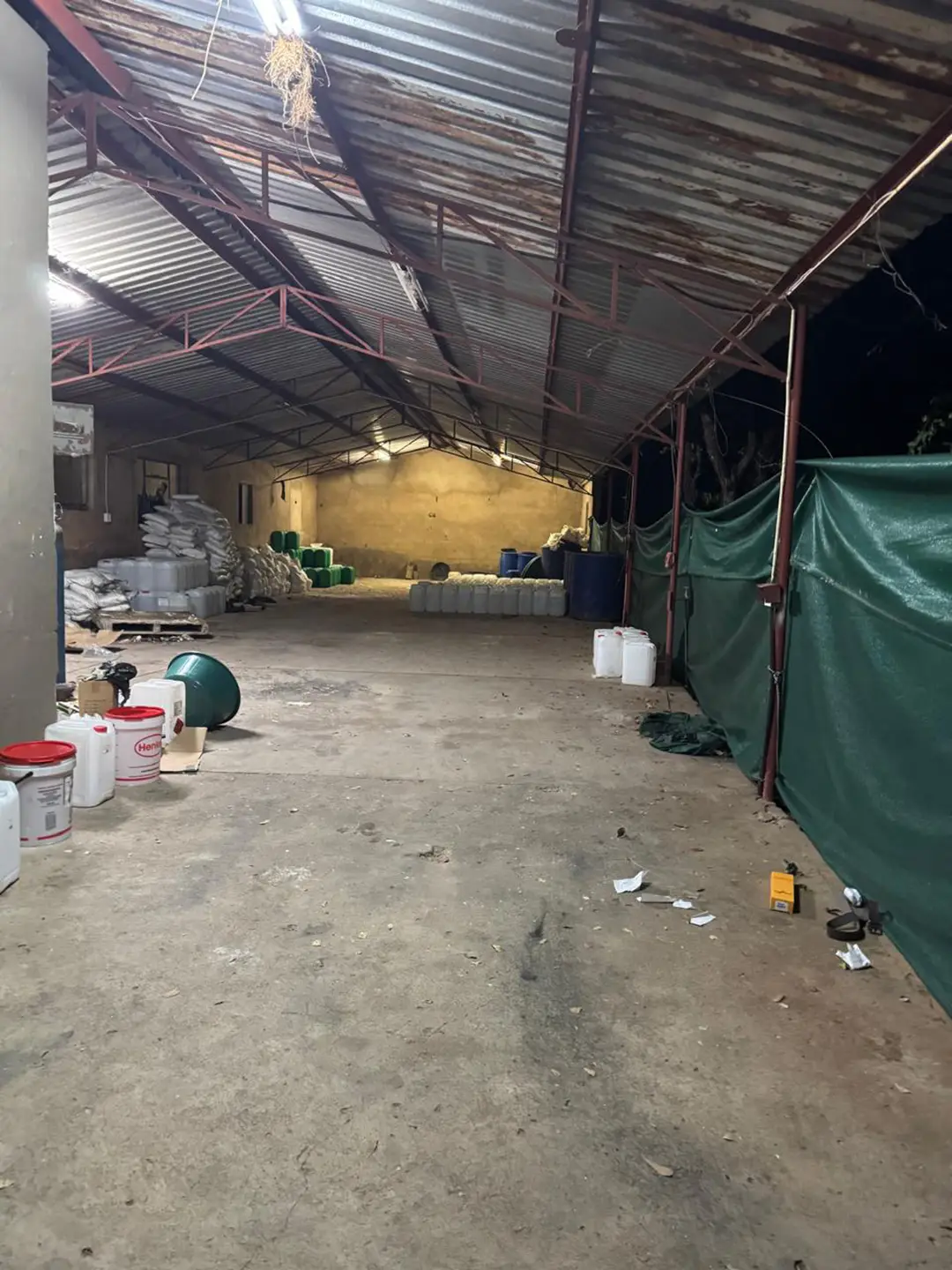
Authorities arrested five people, including two Mexican nationals, at a crystal methamphetamine manufacturing facility at a rural farm in the Limpopo province of South Africa in late August. Two Zimbabwean nationals and one Malawian national were also arrested on charges pertaining to the manufacture and possession of illicit drugs. Officials seized drugs and drug manufacturing equipment worth $37.5 million at the facility.
The arrests were the result of a collaborative operation involving members of the Hawks, the South African Police Service [SAPS] branch that specializes in fighting organized crime, and officers from the country’s narcotics bureau, Crime Intelligence Bureau and Special Task Force, as well as the United States Drug Enforcement Administration and Homeland Security.
“The breakthrough follows a two-month intensive investigation into suspected drug manufacturing activities at the farm,” SAPS said in a statement. “The discovery has exposed an alleged sophisticated, industrial-scale operation believed to have been established for the manufacture of dangerous illicit substances destined for distribution.”
It marked at least the fifth meth lab bust involving members of suspected Mexican drug cartels in South Africa since July 2024, when authorities seized a lab and drugs worth nearly $125.4 million on another farm in Limpopo province. Both the Sinaloa Cartel and the Jalisco New Generation Cartel (CJNG) have begun sending chemists to the continent to produce meth locally rather than risk exporting it.
Observers have warned that the Mexican cartels also fund terrorists, armed groups and criminal organizations that help them produce and move the drugs in a franchise-like business model. The Sinaloa and CJNG cartels began increasing production in Africa over the past five years. They typically organize production, trafficking and distribution, while leaving local sales to criminal gangs. Both cartels are also smuggling precursor drug chemicals to and from China and India via Kenya and South Africa.
Willem Els, a counterterrorism expert at the Institute for Security Studies, told ADF that he believes Mexican cartels are buying off law enforcement, judges and politicians for protection.
“Because of our porous borders, because of corruption, the compromising of state-embedded actors, it’s easy for these guys to go undetected,” said Els. “When they experience some problems, they have big money behind them. They keep on bribing their way out and they can continue to operate. Because of corruption at our ports of entry and our porous borders, it is not a big problem for these guys to operate across borders.”
The flurry of recent meth busts suggests that South Africa is no longer merely a transit hub for meth, which is highly addictive, inexpensive and easily accessible. The country has become one of the world’s largest consumer markets for meth, known locally as “tik.” Analysts say this is due to high youth unemployment rates, law enforcement gaps, the drug’s high potency, low cost and other factors.
Both Mexican cartels also produce meth in Kenya, where its use has risen since 2020, according to a report by the Eastern and Southern Africa Commission on Drugs. The cartels also operate in Nigeria, where increased meth use has been linked to homicides and other violent crimes, particularly in smaller communities where it is produced.
Nigerian authorities in mid-May arrested three Mexican nationals and six others at an industrial-scale methamphetamine laboratory in Ogun State’s Abidagba forest. Officials seized chemicals and drugs worth $363 million.
Before producing local meth, the Sinaloa Cartel was involved in South Africa’s cocaine trade. Shortly after officials discovered a meth lab with Mexican ties in the Limpopo province in September 2025, a truck traveling from Johannesburg to Cape Town was found smuggling cocaine packages labeled with the word “Tesla.” The labels are similar to cocaine packaging used by drug cartels in Mexico, according to South Africa’s Daily Maverick newspaper, which has reported that the Sinaloa Cartel also has ties in neighboring Mozambique.