

AI is being used to analyze data related to a wide range of threats such as unregulated fishing, banditry and terrorism. But experts warn that security professionals must understand its limitations.
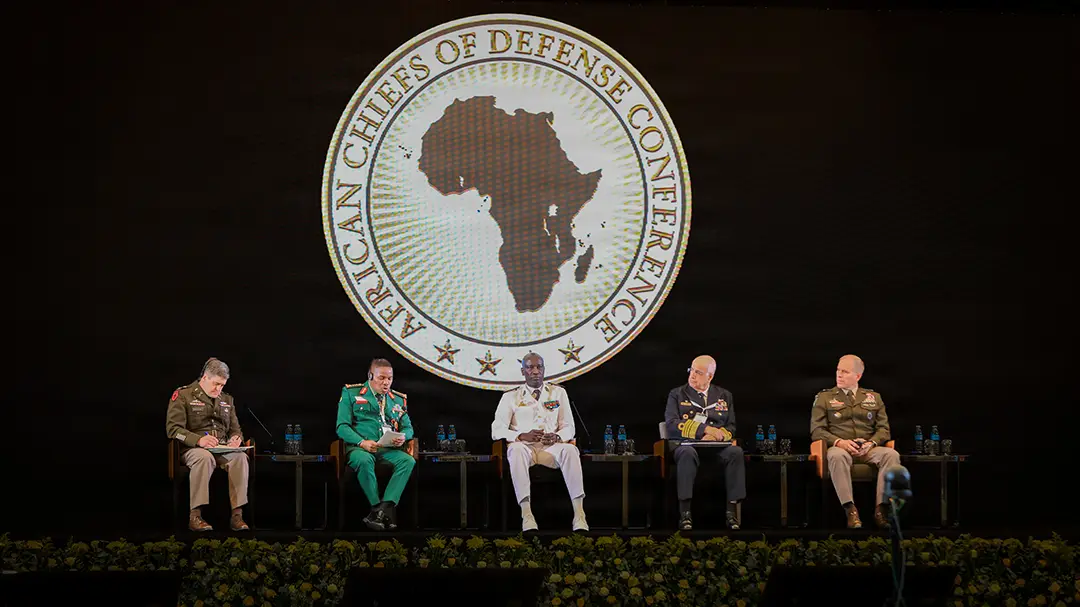
“AI can enhance our capability for monitoring, but it’s very dangerous to confuse data with information,” Brazilian Adm. Renato Rodrigues de Aguiar Freire, chief of the Joint General Staff of the Armed Forces, told attendees recently at the African Chiefs of Defense Conference (ACHOD) in Luanda, Angola.
AI can help detect patterns of movement or changes in terrain that might indicate crime or security threats. Using satellite imagery, AI can pinpoint terrorist supply routes and training camps. It can analyze vast quantities of data quickly to help Soldiers anticipate problems before they happen.
However, using AI effectively to monitor maritime and other environments is about more than simply turning on the technology and letting it run, Freire said. People must be trained to work with AI to understand the data being collected and determine how best to respond to it.
“You have to use technology to prioritize scarce resources,” Freire said.
Even as the call for using AI sweeps across Africa, the continent remains well short of the staffing needed to make the most of the technology. The African Development Bank estimates that the continent will need 23 million tech workers by 2030.
The founders of AI academies, such as Nigeria’s Africa AI Hub, offer the world’s youngest workforce the opportunity to learn AI. Company officials say on their website that they were inspired by the observation that “the AI revolution is happening to Africa, not with Africa.”
In countries such as Kenya, Nigeria, South Africa and Tunisia, AI technology and training are taking root, allowing some of the continent’s first data centers to begin operating.
“Kenya is a hub in East Africa. We have a lot of talent coming in to innovate,” Peter Addo, deputy director for the French Development Agency’s Kenya office, recently told France 24.
Kenya has an estimated 600,000 people trained in the use of AI, with more coming into the workforce every year.
Those new AI-skilled tech workers offer the potential for strengthening the way militaries use technology, Chief of the Tanzania People’s Defence Force Gen. Jacob Mkunda told ACHOD attendees.
“Technology is an important force multiplier that can enhance national security,” Mkunda said. “But technology is a means, not the end.”
AI use is spread unevenly across the continent, with some countries advancing rapidly while others languish. That can become an issue when it comes to cross-border collaboration to track and disrupt criminal networks and other security threats.
Fusion centers and regional hubs such as those used by the Yaoundé Code of Conduct maritime cooperation agreement can overcome those differences while improving cooperation and cross-border security by building trust, Freire said.
“The first barrier is always trust,” he said. “Cooperation can enhance national security.”
Mkunda agreed.
“Intelligence sharing is no longer a matter of choice,” he said. “AI technology can accelerate information sharing.”