

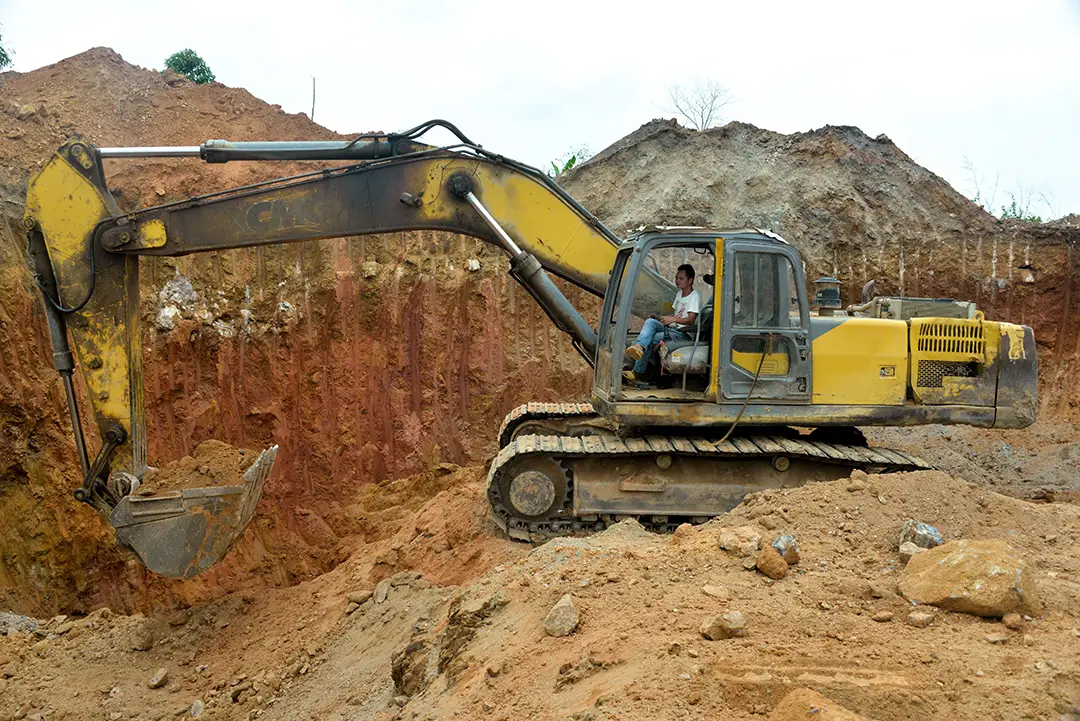
Cameroonian authorities continue to crack down on illegal gold mining sites run by Chinese nationals. Over a three-day period in June, a delegation led by Fuh Calistus Gentry, Cameroon’s acting minister of mines, industry and technological development, made unannounced visits to several gold mining sites, four of which were shut down for operating without permits.
Several workers fled a Chinese-controlled mining site in the central Cameroonian village of Missole I on June 25 as Gentry’s group arrived. In eastern Cameroon, more than 10,500 of the estimated 11,000 foreign miners work without required permits, according to a report by Modern Ghana, an online newspaper. On June 29, the Mining Ministry canceled 74 foreign mining permits. Illegal Chinese mining mostly is concentrated in eastern Cameroon and the north central Adamawa region.
Cameroon’s national gold mining union reported in March that Chinese nationals operate almost 200 gold mining sites. These sites “operate without papers and sell their products to expatriates from neighboring countries who do not declare them and export them clandestinely,” the union said in a news release.
The crime fuels conflict and costs Cameroon a substantial sum of money. Between 2021 and 2025, 44 tons of Cameroonian gold were smuggled to Dubai, compared to only 148 kilograms officially declared — a $3.4 billion loss for Cameroon, the Institute for Security Studies (ISS) reported.
There also are accounting discrepancies. Cameroon reported 953 kilograms of gold production in 2023 but only 22.3 kilograms officially exported. Importing countries, however, reported receiving 15.2 metric tons (15,200 kilograms) — more than 680 times more.
According to the ISS, Cameroonian frontmen often obtain mining permits for foreigners. Influential Cameroonian businesspeople, local authorities and mining sector mediators facilitate this. Chinese operators typically work alongside officially registered companies.
The mining also affects the environment. Chinese mining operations use toxic substances such as cyanide and mercury to extract gold, destroying farmland and polluting rivers. Although Cameroon banned the use of mercury in mining in 2019, a daily average of 40 liters of mercury and cyanide have been found in the Djiengou, Fell and Lom rivers, which are near gold washing ponds used by Chinese companies.
The pollution kills fish and pollutes communities’ drinking water. Mercury’s effects on populations near Chinese gold mines are severe. Residents have reported increased miscarriages, chronic illness and exposure among children working in the mines. One study found that more than 70% of miners in these areas had mercury levels exceeding World Health Organization safety standards.
“Environmental human rights defenders are denied access to sites and face barriers to legal action, especially given that many foreign companies lack identifiable managers or offices,” the International Service for Human Rights reported.
Last year, United Nations experts asked Beijing to address the role and responsibility of Chinese companies involved in Cameroon’s gold mining operations.
Violence also is associated with Chinese-operated mines. On January 21, a protest against Chinese gold mining in the central Cameroonian village of Goro turned violent. After midnight, gendarmes intervened, and security forces opened fire. Several civilians, including a child, were killed, according to Cameroonian news and media platform StopBlaBlaCam. In 2022, an employee at a Chinese mining company in eastern Cameroon killed a Cameroonian man who was looking for gold on land the company said it owned.
“The villagers revolted and killed the Chinese in turn” with stones, local farmer Narma Ndoyama told Africanews. “There are permanent conflicts between Cameroonians and Chinese” over gold mining, Ndoyama added.
Such incidents persuaded authorities to deploy security forces to mining sites, remove artisanal and semimechanized miners, and temporarily suspend mining.
“However, these ad hoc interventions have not stabilized the affected areas,” ISS researchers wrote. Further, the removal of artisanal miners by defense forces is “perceived as favoring mechanized miners,” who are often foreign.
Cameroonian workers at Chinese-operated mines also complain of mistreatment. In May, Grégoire Owona, Cameroon’s minister of labor and social security, condemned viral footage showing a worker being abused inside a Chinese-owned company and ordered labor inspectors to investigate.