

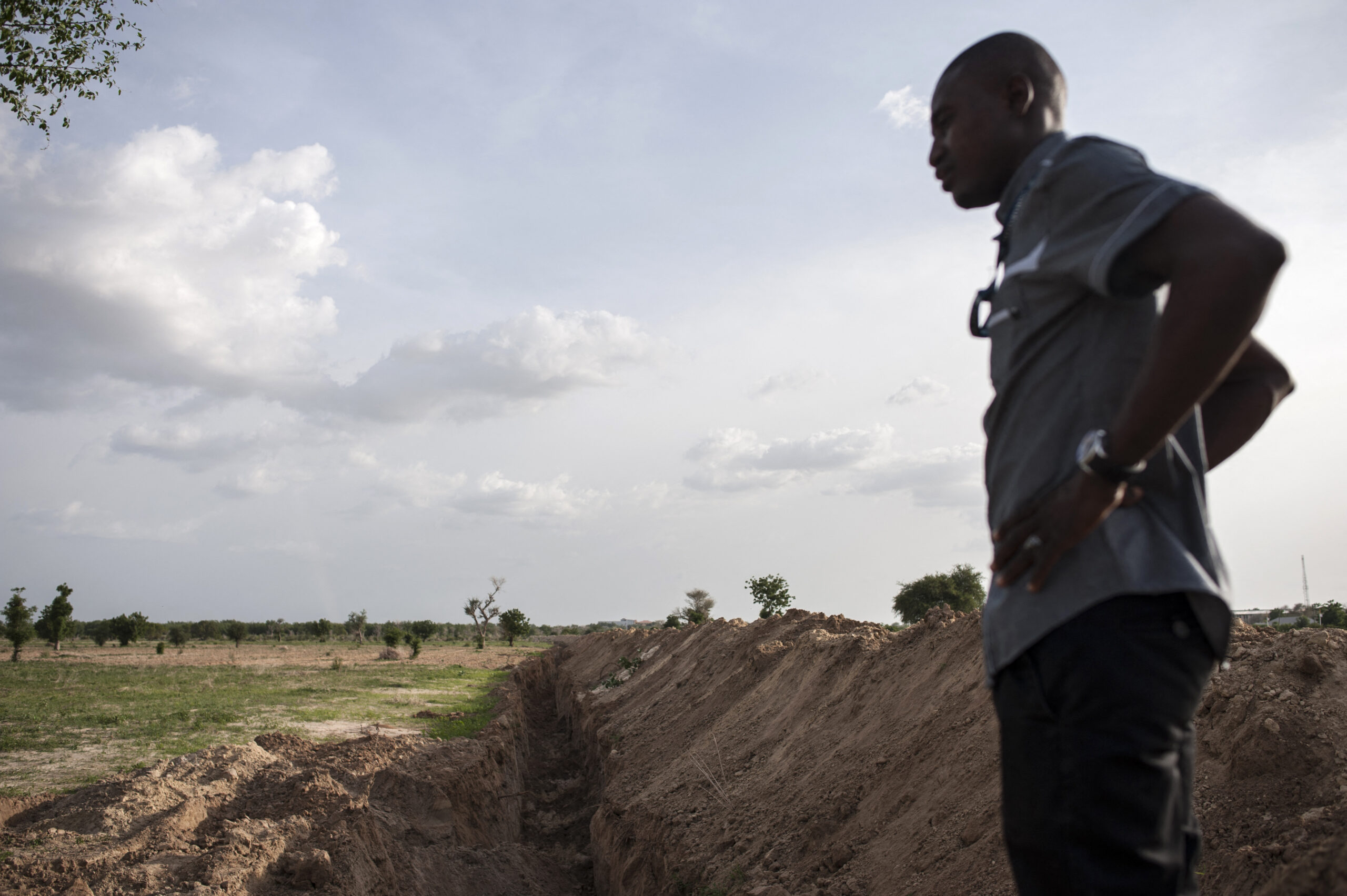
Across the Sahel landscape, an old security feature is returning: fortified barriers. Inhabitants of rural towns are building rings of earthen walls and trenches in an effort to stop attacks by terrorist groups.
A new study by researchers at the University of Florida found that, over the last 15 years, communities have built hundreds of kilometers of earthen fortifications around population centers. In fact, in northeast Nigeria and areas surrounding Lake Chad, all towns of more than 10,000 inhabitants are now surrounded by barriers large enough to be visible in satellite images.
This investment in low-tech security roughly coincides with the rise of Sahel-based terrorism. It also harkens back to traditional mud walls that protected dwellings hundreds of years ago in communities like Nigeria’s Hausaland and coastal Senegambia. However, researchers say today’s barriers are designed to slow down attackers and are not necessarily able to stop them.
“These trenches are very different from the city walls of pre-colonial Africa,” Dr. Olivier Walther, an associate professor at UF and principal investigator for the project, told ADF. “They’re mostly moats and berms and they were built to slow down insurgents who are extremely mobile and carry light weapons.”
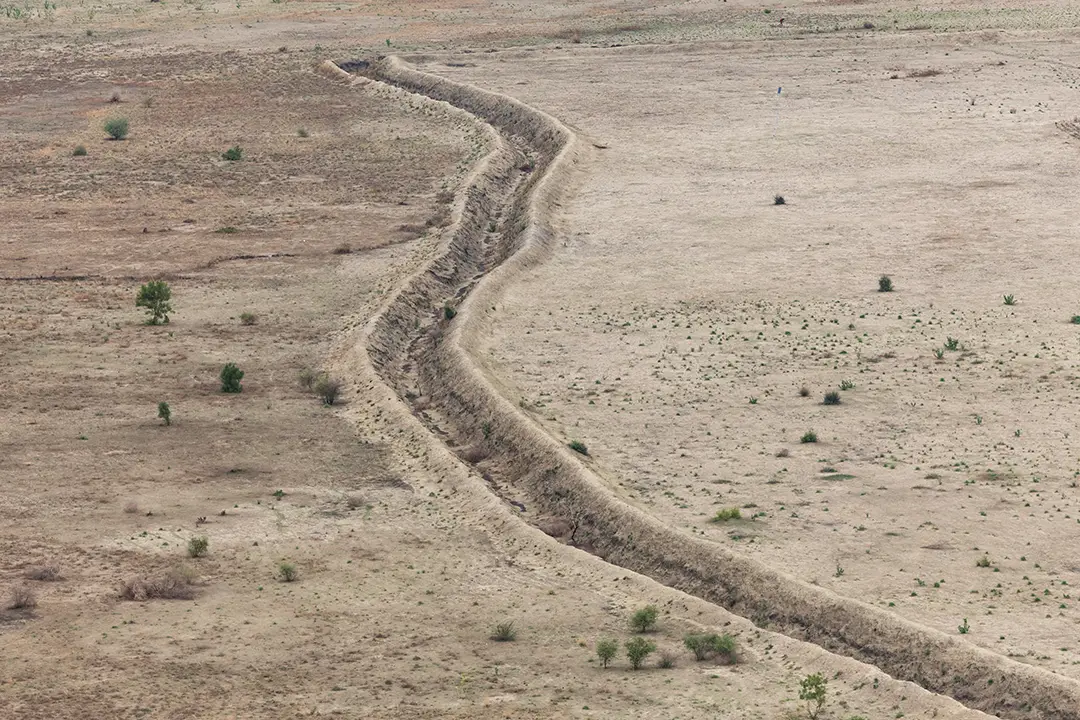
The projects are funded by the government or international agencies. They are typically built using backhoes or other mechanized equipment, although some are dug by hand. They are most effective at forcing attackers to dismount from motorcycles and funneling them towards more secure entry points where armed guards may be able to stop them.
“It’s a very effective way to slow insurgents down and prevent suicide attacks. It also gives defenders time to organize themselves, maybe call for help,” said Walther, whose research project is funded by the international Organisation for Economic Co-operation and Development. “It’s a defensive infrastructure, but it’s not a wall like you would see in medieval times.”
Some countries are expanding this strategy to their borders. Cameroon has fortified nearly 200 kilometers of its border with Nigeria. Togo has built more than 36 kilometers of security trenches along its borders with Burkina Faso and Benin to deter insurgents. Christopher Musa, Nigeria’s minister of defense, proposed protecting his country’s 4,000-kilometer land border with a combination of physical barriers and technological surveillance.
But these multiplying barriers come at a cost. Inhabitants feel safer inside the defensive perimeter of their towns but still must leave to transport goods, farm and herd livestock. In some cases, jihadist groups simply wait for people to leave a fortified area in order to attack.
“By concentrating people in fortified cities, you also expose more people to attacks when they search for livelihoods outside the perimeters,” Walther said. “It has created major logistical and security issues for civilians. When they want to travel between cities, they are much more exposed than before to abductions.”
This ad hoc strategy also reflects an effort to concentrate security in certain nodes while ceding most of the countryside to insurgents. Nigeria, for instance, has built fortified military “supercamps” in the northeast, but has been unable to provide security in surrounding rural areas.
There are also questions about the long-term viability of the strategy. Rain and erosion can degrade the barriers, which require regular upkeep. In one particularly horrific event in 2024 in Barsalogho, Burkina Faso, about 300 people digging a defensive trench were killed by Jama’at Nusrat al-Islam wal-Muslimin terrorists. It was the worst such attack in the country’s history.
Writer Anwar El Mourjani said there is a “risk of fragmentation” in the Sahel as citizens retreat behind walls. “Without stronger local governance, reliable public services and viable livelihoods beyond protected towns, defensive barriers could become permanent features of an increasingly divided region,” he wrote for the website Africa Eye.
The goal, he wrote, should be to promote connectedness and build networks that allow trade and cooperation to flourish.
“The long-term test is … not only whether cities can withstand attacks, but whether governments can reconnect them with the rural communities and economic networks on which their stability depends,” El Mourjani wrote.