

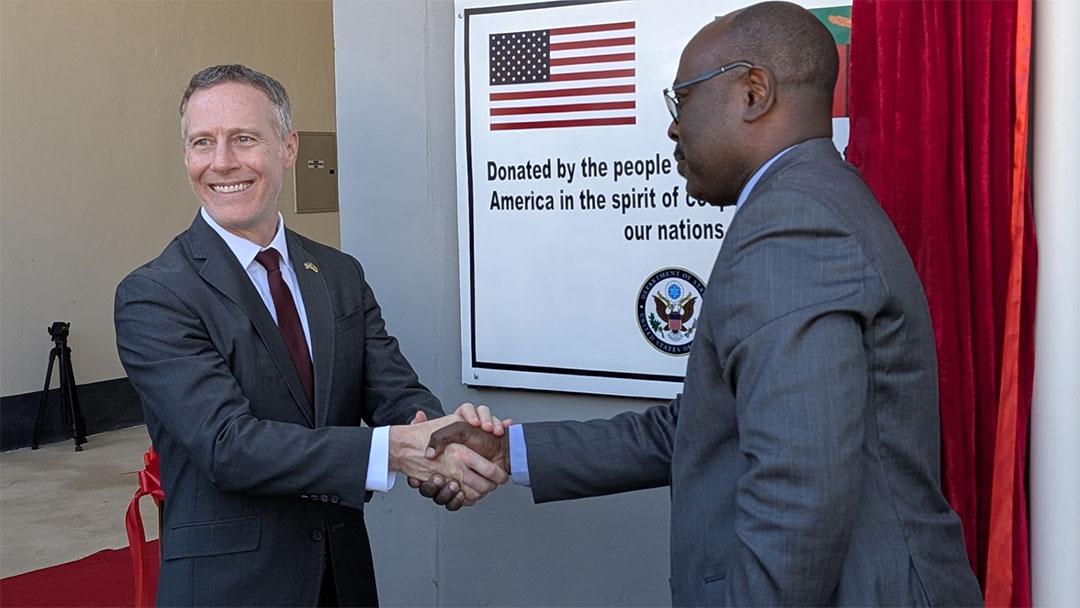
Zambia has unveiled more than $5.8 million in new infrastructure for its Kenneth Kaunda Peace Training Centre, the country’s flagship institution for training military personnel, police officers and civilians for international peace support operations.
The handover from the United States at the facility in Lusaka underscores the decades-long security partnership between the two countries and their shared commitment to strengthening African peacekeeping capabilities, U.S. and Zambian officials said. The upgrades include a 400-seat dining hall, outdoor classrooms, an indoor skills range, four secure ammunition storage containers and support for logistical improvements.
The center’s new amenities include $4 million to support a renewable-energy dining facility, four multipurpose warehouses and solar power to keep them running. The U.S. embassy said that the Engagement Skills Trainer, a $1.5 million indoor range, provides Soldiers with a realistic and safe way to develop critical skills.
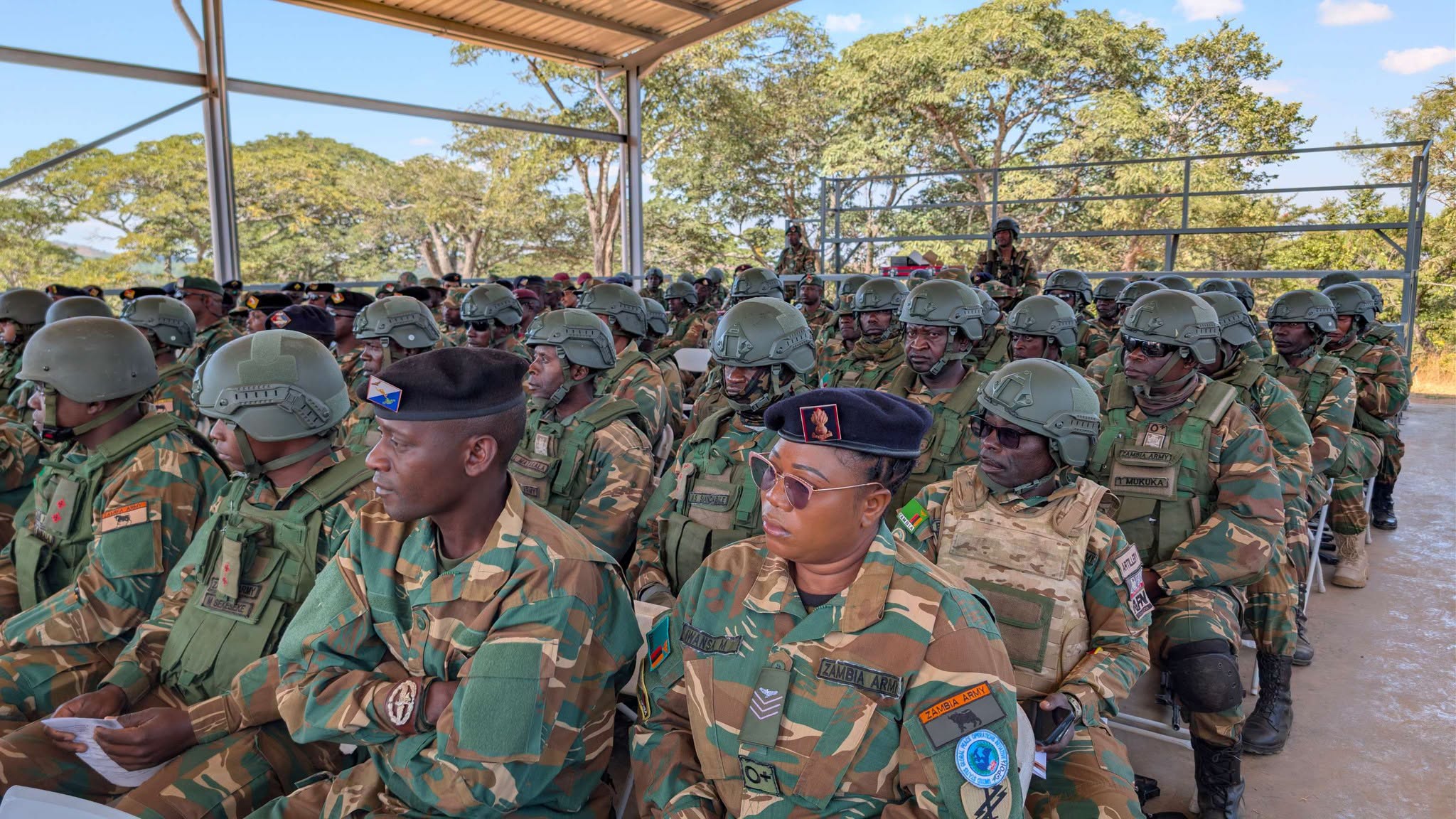
The additions let the center train more peacekeepers and provide modern facilities to prepare them for international deployment. Brig. Gen. Telenkako Banda, center commandant, said the upgrades are a milestone in the institution’s growth.
Ministry of Defence Permanent Secretary Maambo Haamaundu represented Zambia at the June 2026 handover. He noted that the indoor firing range aligns with President Hakainde Hichilema’s call for prudent resource management by reducing reliance on outdoor ranges and cutting operational costs, the Zambia Daily Mail reported.
During the handover ceremony, U.S. Embassy Chargé d’Affaires Michael Coker said the facilities will support training for thousands of future peacekeepers and help maintain the center’s standing as one of Africa’s premier peacekeeping institutions.
“The United States and Zambia have enjoyed a strong and productive relationship for more than six decades,” Coker said, as reported by the embassy. “Throughout that time, our partnership has evolved to meet new challenges and seize new opportunities. Whether in health, education, economic development, disaster response, or security cooperation, our nations have consistently worked together because we share important interests and common values.”
He said that with about 1,000 peacekeepers deployed to the United Nations peacekeeping mission in the Central African Republic, “Zambia continues to make a meaningful contribution to regional and international security.”
The center regularly hosts participants from across Africa, making it an important regional institution. The Zambian Defence Force established it to prepare personnel for peace support operations and later renamed it to honor Kenneth Kaunda, Zambia’s founding president. Its curriculum includes pre-deployment training, leadership development, civil-military cooperation, use of force, protection of civilians and children, logistics, humanitarian coordination, and command and staff planning. Students include military personnel, police officers and civilians who may serve in U.N. or regional peace support operations. The center partners with the international Peace Operations Training Institute to offer free online courses in English, French, Spanish and Portuguese.
The U.S. has provided more than $4.5 million worth of equipment and support to the center annually. Through its Global Peace Operations Initiative, the U.S. has a history of working with Zambia to support U.N. peacekeeping operations training. Trainers are retired U.S. military and reserve officers and noncommissioned officers with expertise in training, planning and operations. They partner with Zambian Defence Force instructors to work with returning peacekeepers, incorporating lessons learned and best practices into pre-deployment training for the next group of Zambian peacekeepers.