

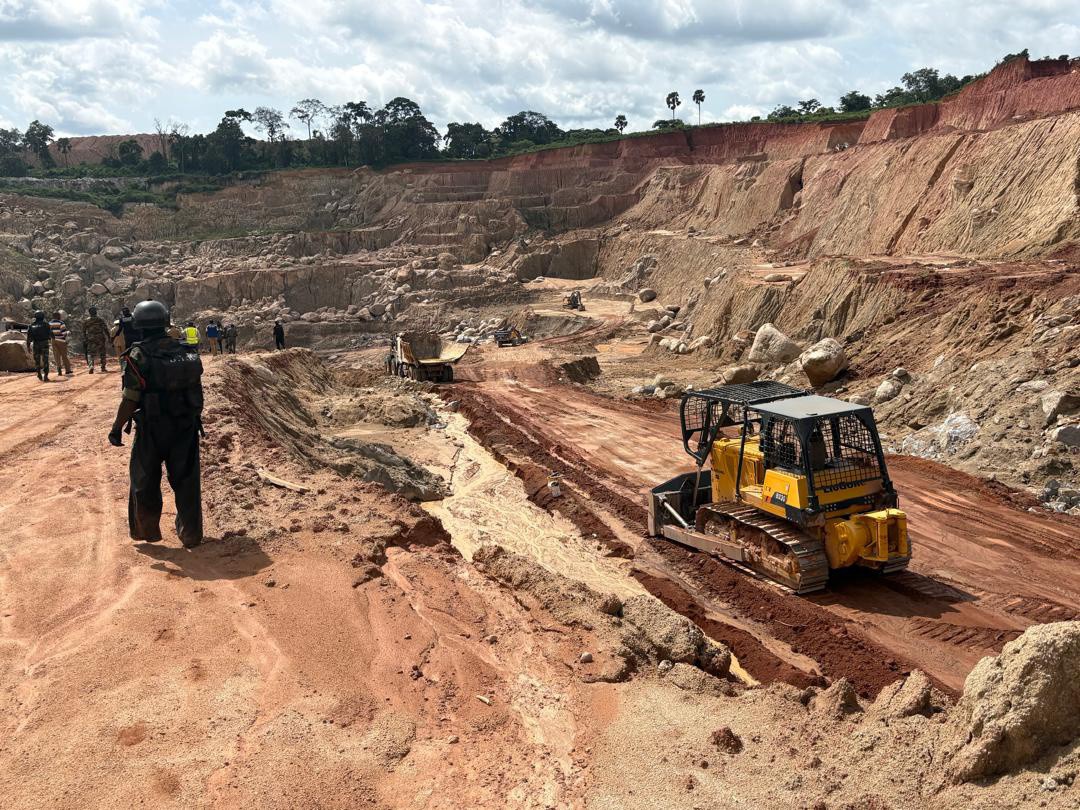
Ordering a complete halt to all gold-mining activities, Cameroon recently took sweeping measures to take back control of industrial and artisanal gold mining from Chinese companies that have come to dominate the sector.
“The era of fraudulent gold mining in Cameroon is over,” the Ministry of Mines, Industry and Technological Development declared in an April 4 statement.
Before operations can resume, mining companies are required to meet minimum monthly production targets, transition to closed-circuit processing systems within six months, and pay an up-front environmental bond of more than $112,000.
“These measures aim to restructure the sector not only to control production and increase state reserves and revenue, but also to combat illegal mining, which causes significant losses to the Cameroonian economy through smuggling,” the ministry said.
For years, the Central African country has struggled to oversee the sector. Major discrepancies between Cameroon’s official gold exports and far higher import figures reported by other countries, particularly the United Arab Emirates, were revealed in a 2023 report by the Extractive Industries Transparency Initiative that was published in December 2025.
Cameroon reported 953 kilograms of gold production in 2023 but only 22.3 kilograms officially exported. Importing countries, however, reported receiving 15.2 metric tons (15,200 kilograms), which is nearly 680 times more.
“This suggests a large share of gold, especially artisanal mining, bypasses official channels and is diverted into informal networks or smuggled,” researcher Aicha Pemboura said in a March 2026 report on organized crime in Central Africa.
In February 2026, Cameroonian President Paul Biya ordered an investigation into illegal gold trafficking to identify smuggling networks, assign administrative and criminal responsibility, and propose corrective actions.
“About 200 illegal companies have been identified in the east and Adamawa regions, more than 95 percent of them foreign firms,” the Ministry of Mines said in a May 13 statement. It published a list showing that many of the companies are run by Chinese nationals.
In March, acting Minister of Mines Fuh Calistus Gentry led a team of police and Soldiers that conducted surprise inspections, seized equipment and impounded vehicles at a number of illegal mining sites that had defied the shutdown.
Several representatives of Chinese mining companies attended a meeting on April 9, during which Gentry informed the group of the new restrictions. He said his mission is to put an end to illegal operations and completely restructure the country’s semi-mechanized artisanal mining sector.
Cameroon’s crackdown is part of a shift across the continent, where governments increasingly are enforcing stricter mining regulations, particularly on foreign operations taking advantage of loosely regulated and informal segments of the sector.
While new regulations and efforts to dismantle illegal mining operations are sure to test governments’ resources and regulatory abilities, the potential payoffs are enormous for local economies and the environment.
Marcena Hunter, director of extractives with the Global Initiative against Transnational Organized Crime, said mercury pollution and poisoning have become major problems associated with gold mining.
“While deforestation may be the most well-known threat from illegal mining, threats to waterways are arguably the greater direct impact,” she said in an April 6 video. “The pollution of waterways from mercury and other chemicals from the processing of ore can be really detrimental to the environment.”