

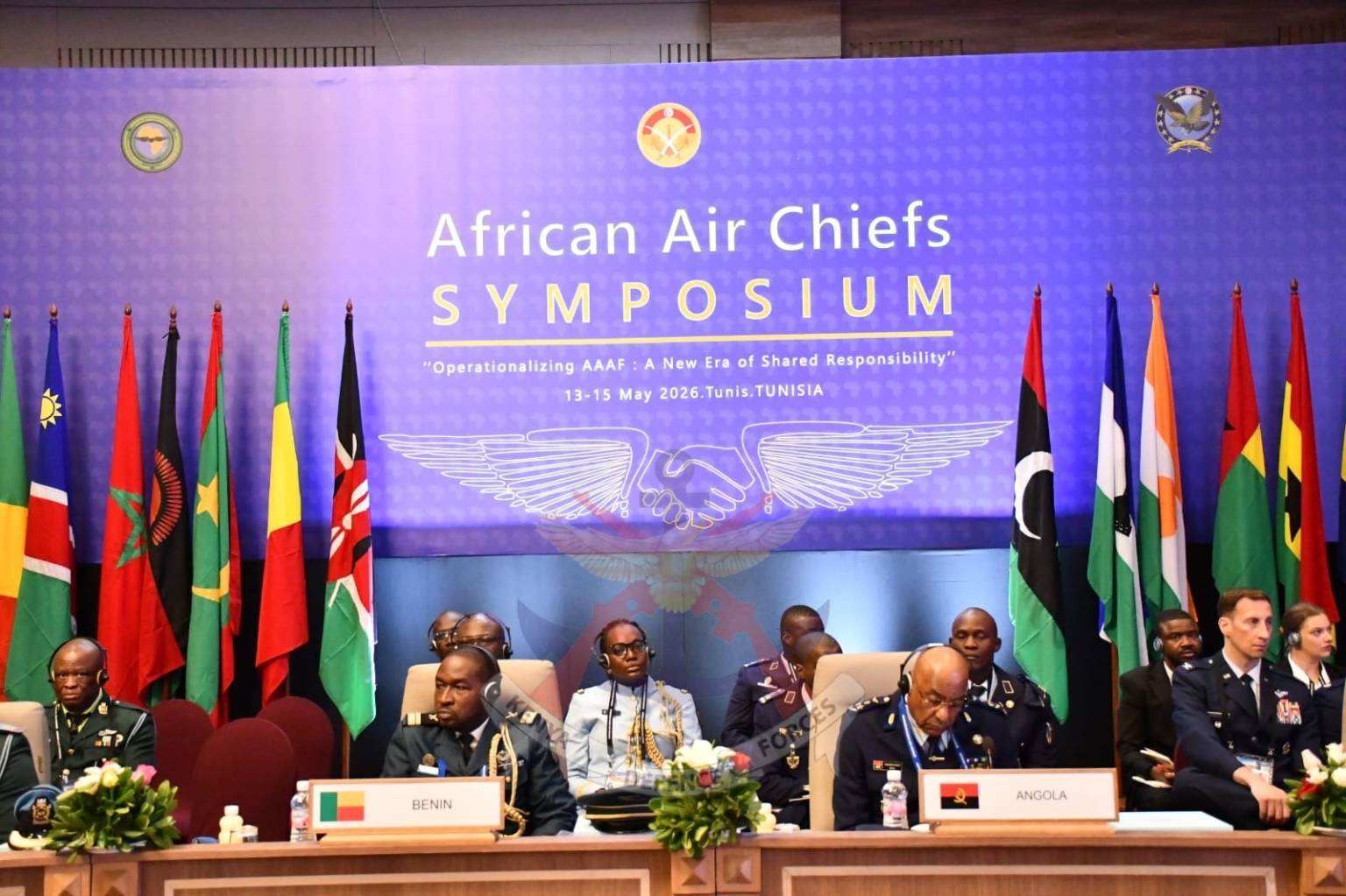
During the 2026 African Air Chiefs Symposium (AACS), more than 30 military leaders discussed ways to harmonize efforts to counter insurgencies and strengthen humanitarian assistance and disaster response.
Throughout the event, the chiefs discussed enhancing regional security and interoperability and worked to draft a seven-year plan for the Association of African Air Forces (AAAF).
The three-day symposium, which was jointly organized by the Tunisian Air Force and the United States Air Forces in Europe-Air Forces Africa, ended May 15. Co-hosted by Nigeria, the 15th AACS included a tour of the Tunisian Air Force’s Noncommissioned Officer School and an air power expo where defense contractors and aerospace companies demonstrated emerging aviation technologies and autonomous platforms.
The chiefs discussed the shared responsibilities of operationalizing the AAAF, a voluntary, apolitical, African-led organization that promotes dialogue, cooperation and collaboration among continental air forces. The AAAF was established during the 2015 AACS, when Côte d’Ivoire, Mauritania, Senegal and the U.S. signed the AAAF Charter. The association now has 30 member nations.
Tunisian Minister of National Defense Khaled Sehili said this year’s symposium offered opportunities to assess technological developments, examine ways to modernize air fleets, and develop education and training methods. Air chiefs also discussed how to leverage artificial intelligence and databases to improve command, control and communication systems, particularly in cyber domains.
Tunisia “will continue to open its training institutions to the armies of brotherly and friendly countries in order to promote the exchange of expertise and to make known the Tunisian experience, with a view to setting up a regional training center in the field of military aviation,” Sehili said in a joint report by Tunisia’s webmanagercenter.com news platform and Tunis Afrique Presse, the country’s national news agency.
Sehili added that he was grateful for the ongoing support of international partners, including the U.S.
Chief of Staff of the Tunisian Air Force Lt. Gen. Mohamed Hajjem said the symposium was “likely to provide the essential elements to monitor the new realities and their current and future challenges, as well as to effectively face the challenges and threats weighing on the security and stability of the African continent and the safety of its airspace.”
Nigerian Chief of the Air Staff, Air Marshal Sunday Kelvin Aneke, said the symposium’s theme, “Operationalizing the Association of African Air Forces: A New Era of Shared Responsibility,” underlined the need for African nations to collectively develop sustainable solutions to terrorism, insurgency and other security challenges. Aneke said stronger partnerships, intelligence sharing and enhanced operational coordination are critical to addressing these threats.
Aneke was unanimously reelected as AAAF chairman for another two-year term during the closing ceremony.
Maj. Gen. Bernard Waliaula, commander of the Kenya Air Force, said his country’s participation underscored its recognition that contemporary threats increasingly cross national borders and require coordinated, multinational solutions.
Kenya’s Ministry of Defence noted that the symposium strengthened strategic relationships ahead of the AAAF’s inaugural Humanitarian Assistance and Disaster Relief Command Post and Field Training Exercise in 2027, which the Kenya Air Force is expected to host. The exercise aims to hone multinational air capacity and readiness with a focus on joint planning, interoperability and coordinated crisis response efforts.