

As terrorist groups continue to expand beyond the Sahel, countries throughout West Africa are emphasizing the importance of logistical cooperation to rapidly deploy and support troops.
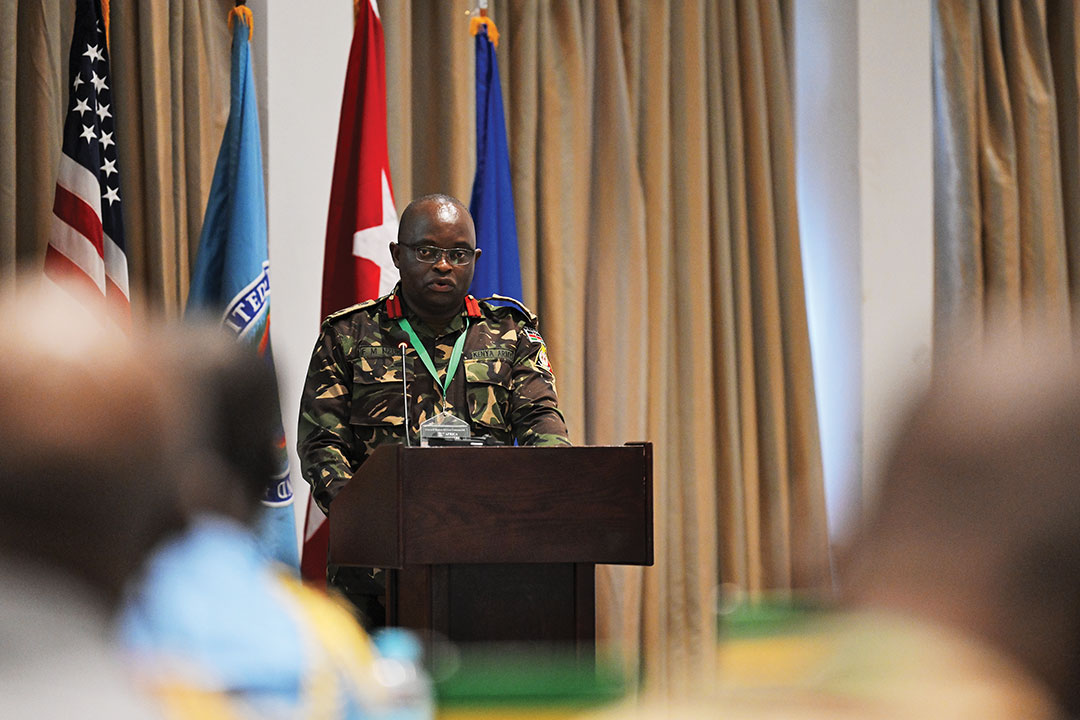
The growing threat of al-Qaida and Islamic State group affiliates loomed over the 2025 West Africa Logistics Conference co-hosted by United States Africa Command (AFRICOM) and the Armed Forces of Liberia (AFL) in the capital, Monrovia, in August 2025.
More than 90 participants from 22 nations and organizations attended, including most West African countries and representatives from the Economic Community of West African States (ECOWAS).
“This conference could not have come at a better time than today,” AFL Chief of Staff Maj. Gen. Davidson Forleh said during the opening ceremony. “The common enemies that all of us face today in the world is terrorism. No one country can fight terrorism. There has to be togetherness. There must be a synergy of effort.”
The conference featured panel discussions, forums, and exchanges of best practices and lessons learned. Topics included regional logistics planning and coordination, defense transportation systems, interoperability among ECOWAS and partner nations, supply chain resilience and sustainability, crisis response, humanitarian logistics, and public-private partnerships.
The primary concern of military logistics is how to source, stage, move and dispose of materiel throughout the continent. Logistics officials are responsible for a vast array of supplies. They oversee facility construction and upkeep. They feed, outfit, move and arm their Soldiers.
“We are here to ensure that all of us bring to bear our expertise when it comes to logistics,” Forleh said. “Without logistics, you’re not going to win a battle.”
AFRICOM’s logistics team led a discussion on the Assess, Advise, Advocate and Integrate Operational Assessment Model, called A3I. The model takes in self-reported logistics data from African partners, such as supply nodes, fuel points and airstrips.
The goal is to build a complete assessment of regional strengths and gaps in capability with specific, measurable and achievable goals, according to AFL Assistant Chief of Staff for Logistics Lt. Col. Saimo Kortu.
“We’re refining the product to fully map out all of our capacities, identify gaps and think about how those gaps can be bridged,” he said of A3I. “It’s a very useful tool that’s going to help enhance our capability.”